15 Gigantes Plaki: The Ultimate Greek Baked Beans Recipe You Need to Try
There are dishes that feed you and there are dishes that transport you. Gigantes plaki belongs firmly in the second category. One spoonful of these slow-oven-baked giant white beans swimming in rich tomato sauce fragrant with olive oil, garlic, and fresh herbs and suddenly you’re sitting in a sun-drenched Greek taverna with a glass of ouzo and absolutely nowhere to be. It’s the kind of food that makes you genuinely grateful for whoever invented the oven — and whoever had the wisdom to put beans in it.
This guide covers everything you need to know to make the most authentic and most delicious gigantes plaki of your life. From bean selection and preparation to the perfect tomato sauce, the essential herb combinations, feta variations, vegan adaptations, slow cooker methods, serving suggestions, and the mistakes that turn a potentially magnificent dish into a disappointing one — every detail is here. Whether you’re discovering this dish for the first time or trying to perfect a recipe you’ve been making for years, something in this guide will make your next batch genuinely better than any previous one.
What Is Gigantes Plaki and Why This Greek Dish Is So Beloved Worldwide
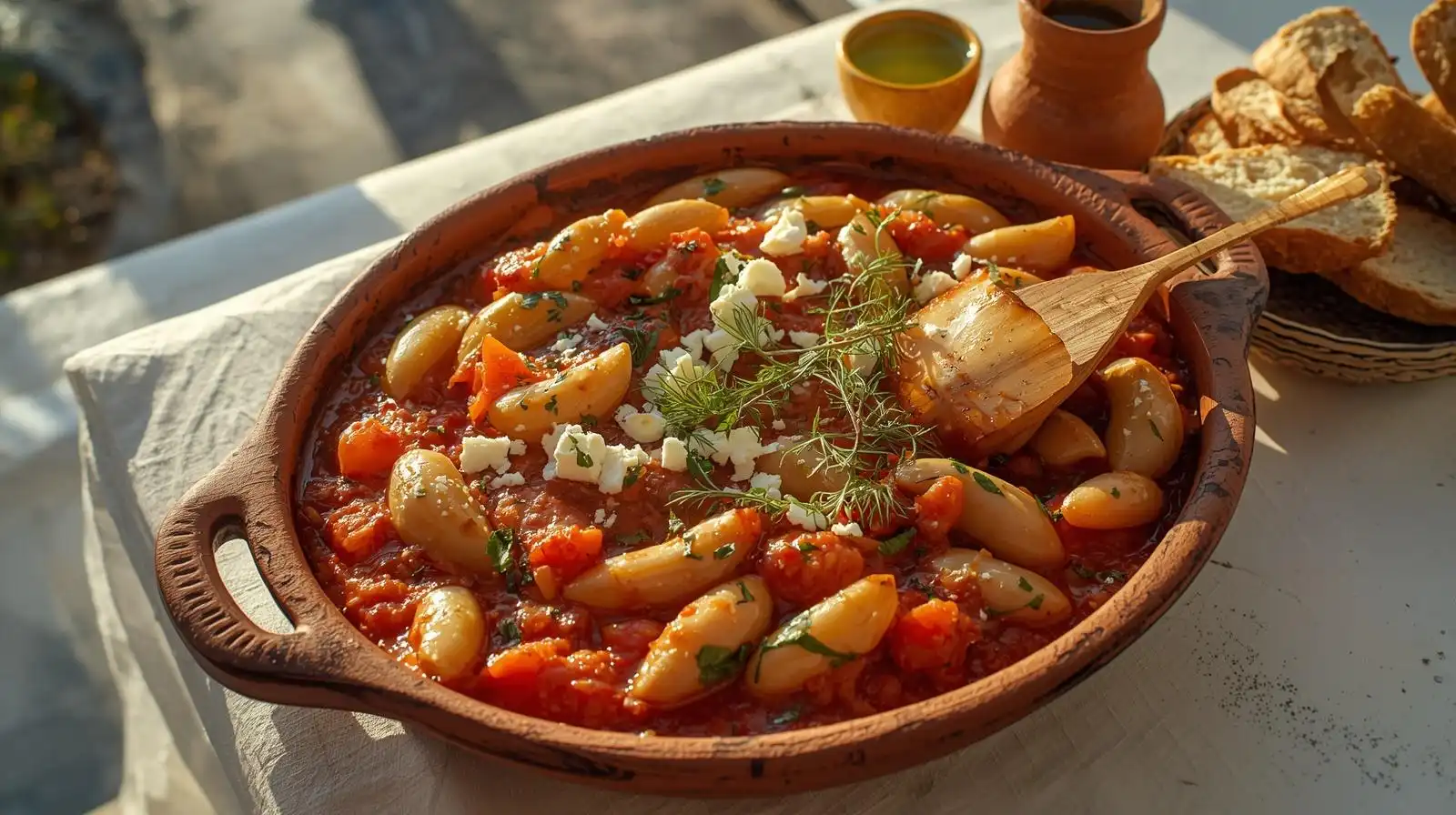
What is gigantes plaki in its most essential definition? The name translates directly from Greek — gigantes meaning giants and plaki meaning flat-baked or oven-baked — describing large white beans slow-cooked in a deeply flavored tomato sauce enriched with quality olive oil, garlic, and fresh herbs until the beans become extraordinarily tender and creamy while absorbing the surrounding sauce’s complex flavors through every hour of gentle oven cooking. Gigantes plaki Greek cuisine positions this dish as one of the most beloved and most representative examples of Greek plant-based cooking — a cuisine that has nourished the Mediterranean world for millennia with exceptional vegetables, legumes, and olive oil.
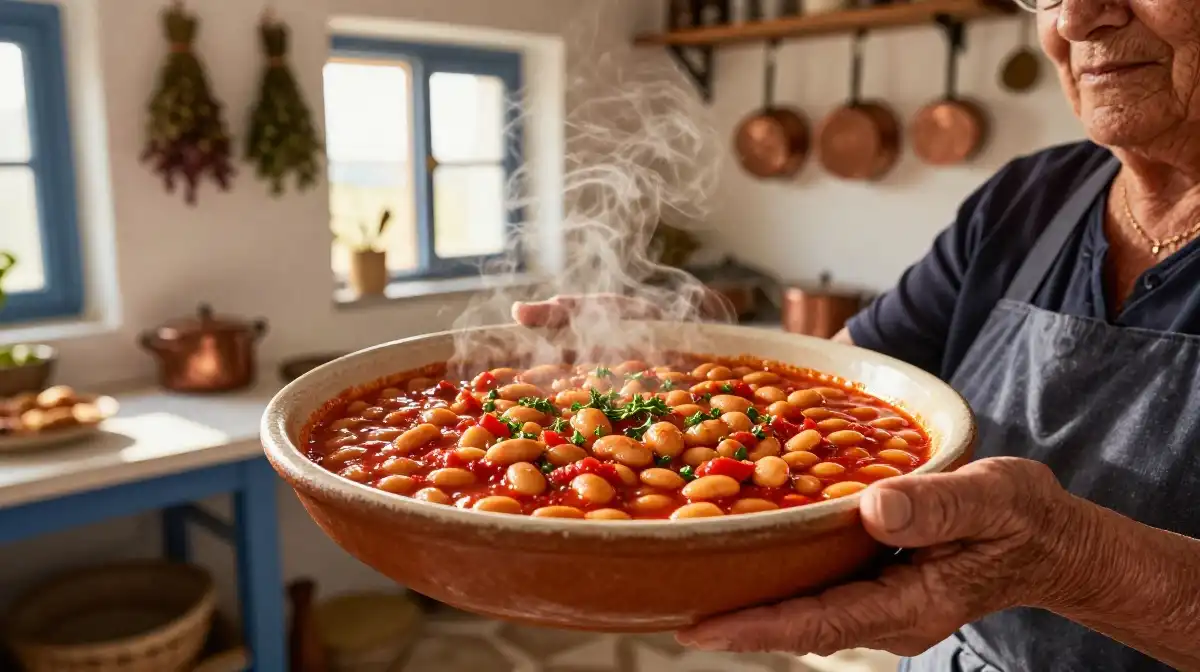
What does gigantes plaki taste like to someone experiencing it for the first time? The flavor is simultaneously simple and complex — a deep sweet tomato richness from long-cooked sauce, an earthy creaminess from the large white beans that have absorbed surrounding flavors throughout their extended baking time, a bright herbal freshness from dill and parsley, and the grassy fruity quality of good Greek olive oil that permeates everything in the most beautiful way imaginable. Gigantes plaki comfort food status comes from the combination of deeply satisfying flavors and the particular warmth that slow-oven-baked legume dishes deliver on a level that faster-cooked preparations simply cannot replicate regardless of their ingredient quality or technique precision.
The Fascinating History and Cultural Significance of Gigantes Plaki in Greece
Traditional gigantes plaki carries centuries of Greek culinary history within its seemingly simple preparation — a dish born from the cucina povera tradition of transforming humble dried legumes and garden vegetables into something genuinely extraordinary through patience, quality olive oil, and the accumulated wisdom of generations of Greek home cooks who understood that great food never requires expensive ingredients. The giant white beans that give the dish its name have been cultivated in the Kastoria and Florina regions of northern Greece for centuries — these specific geographic areas produce the most prized gigantes beans in the country, characterized by their exceptional size, their thin skins, and their remarkable capacity for absorbing surrounding flavors during cooking.
Gigantes plaki traditional Greek dish holds a specific and culturally significant place in the Greek Orthodox fasting calendar — traditionally served during Lent when Orthodox Christians abstain from meat, dairy, and other animal products for extended periods throughout the forty days preceding Easter. This Lenten connection explains why the dish appears most prominently in Greek baked beans recipe traditions during spring and why Greek home cooks have perfected it over countless generations of religious observance that demanded genuinely satisfying and genuinely delicious plant-based cooking. Today gigantes plaki Mediterranean recipe preparations appear year-round in Greek households, restaurants, and tavernas — cherished not for their fasting associations but for their intrinsic deliciousness that stands entirely independent of any religious or dietary context.
Best Beans to Use for Authentic and Delicious Gigantes Plaki
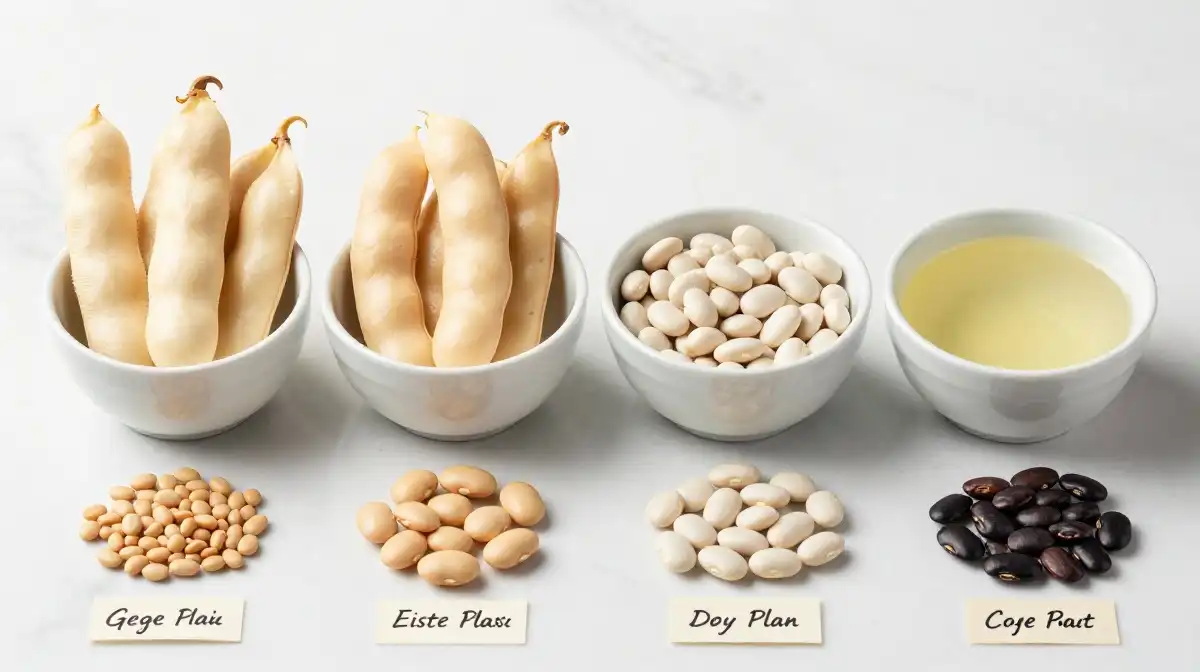
What beans are used in gigantes plaki and how significantly does bean choice affect the finished dish? Authentic Greek giant beans — specifically the large white Phaseolus coccineus variety grown primarily in northern Greece — are the traditional choice that produces the most authentic result with their distinctive large flat shape, their thin skin that becomes wonderfully tender during cooking, and their exceptional capacity for absorbing surrounding sauce flavors while maintaining structural integrity throughout the extended oven braising time. These authentic Greek gigantes beans are available at specialty Greek grocery stores, Mediterranean food markets, and online retailers — Whole Foods’ bulk section sometimes carries them and Amazon stocks several quality Greek import brands.
you may also like this: 14 Mediterranean Pinto Bean Soup: The Hearty Healthy One Pot Recipe That Will Become Your New Obsession
Gigantes beans recipe adaptation for American home cooks who cannot source authentic Greek gigantes uses excellent substitutes that produce genuinely satisfying results. Large butter beans — also called lima beans in their large variety — represent the most widely available and most texturally appropriate substitute in American grocery stores. Large cannellini beans work beautifully in their dried form despite being slightly smaller and rounder than traditional gigantes. Dried beans of any variety suitable for this dish must be soaked overnight — this is non-negotiable since under-soaked beans remain unpleasantly hard even after extended baking and create a texture that no amount of additional cooking time adequately corrects once the surrounding tomato sauce has acidified the beans’ exterior during baking.
| Bean Type | Availability | Texture | Flavor | Authenticity |
|---|---|---|---|---|
| Greek Gigantes | Specialty stores | Best – very creamy | Most authentic | Highest |
| Large Butter Beans | Most grocery stores | Excellent – very creamy | Mild, rich | Very Good |
| Large Cannellini | Most grocery stores | Good – slightly firmer | Mild, earthy | Good |
| Large Lima Beans | Most grocery stores | Good – creamy | Mild, slightly starchy | Good |
| Canned Gigantes | Greek specialty stores | Good – convenient | Good | High |
How to Prepare and Cook Dried Gigantes Beans From Scratch
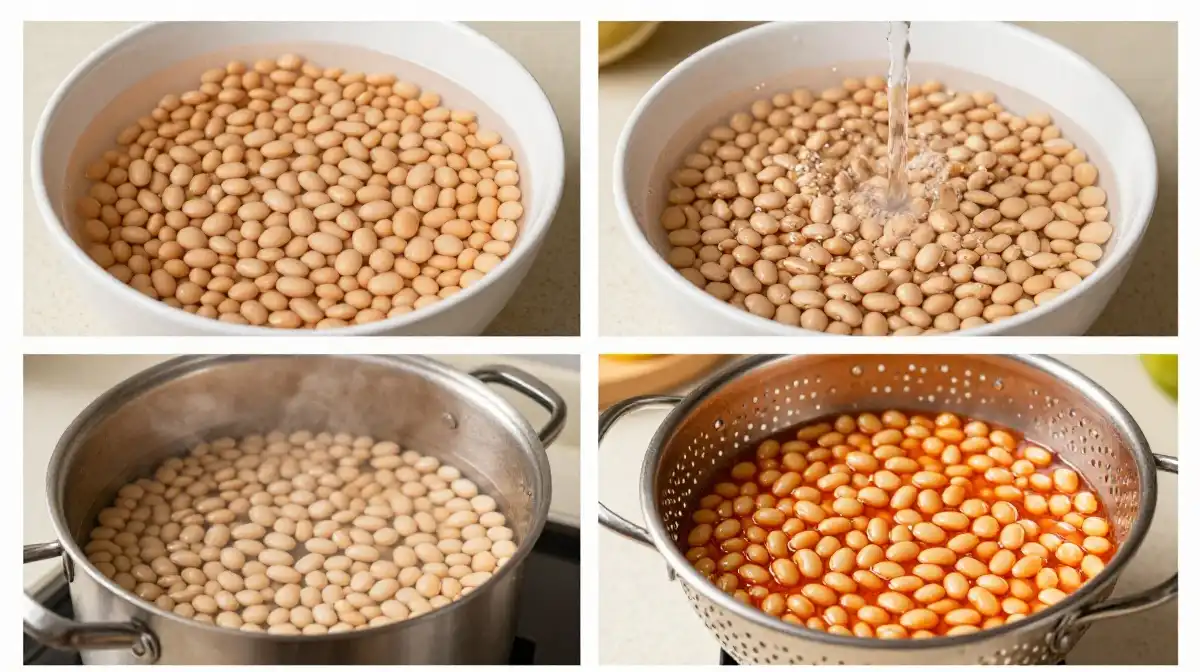
How to cook gigantes beans from scratch begins with proper overnight soaking — place your dried beans in a large bowl and cover with cold water by at least three inches since the beans will absorb a remarkable quantity of water during the eight to twelve hour soaking period and expand to nearly twice their original volume. Add a pinch of baking soda to the soaking water — this alkaline addition softens the bean skins slightly during soaking creating a more tender final result after baking. After soaking drain the beans and rinse thoroughly under cold water before proceeding to the pre-cooking stage that most recipes skip but that produces dramatically superior results in the finished dish.
How to cook gigantes beans from scratch in the pre-cooking stage — boiling the soaked beans in fresh unsalted water for forty to fifty minutes until just barely tender but nowhere near fully cooked — serves two critical functions that significantly improve the finished dish’s quality. First the pre-cook removes the oligosaccharides responsible for digestive discomfort that dried beans produce when insufficiently pre-cooked. Second and more importantly for recipe quality the pre-cook removes much of the beans’ raw starchy flavor and bitter compounds that would otherwise leach into the tomato sauce during baking creating an unpleasantly raw legume character in what should be a deeply sweet and refined sauce. Drain the pre-cooked beans thoroughly before proceeding to the sauce preparation and oven assembly stages of the recipe.
Best Tomato Sauce Base for a Rich and Flavorful Gigantes Plaki
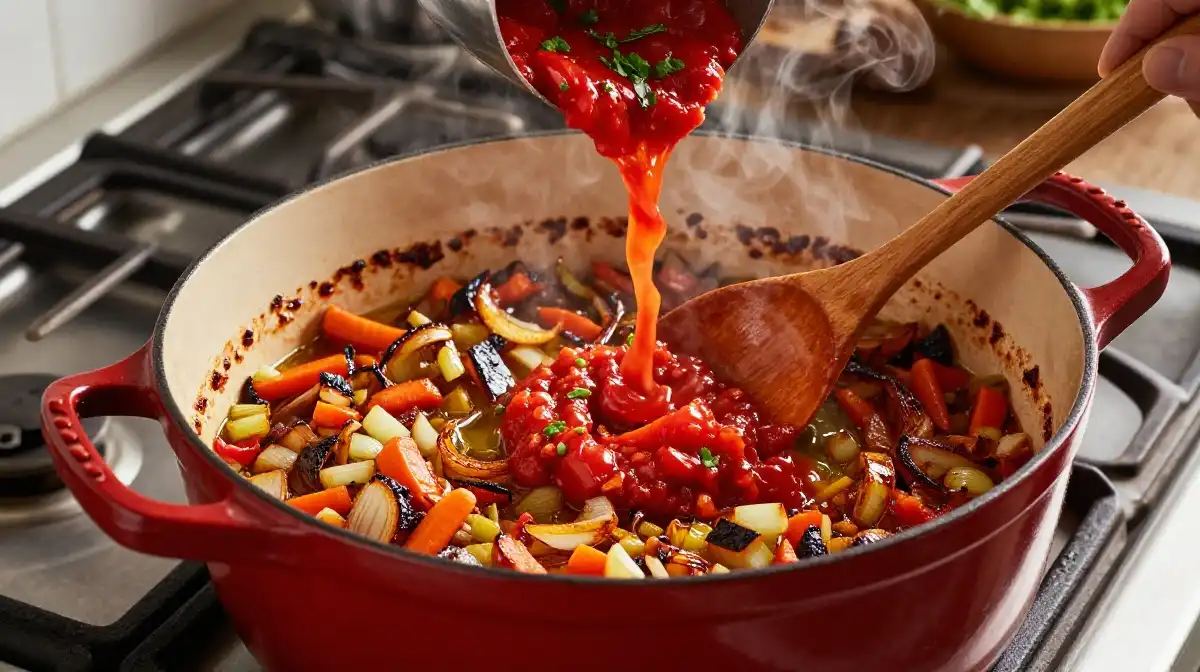
How to make gigantes plaki sauce that achieves the deep sweet tomato richness that characterizes the best versions of this dish requires understanding the significant difference between sauce made with quality ingredients cooked properly and sauce assembled carelessly from inferior components. The tomato base builds through a specific sequence — sauté diced onion in generous olive oil for eight to ten minutes until genuinely soft and beginning to caramelize rather than merely wilted. Add minced garlic for two additional minutes. Add tomato paste and cook for three minutes until it darkens slightly and loses its raw edge — this tomato paste caramelization step contributes concentrated depth that shortcuts skip at considerable flavor cost.
How to make gigantes plaki with fresh tomatoes versus crushed canned tomatoes produces genuinely different seasonal results. Fresh fresh tomatoes — specifically very ripe summer tomatoes at their peak sweetness — create a brighter more vibrant sauce with perceptible tomato acidity that makes the finished dish taste distinctly summery and fresh. Crushed tomatoes from quality canned brands like San Marzano or Mutti produce a deeper more concentrated richness that works better in winter preparations and requires less cooking time than fresh tomatoes need to develop equivalent sweetness and body. The best compromise for year-round cooking uses high-quality crushed tomatoes supplemented with two tablespoons of tomato paste — achieving the concentrated depth of long-cooked fresh tomatoes without the season-dependent quality variation that fresh tomatoes inevitably produce.
Best Herbs and Spices for an Authentic Gigantes Plaki Recipe
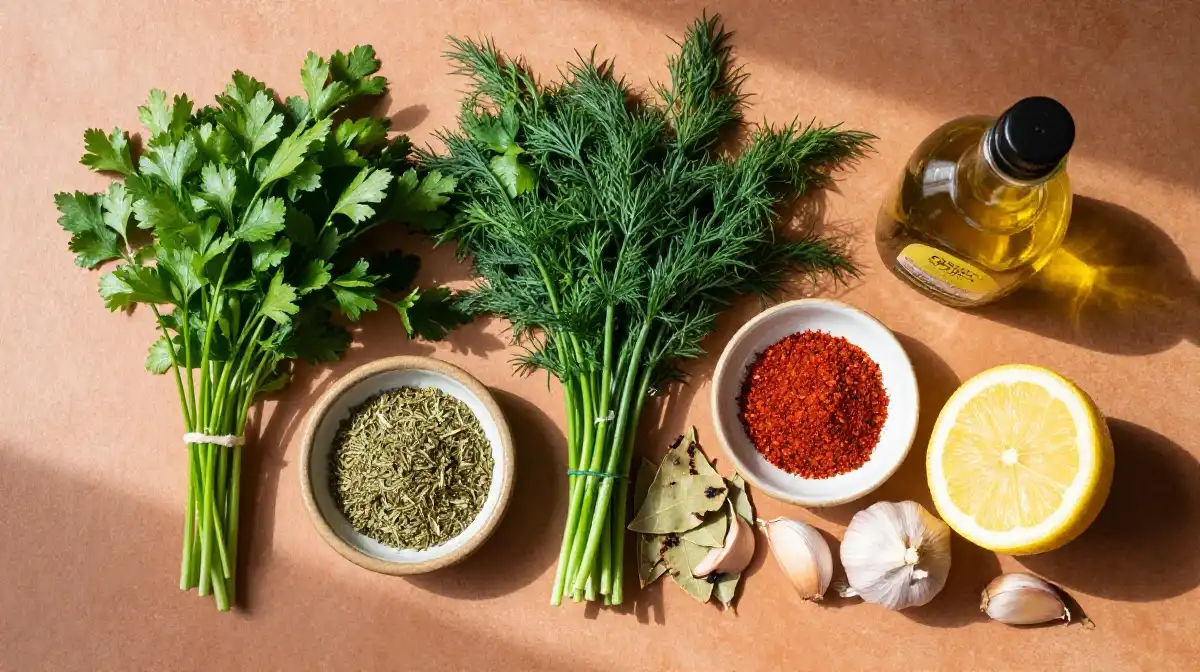
What spices go in gigantes plaki and which herb combinations create the most authentically Greek flavor profile? The herb vocabulary of authentic gigantes plaki recipe is surprisingly restrained compared to more complex spice-forward traditions — Greek cooking at its most authentic trusts high-quality ingredients to speak for themselves rather than burying them beneath complex spice blends that obscure rather than enhance. Fresh parsley is the primary herb — generous quantities added both during cooking and as a final fresh garnish provide bright green herbaceous character that warm-herb alternatives like thyme and rosemary cannot replicate. Fresh dill is the distinctly Greek herb addition that immediately signals authentic provenance — its delicate anise-adjacent flavor is completely characteristic of northern Greek cooking and specifically associated with gigantes plaki in ways that make its omission immediately noticeable to anyone familiar with the authentic dish.
Bay leaf contributes a subtle eucalyptus-like herbal background note that develops during the long oven cooking period without announcing itself as an identifiable flavor — its contribution is most apparent when it’s absent. Oregano — specifically dried Greek oregano which is more intensely flavored than Italian varieties — adds Mediterranean herbal character that fresh oregano achieves less effectively since fresh oregano loses its characteristic intensity during extended oven cooking. Smoked paprika is a modern addition not present in the most traditional preparations but included in many contemporary Greek recipes for the subtle smokiness that contributes depth without overwhelming the dish’s fundamentally fresh and herb-forward character. A small amount of lemon juice added immediately before serving brightens every flavor simultaneously creating the finishing freshness that Mediterranean cooking relies upon so consistently and so effectively.
How to Make Classic Gigantes Plaki Step by Step From Scratch
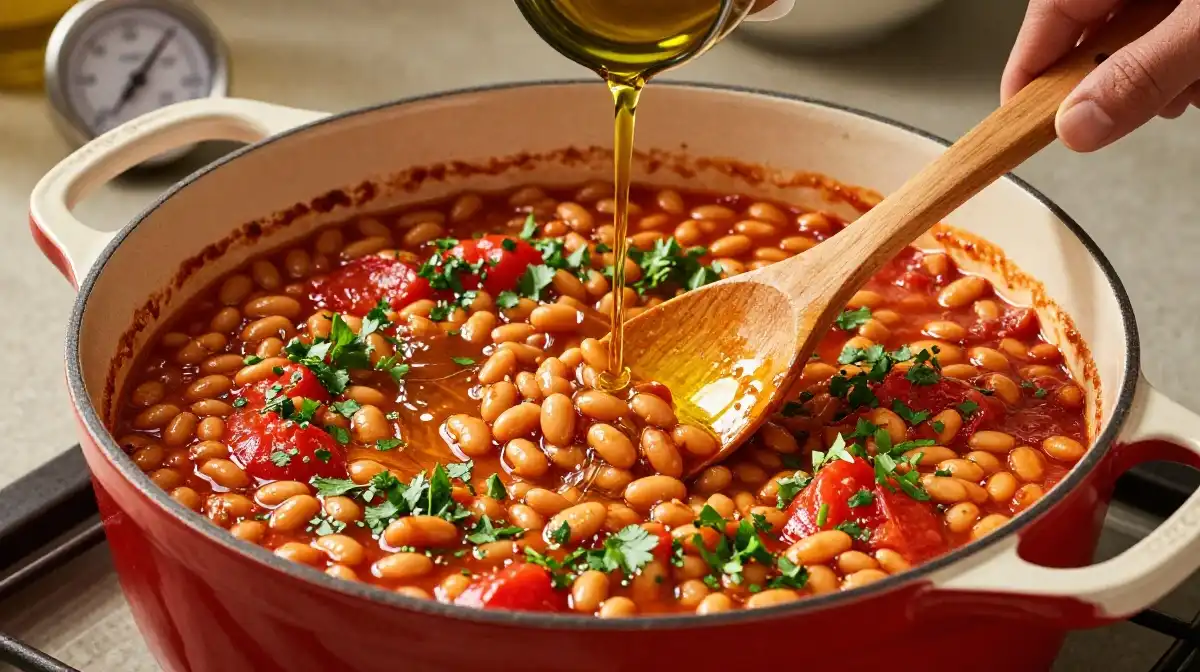
How to make authentic Greek baked beans from complete beginning to beautiful oven-baked finish requires planning for the overnight bean soaking that the preparation demands — start soaking your dried giant white beans or butter beans the evening before you plan to cook. The next day drain and pre-cook the beans in unsalted water for forty-five minutes until just barely tender. While beans pre-cook build the tomato sauce in a large Dutch oven or oven-safe pot — sauté diced onion, celery, and carrot in six tablespoons of quality olive oil for ten minutes. Add garlic, tomato paste, crushed tomatoes, vegetable broth, bay leaves, oregano, smoked paprika, salt and pepper. Simmer for fifteen minutes until the sauce develops richness and body.
How long to bake gigantes plaki for the most tender creamy result that characterizes the authentic taverna version? Transfer the drained pre-cooked beans into the simmering tomato sauce in the Dutch oven, stir gently to combine, add fresh parsley and fresh dill, drizzle generously with additional olive oil across the surface, and transfer uncovered to a preheated 350°F oven. Bake uncovered for sixty to seventy-five minutes — the uncovered baking is essential for developing the characteristic slightly caramelized top layer of beans and concentrated sauce surface that distinguishes properly made gigantes plaki from versions that steam under a covered lid throughout their baking time. The beans should be completely tender, the sauce should be thick and deeply colored, and the surface beans should show slight golden caramelization around their edges indicating proper heat exposure throughout the baking period.
How to Make Gigantes Plaki With Feta Cheese for Extra Richness
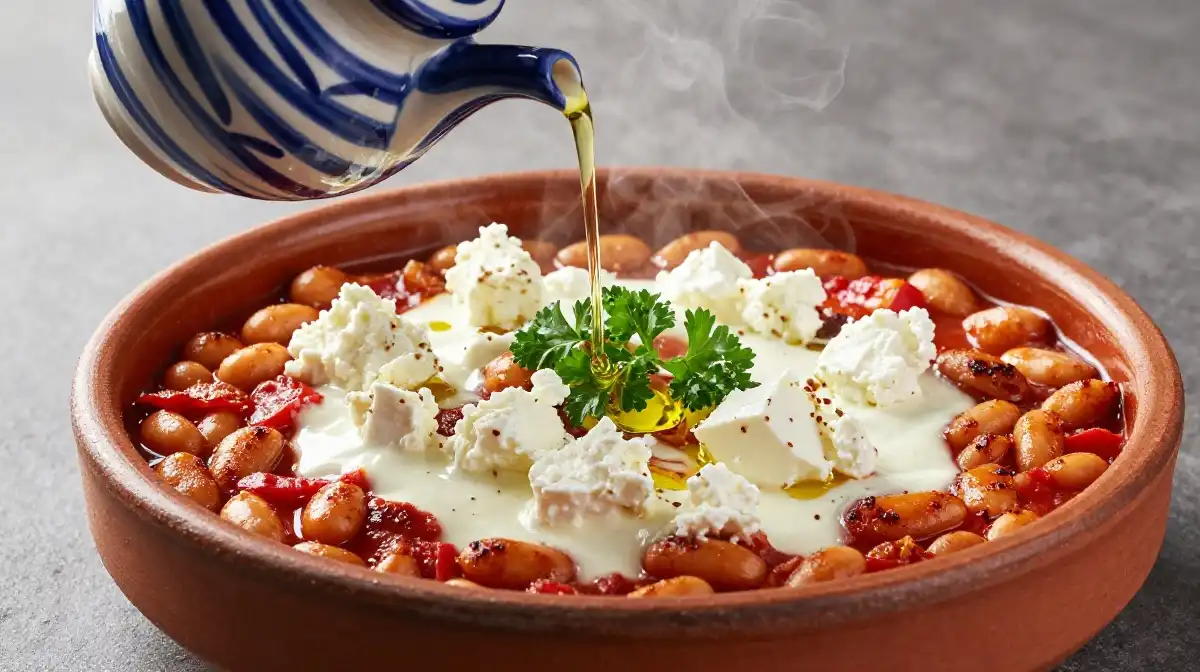
How to make gigantes plaki with feta transforms the already excellent classic version into something more luxurious and more immediately satisfying — the salty briny creaminess of authentic Greek feta cheese crumbled across the hot beans creates a remarkable flavor interaction where the cheese’s sharp dairy tang cuts through the tomato sauce’s sweetness while its creamy texture dissolves partially into the hot beans creating pockets of rich dairy flavor distributed throughout the serving. Gigantes plaki with feta should use block feta packed in brine rather than pre-crumbled alternatives — brine-packed feta carries far more flavor, more appropriate moisture content, and crumbles into more attractive irregular pieces that distribute more naturally and more aesthetically through the finished dish.
Gigantes plaki with feta technique requires strategic timing for maximum impact — add the feta in two stages for the best result. Crumble approximately half the feta across the surface of the beans during the final fifteen minutes of oven baking, allowing it to warm through and begin melting slightly into the sauce while still maintaining crumble integrity and its characteristic white color. Add the remaining half immediately before serving as a fresh cold contrast against the hot beans — the temperature contrast between cold crumbled feta and steaming hot beans creates a more complex and more interesting eating experience than uniform temperature throughout the dish achieves when feta is added exclusively during cooking. A final drizzle of the best available Greek extra-virgin olive oil across the feta and beans immediately before serving completes the dish with a fruity grassy richness that makes every bite genuinely extraordinary.
How to Make Vegan Gigantes Plaki With Olive Oil and Fresh Herbs
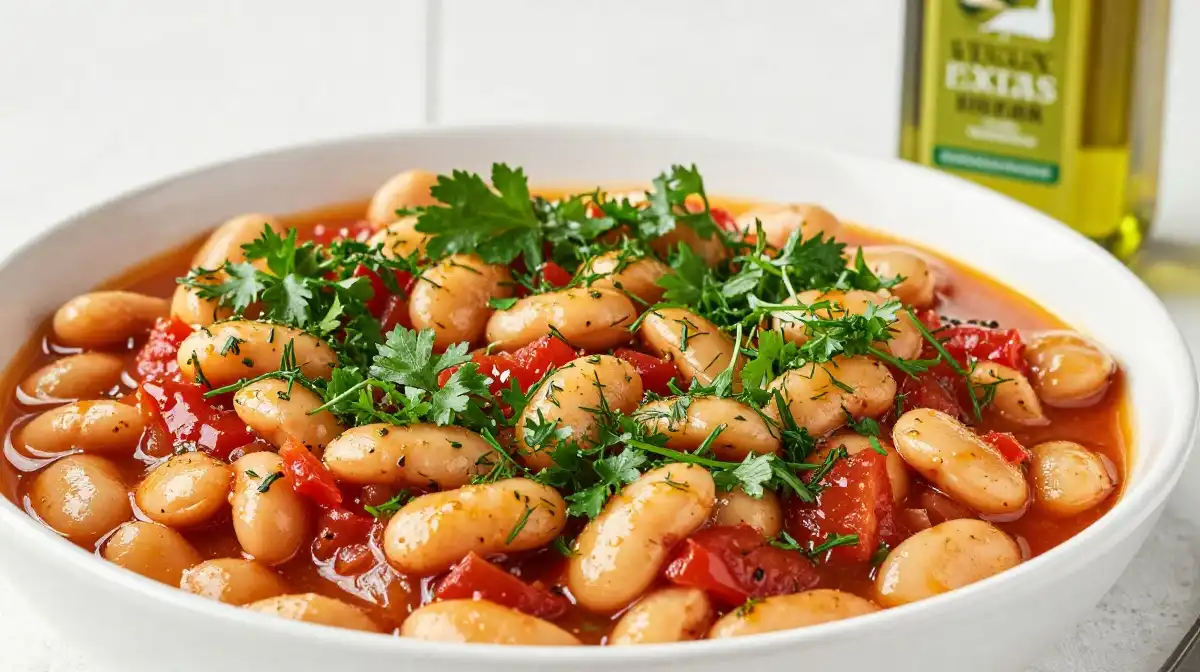
How to make gigantes plaki vegan is a question with a genuinely satisfying answer — the most traditional and most authentic version of gigantes plaki vegetarian preparation is already entirely vegan in its classic form. The dish’s foundational recipe contains no animal products whatsoever — giant white beans, tomatoes, olive oil, garlic, onion, and fresh herbs constitute the complete ingredient list in the most traditional preparations. The most important vegan preparation consideration is using vegetable broth rather than chicken broth as the liquid addition to the tomato sauce — a substitution that has no detectable impact on the finished dish’s flavor when quality vegetable broth is used since the tomato sauce’s dominant character overwhelms the subtle differences between broth types during the extended oven baking process.
Gigantes plaki vegan version achieves its richness and depth entirely through the generous quantity of quality olive oil that authentic Greek preparation uses far more liberally than most American recipes suggest as appropriate. Traditional Greek tavernas use at minimum half cup of extra-virgin olive oil per batch — this quantity seems excessive by American cooking standards but it’s precisely this olive oil generosity that creates the characteristic richness, the beautiful surface sheen, and the depth of flavor that makes authentic gigantes plaki with olive oil taste so profoundly satisfying without any animal product contribution whatsoever. Use the best Greek extra-virgin olive oil you can source — the olive oil’s quality contributes more directly to this dish’s final character than it does in applications where it’s used for high-heat cooking that destroys delicate flavor compounds.
How to Make Gigantes Plaki in Slow Cooker and Dutch Oven
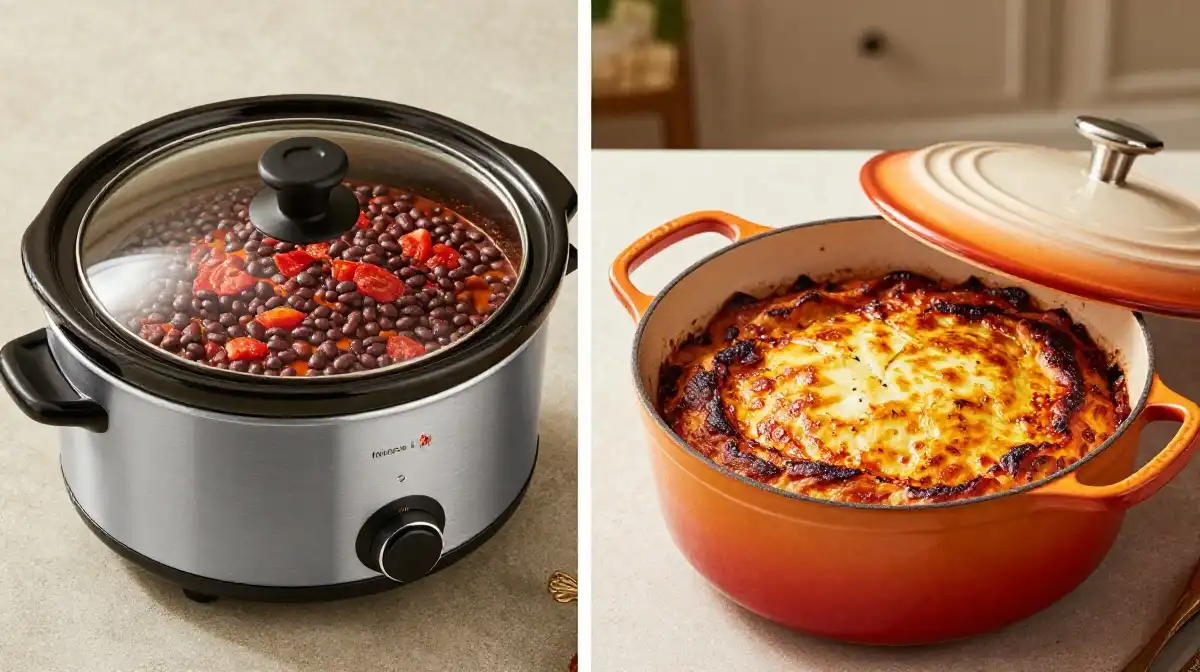
How to make gigantes plaki in slow cooker produces the most tender and most deeply flavored beans of any cooking method because the extended low-temperature environment — eight to ten hours on low setting — allows the beans to absorb surrounding tomato sauce flavors more completely than faster cooking methods achieve. Build the complete tomato sauce in a skillet on the stovetop first — the sauce cannot develop its characteristic depth from raw ingredients in a slow cooker’s gentle heat environment. Transfer the completed tomato sauce and drained pre-cooked beans to the slow cooker, add additional olive oil, fresh herbs, and seasonings, and cook on low for eight hours or high for five hours until beans are completely tender throughout.
Gigantes plaki slow cooker preparation requires one significant quality sacrifice that should be acknowledged honestly — the characteristic slightly caramelized top layer of beans and concentrated surface sauce that oven baking creates cannot develop in a slow cooker’s humid enclosed environment. Transfer the slow cooker contents to an oven-safe baking dish and place under the broiler for five to eight minutes immediately before serving to recreate the caramelized surface that oven baking achieves naturally during its longer cooking period. Dutch oven preparation on the stovetop combined with oven finishing — beginning the entire preparation on the stovetop in a heavy enameled Dutch oven before transferring to the oven for the final sixty minutes — represents the most versatile and most consistently excellent cooking method available that leverages both cooking environments optimally for maximum flavor development and textural excellence throughout the finished dish.
What to Serve With Gigantes Plaki for a Complete Greek Meal
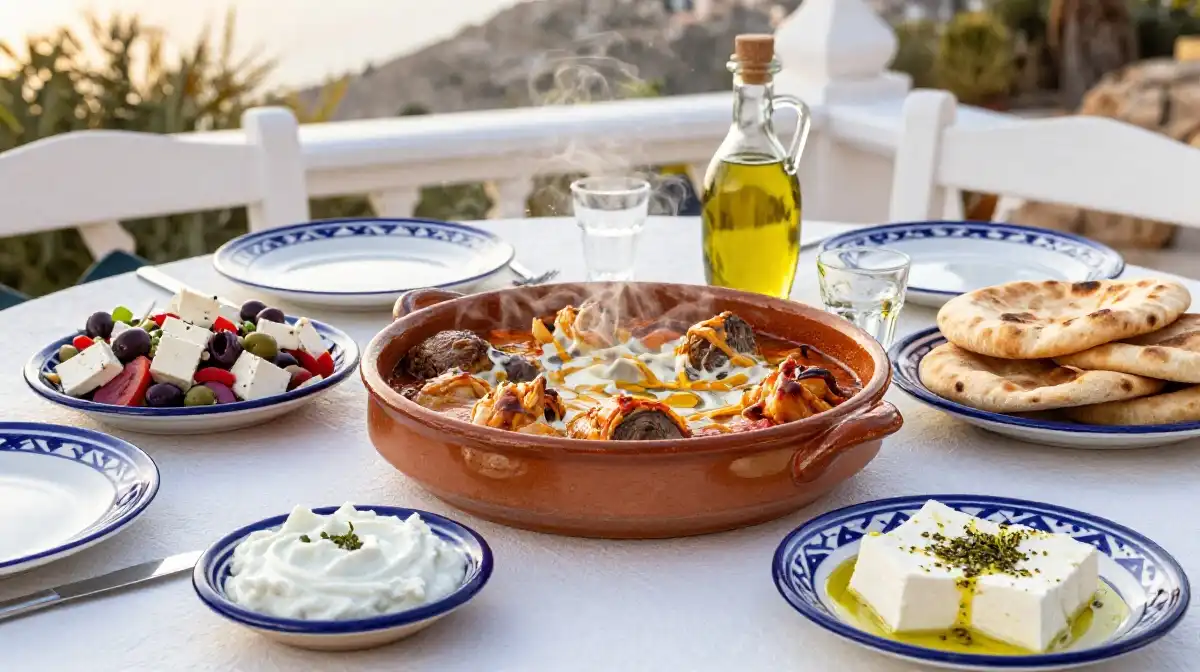
What to serve with gigantes plaki for a complete and authentic Greek dining experience requires understanding how this dish functions within the broader context of Greek meal structure — specifically the meze tradition of multiple small shared dishes served simultaneously rather than the sequential courses that Western dining typically employs. Gigantes plaki functions most authentically as a meze component — one among several dishes including feta cheese with olive oil and oregano, Greek village salad with cucumber and tomato, spanakopita, tzatziki, and warm pita or crusty bread for serving that collectively create a complete and deeply satisfying Greek meal without any single dish bearing the entire burden of the eating experience.
Crusty bread is absolutely non-negotiable for serving alongside gigantes plaki — a thick piece of good country bread for soaking up the extraordinary tomato sauce that remains in the baking dish is one of the most fundamentally pleasurable eating experiences that Greek cuisine offers. Warm pita serves the same mopping function with additional authenticity for the Middle Eastern-influenced region of northern Greece where the dish originates. A simple Greek salad of tomatoes, cucumber, kalamata olives, red onion, and feta dressed with olive oil and red wine vinegar provides bright acidic freshness that perfectly complements the beans’ richness. A glass of Greek wine — Assyrtiko from Santorini for white wine drinkers or Xinomavro from Naoussa for red wine preferences — elevates the entire meal to something genuinely celebratory and complete.
How to Make Gigantes Plaki for Meal Prep and Busy Weeknights
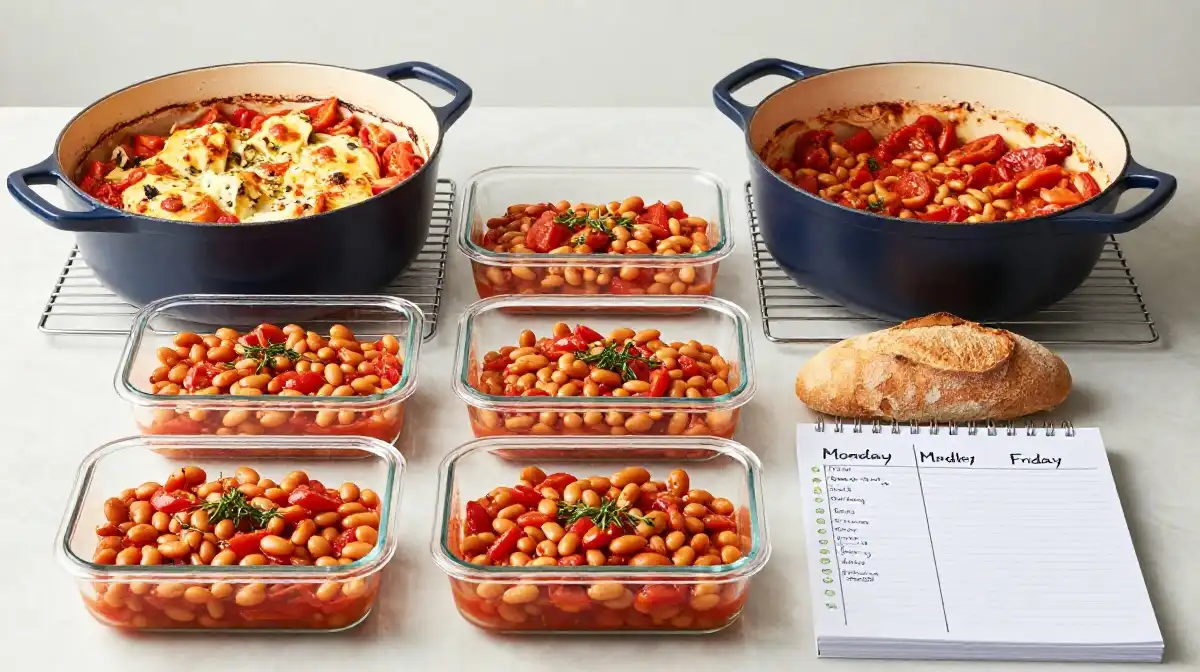
How to make gigantes plaki ahead of time for maximum weeknight convenience requires acknowledging this dish’s one great advantage as a meal prep component — it improves dramatically with time. Gigantes plaki meal prep prepared on Sunday tastes noticeably better on Tuesday than it does immediately after cooking as the beans continue absorbing the tomato sauce flavors during refrigerator storage, developing a more integrated and more deeply complex character that freshly made versions haven’t had adequate time to achieve. This quality improvement over time means that easy gigantes plaki recipe meal preppers consistently report that their best batches were the ones eaten two days after cooking rather than immediately — a genuinely happy meal prep characteristic that few other dishes share.
How to make gigantes plaki for a crowd scales beautifully — simply double or triple all ingredient quantities and use a proportionally larger baking vessel, noting that larger volumes require slightly longer baking times to heat through completely and develop the characteristic caramelized top layer. Gigantes plaki meal prep for a week of lunches provides approximately 280 to 320 calories per generous serving alongside 14 grams of plant-based protein and 12 grams of dietary fiber — making it one of the most nutritionally complete and most economically efficient meal prep options available to American home cooks who want genuinely delicious plant-forward weekday lunches without daily cooking effort throughout the working week.
How to Store and Reheat Gigantes Plaki Without Losing Flavor
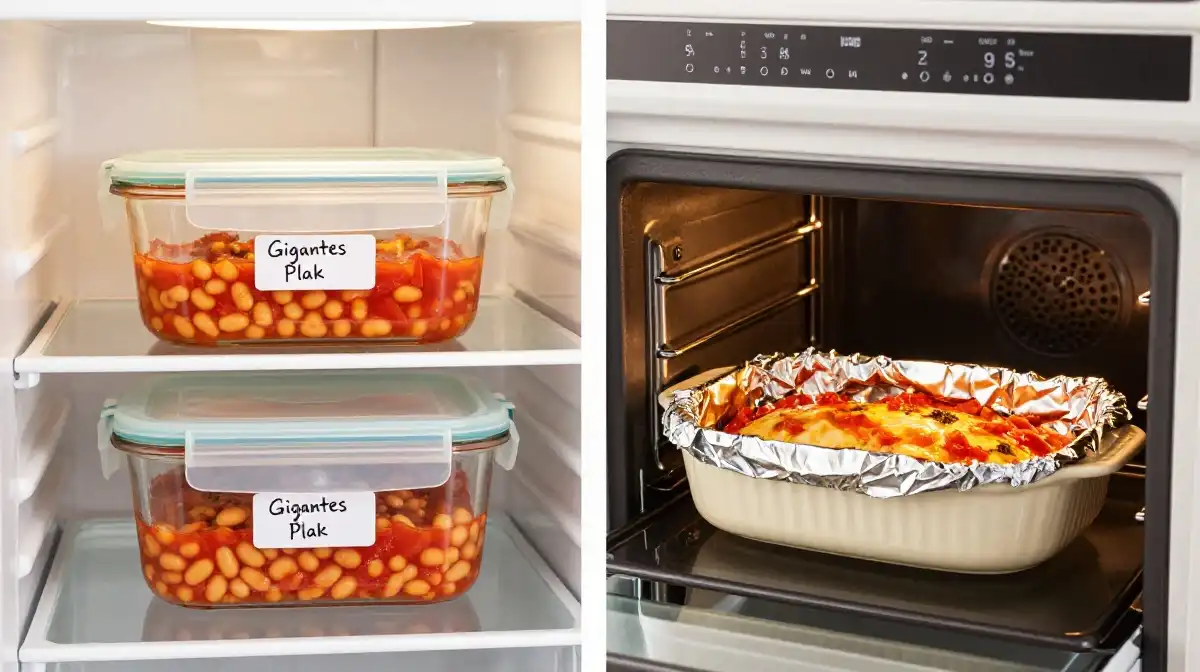
How to store gigantes plaki leftovers correctly ensures the quality improvement during refrigerator storage that makes this dish so exceptional as a meal prep component actually develops as intended rather than being undermined by improper storage practices. Allow the baked beans to cool completely at room temperature before transferring to glass airtight containers — hot beans transferred directly to sealed containers create condensation that dilutes the sauce and creates a humid environment that can accelerate spoilage during the first twenty-four hours of refrigerator storage. Glass containers outperform plastic for this application because they don’t absorb the tomato, garlic, and herb aromas that would flavor-contaminate subsequently stored foods.
How to reheat gigantes plaki correctly preserves the dish’s developed flavors and the beans’ carefully achieved tender texture through gentle reheating that avoids the aggressive boiling that would cause beans to break down completely and sauce to separate unpleasantly. Add two to three tablespoons of water or broth to the stored beans before reheating to compensate for the moisture the sauce absorbs during refrigerator storage. Reheat covered in a 325°F oven for twenty to twenty-five minutes — this oven reheating method produces results virtually indistinguishable from the freshly baked dish. How to reheat gigantes plaki in the microwave works adequately when oven reheating isn’t practical — use sixty percent power for two to three minutes stirring once at the halfway point to ensure even heat distribution without creating hot spots that overcook the beans’ exterior while leaving the center still cold throughout.
Nutritional Benefits of Gigantes Plaki as a Healthy Mediterranean Meal
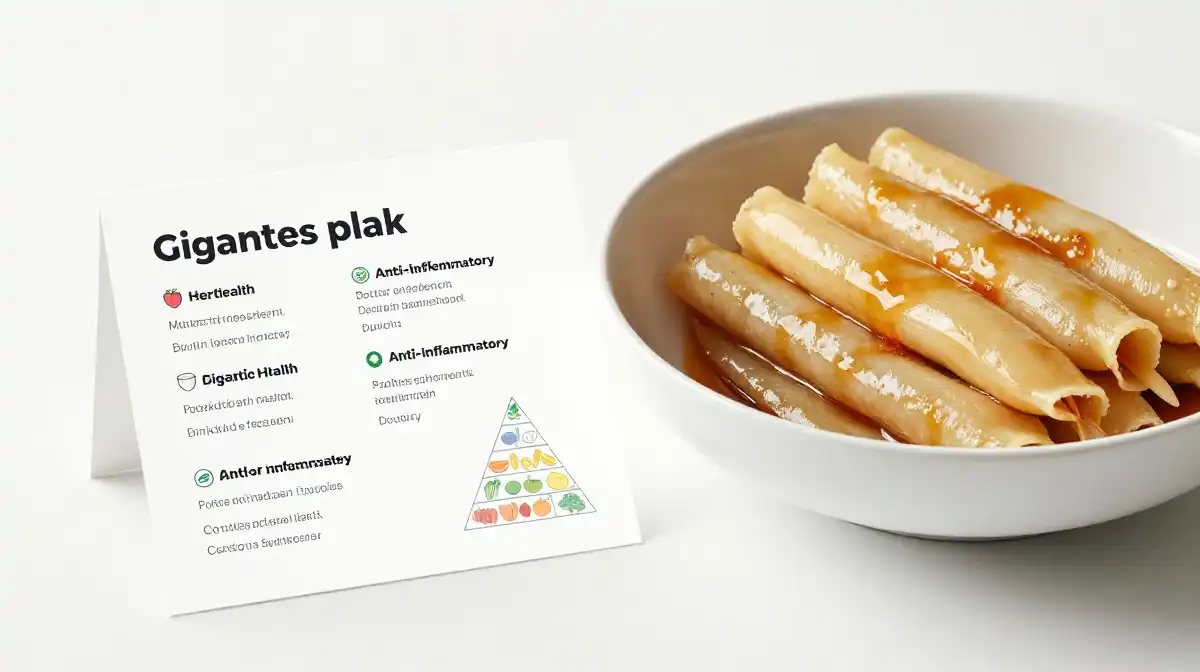
Are gigantes plaki healthy in a genuinely meaningful nutritional sense rather than in the vague aspirational sense that food marketing deploys so liberally? The answer is an emphatic yes supported by substantial scientific evidence. One generous serving of gigantes plaki Mediterranean recipe provides approximately 18 grams of plant-based protein, 16 grams of dietary fiber, significant iron, folate, magnesium, and potassium, substantial quantities of lycopene from the tomato sauce, powerful anti-inflammatory polyphenols from the olive oil, and a calorie count of approximately 290 to 340 per serving that makes it genuinely appropriate for virtually every dietary approach from weight management to athletic fueling to cardiovascular disease prevention.
The Mediterranean diet framework within which Greek baked beans recipe preparations exist has been validated by decades of nutritional science as among the most health-protective dietary patterns available to human beings — the PREDIMED study published in the New England Journal of Medicine demonstrated that Mediterranean diet adherence reduced major cardiovascular events by approximately 30% compared to low-fat diet control groups. Gigantes plaki epitomizes Mediterranean diet principles — legumes as primary protein source, generous olive oil, abundant vegetables, fresh herbs, and the absence of processed ingredients in any form. The combination of soluble fiber from the beans with the anti-inflammatory compounds in olive oil and the lycopene in tomatoes creates a nutritional synergy that makes this dish genuinely exceptional for long-term health support throughout a lifetime of regular Mediterranean-style eating.
| Nutrient | Per Serving | % Daily Value | Health Benefit |
|---|---|---|---|
| Protein | 18g | 36% | Muscle support, satiety |
| Dietary Fiber | 16g | 57% | Digestive health, cholesterol |
| Iron | 4mg | 22% | Energy, oxygen transport |
| Folate | 180mcg | 45% | Cell health, pregnancy |
| Potassium | 680mg | 14% | Heart health, blood pressure |
| Magnesium | 85mg | 20% | Bone health, energy metabolism |
| Lycopene | High | — | Antioxidant, anti-inflammatory |
Common Gigantes Plaki Mistakes to Avoid for Perfect Results Every Time
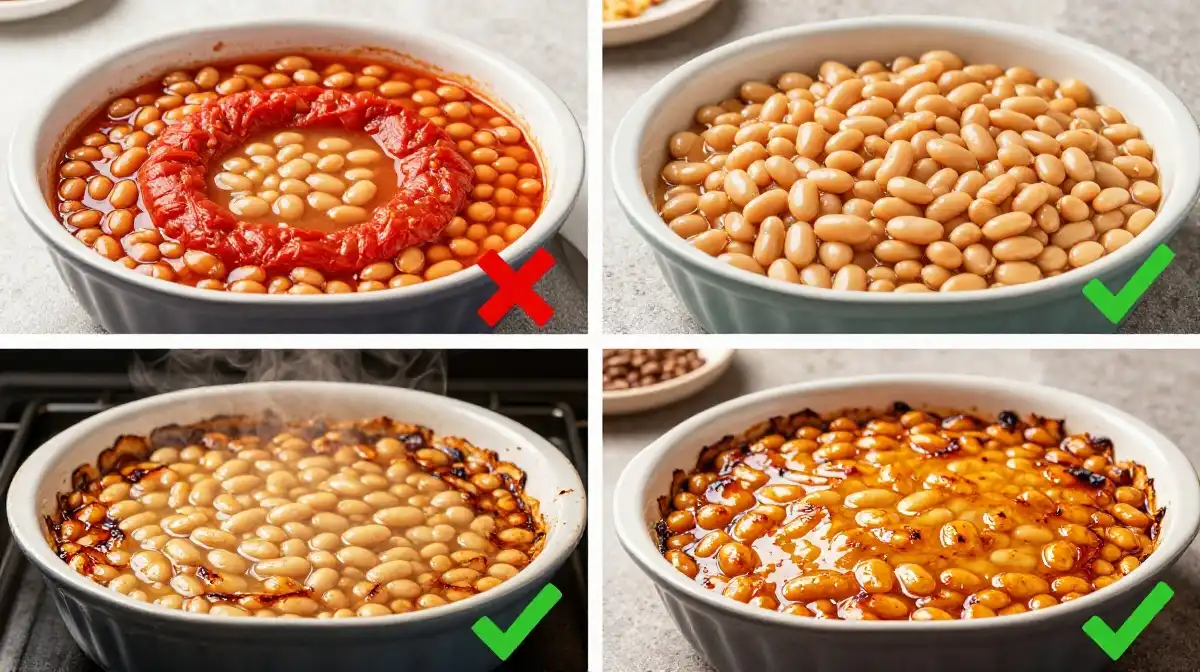
How to make gigantes plaki without making the mistakes that turn a potentially magnificent dish into a mediocre one begins with the single most common and most impactful error — insufficient bean pre-cooking before oven baking. Tomato sauce’s acidity significantly slows bean softening during cooking — once the beans enter the acidic tomato environment their exterior hardens and further softening becomes extremely difficult regardless of how long the baking continues. Beans that enter the oven not fully pre-cooked emerge from even extended baking with unpleasantly firm centers surrounded by perfectly cooked exteriors — an irreversible textural failure that no amount of additional cooking time adequately corrects after the acidic sauce has set the beans’ outer layer.
The second most significant mistake is insufficient olive oil — using quantities appropriate for other recipes rather than the genuinely generous amounts that authentic gigantes plaki with olive oil demands for its characteristic richness and flavor depth. Half cup of good olive oil per batch of four to six servings seems extravagant by American cooking standards but is precisely what authentic Greek preparation requires and what creates the dish’s distinctive richness. The third critical mistake is baking covered rather than uncovered — a covered baking vessel creates steam that produces a completely different and significantly less delicious result compared to uncovered oven baking that concentrates flavors through gentle evaporation and creates the characteristic caramelized top layer that is one of gigantes plaki most beloved textural and flavor characteristics.