14 Red Pepper Pesto: The Bold Vibrant Sauce That Transforms Every Dish
Some sauces play a supporting role. Red pepper pesto refuses to do that. It storms onto your plate with smoky sweetness, bold garlic punch, and a color so vivid it looks like liquid sunset. Traditional green pesto is wonderful — nobody’s arguing that — but this roasted red version brings a completely different energy to your kitchen. It’s versatile, deeply flavorful, and genuinely easy to make. Once you try it, that jar of store-bought pesto starts collecting dust permanently.
What Is Red Pepper Pesto and Why It Beats Regular Pesto Every Time
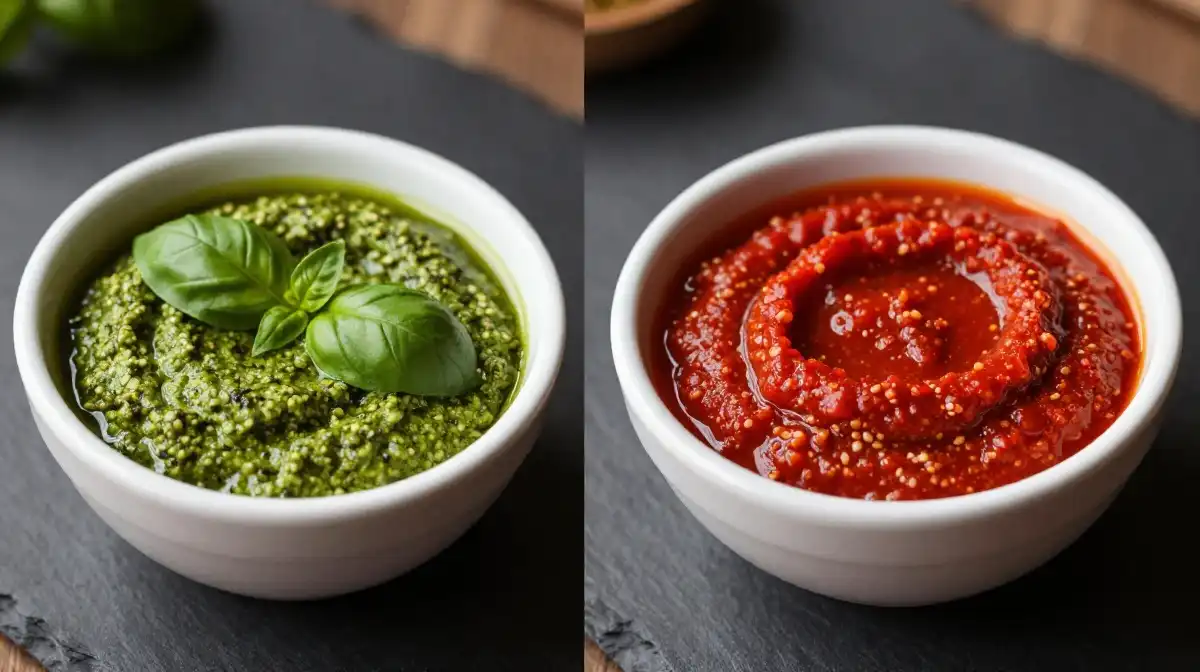
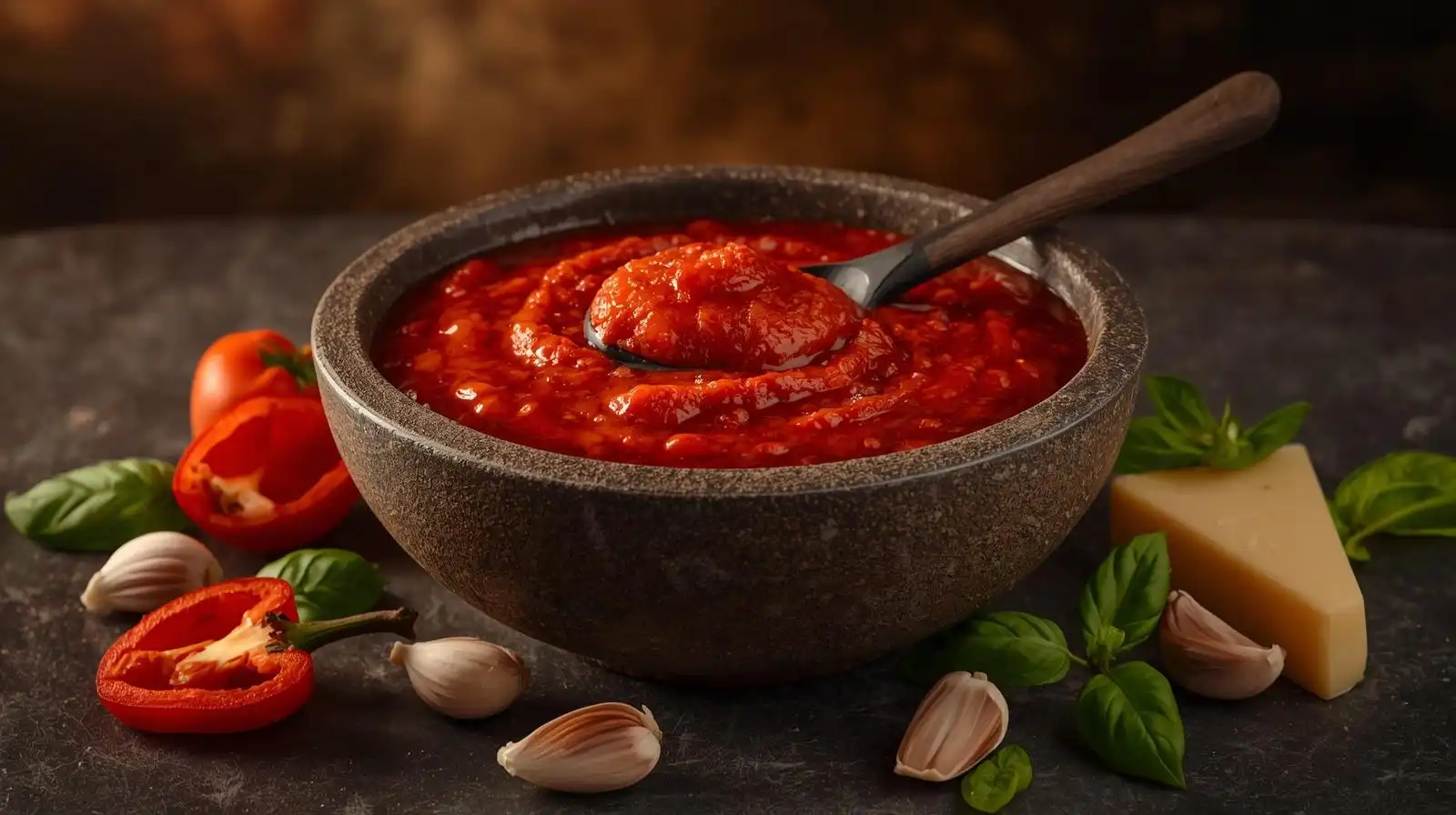
Red pepper pesto is a rich, blended sauce built around roasted red peppers as its starring ingredient. Unlike traditional Genovese pesto which relies on fresh basil as its base, this version uses the deep smoky sweetness of charred peppers as its foundation. It originated as a Sicilian-influenced condiment but has evolved into a globally beloved sauce with countless regional variations across American home kitchens.
What makes roasted red pepper pesto genuinely superior for many cooks is its incredible flavor complexity. Roasting transforms raw peppers entirely — natural sugars caramelize, bitterness disappears, and a subtle smokiness emerges that green pesto simply cannot replicate. Red pepper pesto healthy profiles also impress nutritionally. Red bell peppers contain three times more Vitamin C than oranges according to Healthline. That nutritional punch paired with olive oil’s heart-healthy fats makes this sauce genuinely good for you.
Best Peppers to Use for the Most Flavorful Red Pepper Pesto
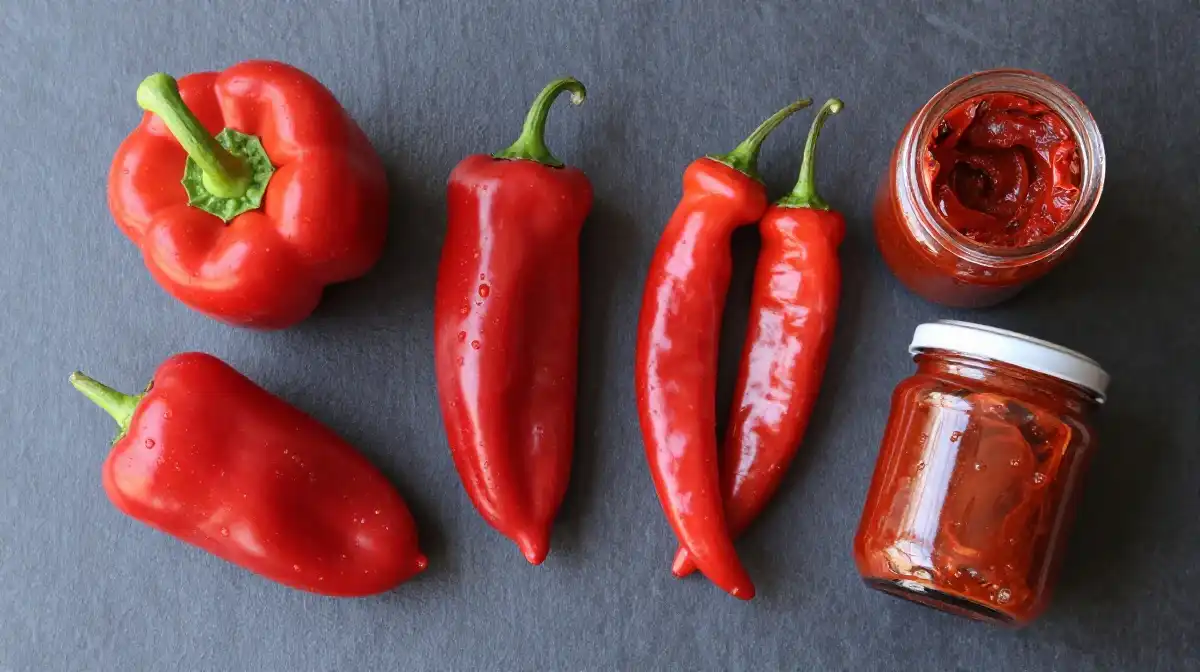
Pepper selection shapes everything about your final sauce. Red bell peppers are the gold standard for homemade red pepper pesto — they’re sweet, fleshy, and roast beautifully without excessive bitterness. Their thick walls produce generous amounts of soft roasted flesh that blends into a silky smooth sauce with minimal effort.
However don’t overlook other varieties entirely. Piquillo peppers — small, pointed Spanish peppers sold jarred — deliver an intensely concentrated sweetness that elevates red pepper pesto sauce dramatically. Fresno peppers add gentle heat alongside their fruity sweetness. Roasted Anaheim peppers contribute a mild, earthy depth. Jarred red peppers work perfectly when fresh peppers aren’t in season — just drain them thoroughly and pat completely dry before blending to avoid a watery sauce that coats nothing properly.
| Pepper Type | Flavor Profile | Best Use in Pesto |
|---|---|---|
| Red Bell Pepper | Sweet, mild, fruity | Classic base pepper |
| Piquillo Pepper | Intense, concentrated sweet | Premium flavor boost |
| Fresno Pepper | Fruity with mild heat | Spicy pesto variation |
| Jarred Roasted Peppers | Smoky, soft, convenient | Quick weeknight version |
| Anaheim Pepper | Mild, earthy, subtle | Layered depth addition |
Best Nuts and Seeds for a Perfect Red Pepper Pesto Recipe
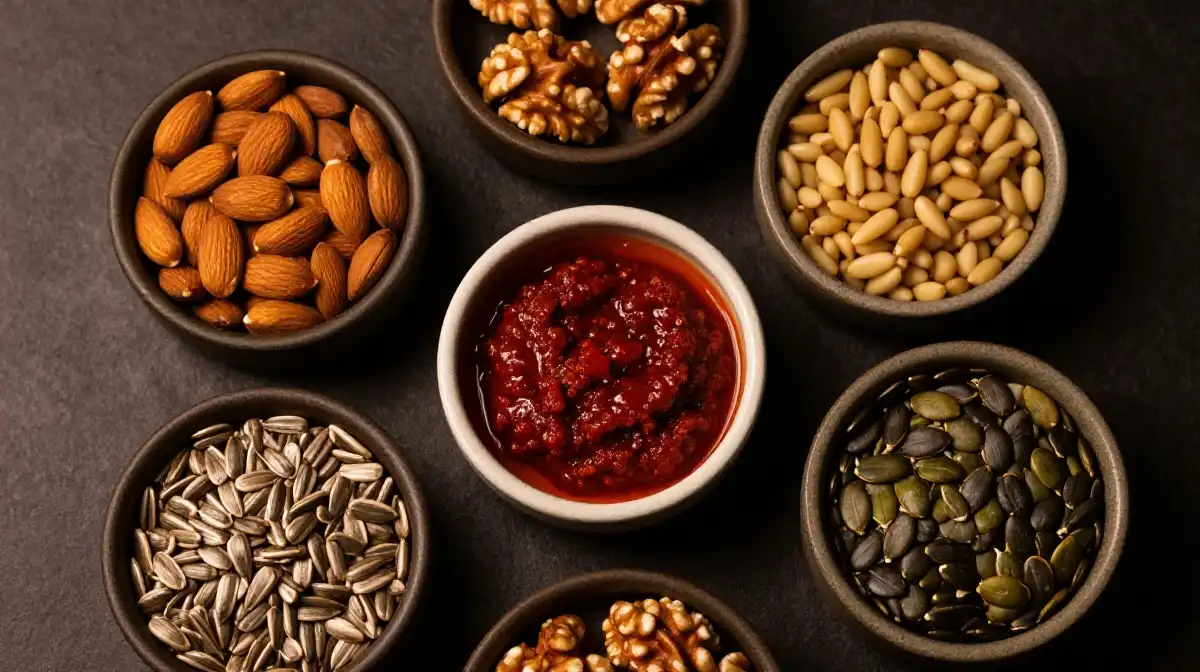
Nuts give pesto its body, richness, and that characteristic creamy texture that makes it cling to pasta so beautifully. Red pepper pesto with almonds is arguably the most popular American variation — blanched almonds blend into a smooth, slightly sweet base that complements roasted pepper’s natural sweetness without overpowering it.
you may also like this: 16 Muhammara: The Bold Smoky Dip You Will Make Again and Again
Red pepper pesto with walnuts offers a more robust, slightly bitter counterpoint that balances the pepper’s sweetness brilliantly. Red pepper pesto with pine nuts stays closest to traditional pesto tradition — buttery, delicate, and genuinely luxurious though noticeably more expensive. For a budget-conscious red pepper pesto recipe, sunflower seeds or pumpkin seeds work surprisingly well and add a pleasant nuttiness without the premium price tag. Always toast your nuts lightly before blending — just three to four minutes in a dry pan transforms their flavor entirely.
How to Roast Red Peppers Perfectly for the Best Pesto Flavor
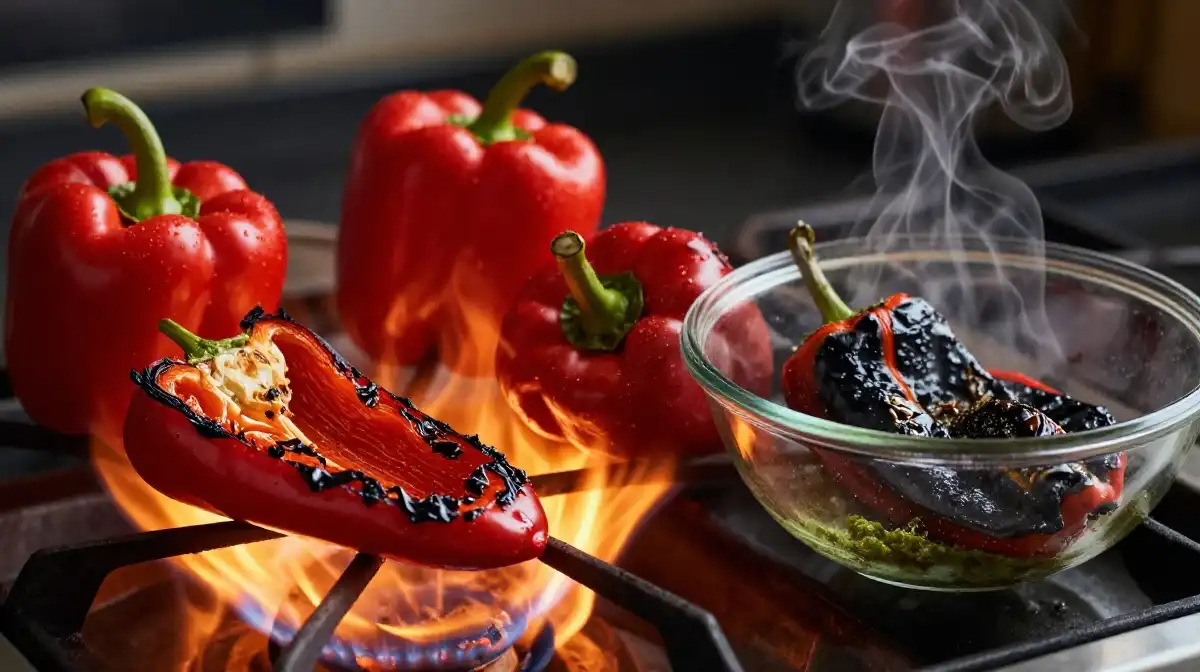
How to make roasted red pepper pesto that genuinely impresses starts with mastering the roasting process itself. Place whole red bell peppers directly over a gas flame — turning every two minutes with tongs — until the skin blackens completely on all sides. This direct flame method creates the deepest possible smokiness and the most intensely flavored pepper flesh underneath.
No gas stove? No problem. Halve your peppers, remove seeds, and place cut-side down on a foil-lined baking sheet. Roast at 450°F for 25–30 minutes until skin blisters and blackens thoroughly. Transfer immediately to a sealed bowl or zip-lock bag and let steam for 15 minutes — this loosens the skin dramatically. Peel under cool running water. Never rinse the flesh itself though — you’ll wash away precious roasted flavor that took half an hour to build. Pat completely dry before blending for the thickest, most concentrated pesto possible.
How to Make Classic Red Pepper Pesto From Scratch Step by Step
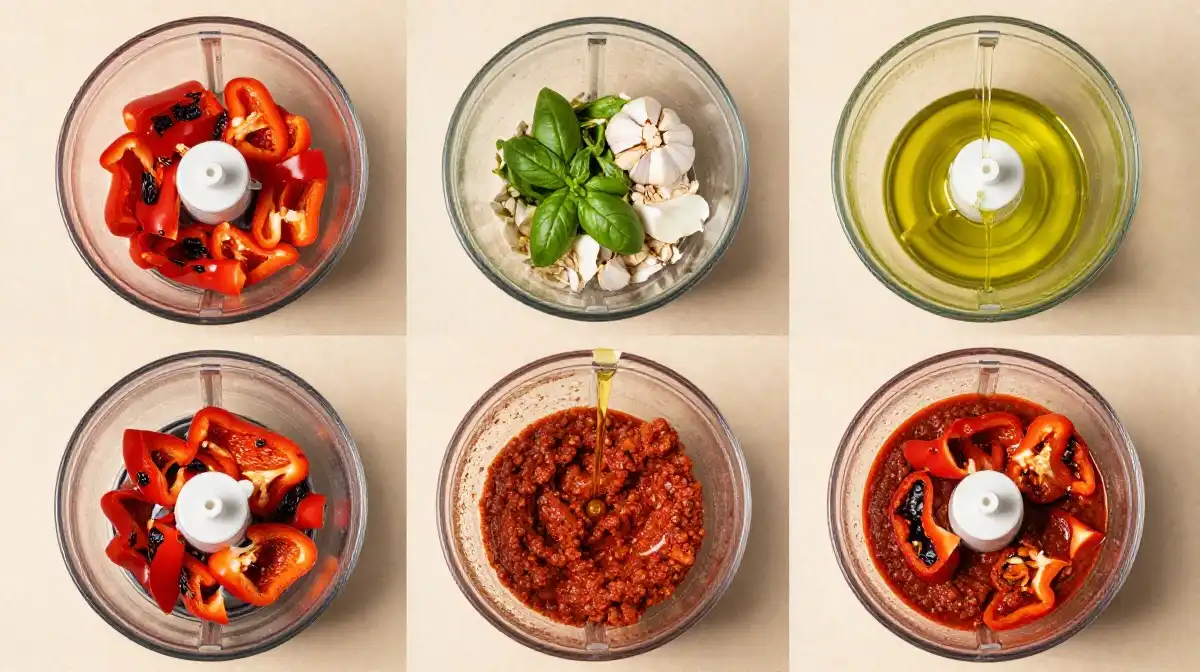
How to make red pepper pesto from scratch follows a beautifully simple sequence once your peppers are roasted and peeled. Add roasted pepper flesh to your food processor first. Pulse four to five times to break it down roughly. Add three to four cloves of raw or roasted garlic, a generous handful of fresh basil, and your choice of nuts — about one-third cup works well for four servings.
Pulse again until the mixture resembles a coarse paste. Add half a cup of freshly grated parmesan cheese, two tablespoons of lemon juice, a pinch of red chili flakes, salt, and black pepper. Pulse briefly to combine. Now stream in olive oil slowly through the feed tube while the processor runs — typically three to four tablespoons achieves a perfect consistency. How to make red pepper pesto sauce thicker is simple: use less oil and add an extra tablespoon of nuts. Too thick? A splash of reserved pasta water loosens it instantly without diluting flavor.
How to Make Vegan Red Pepper Pesto Without Cheese
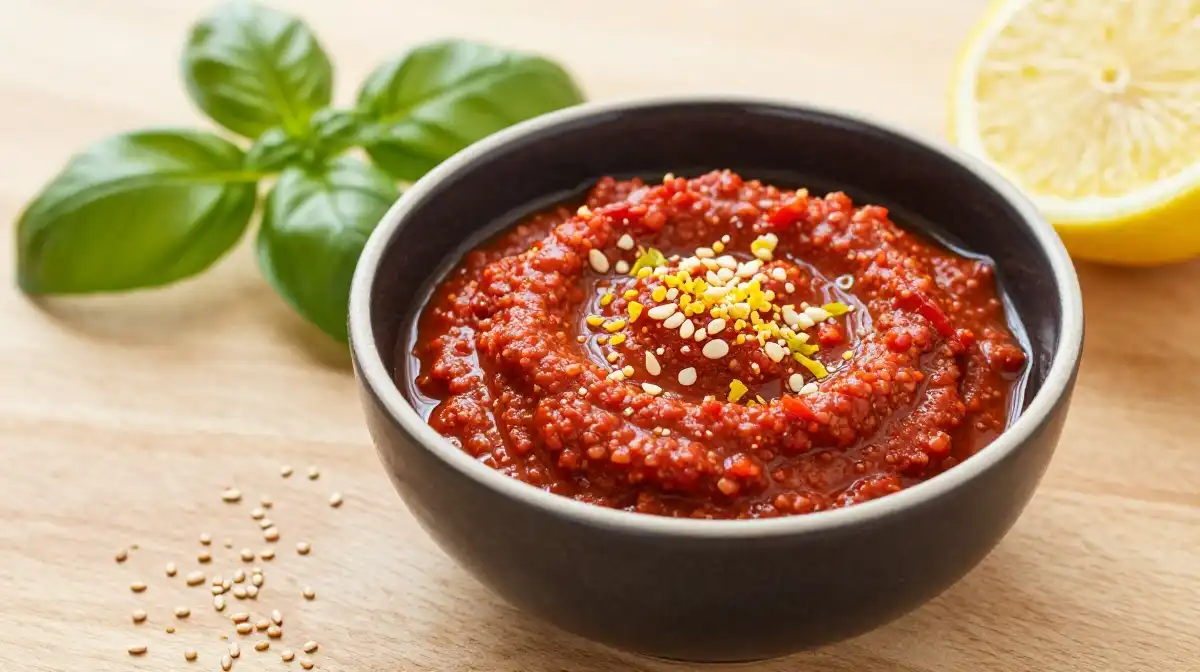
How to make vegan red pepper pesto requires one smart substitution that most people don’t expect to work as well as it does. Nutritional yeast replaces parmesan cheese almost perfectly — it delivers the same savory, umami-rich depth with a slightly nutty quality that blends seamlessly into the sauce. Use three to four tablespoons per batch.
Red pepper pesto vegan style also benefits from a slightly increased amount of lemon juice and lemon zest — the extra acidity compensates for the tang that aged cheese normally provides. Add a teaspoon of white miso paste for additional umami depth if you have it available. Red pepper pesto with olive oil forms the creamy backbone in vegan versions since there’s no dairy fat to contribute richness. Don’t be shy with the oil — it’s what makes the sauce feel genuinely luxurious rather than thin and watery.
How to Make Nut Free Red Pepper Pesto for Allergy Friendly Cooking
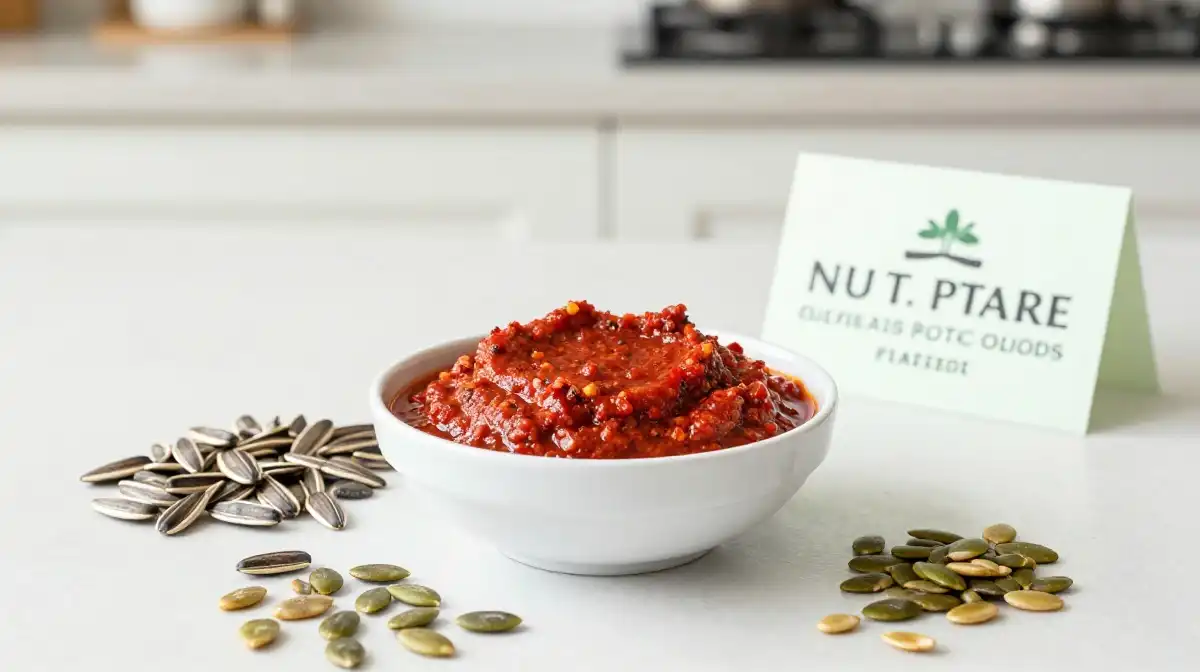
Food allergies shouldn’t exclude anyone from enjoying this extraordinary sauce. How to make red pepper pesto without nuts successfully means finding an ingredient that replicates the body and richness that nuts normally provide. Roasted sunflower seeds are the best direct substitute — they’re similarly fatty, blend smoothly, and cost a fraction of pine nuts or almonds.
Hemp seeds work beautifully too and add impressive nutritional value with their complete protein profile. Roasted pumpkin seeds contribute a pleasant earthiness that pairs surprisingly well with red pepper pesto with garlic and basil combinations. For a completely seed-free option, add an extra tablespoon of olive oil and two tablespoons of cream cheese or parmesan — the fat content from these dairy additions recreates the creamy texture nuts normally provide. Always label nut-free versions clearly when serving to guests with allergies.
Best Ways to Use Red Pepper Pesto in Your Everyday Cooking
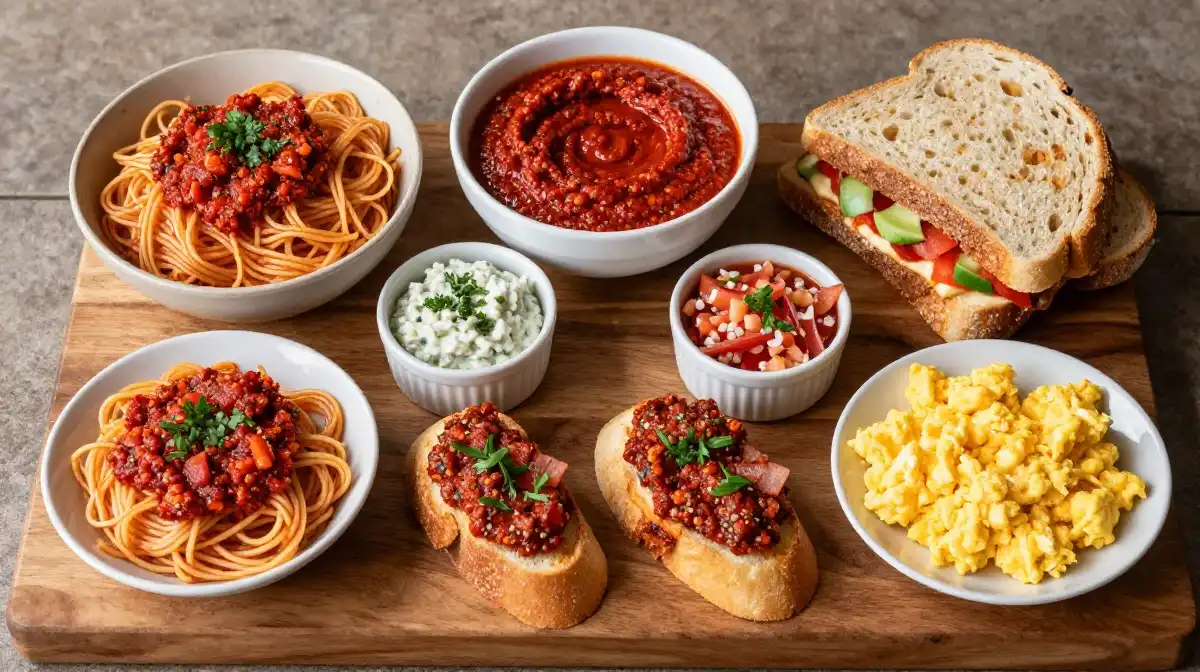
Red pepper pesto uses extend far beyond pasta — and honestly that revelation changes how you cook entirely. Spread it generously on sandwiches and wraps instead of mayonnaise for an instant flavor upgrade. Use it as a pizza base sauce in place of traditional tomato sauce — red pepper pesto for pizza creates a smoky, sweet foundation that pairs brilliantly with mozzarella and fresh arugula.
Stir a spoonful into scrambled eggs for a vibrant weekend breakfast. Toss it with roasted vegetables as a finishing sauce. Mix it into hummus for a sophisticated dip. Use red pepper pesto spread on crostini for effortless appetizers that consistently impress guests. Marinate chicken breasts in it overnight before grilling. Dollop it over poached eggs on toast. The applications are genuinely endless and each one delivers that same bold smoky sweetness that makes this sauce so completely addictive.
How to Make Red Pepper Pesto Pasta That Wows Every Guest
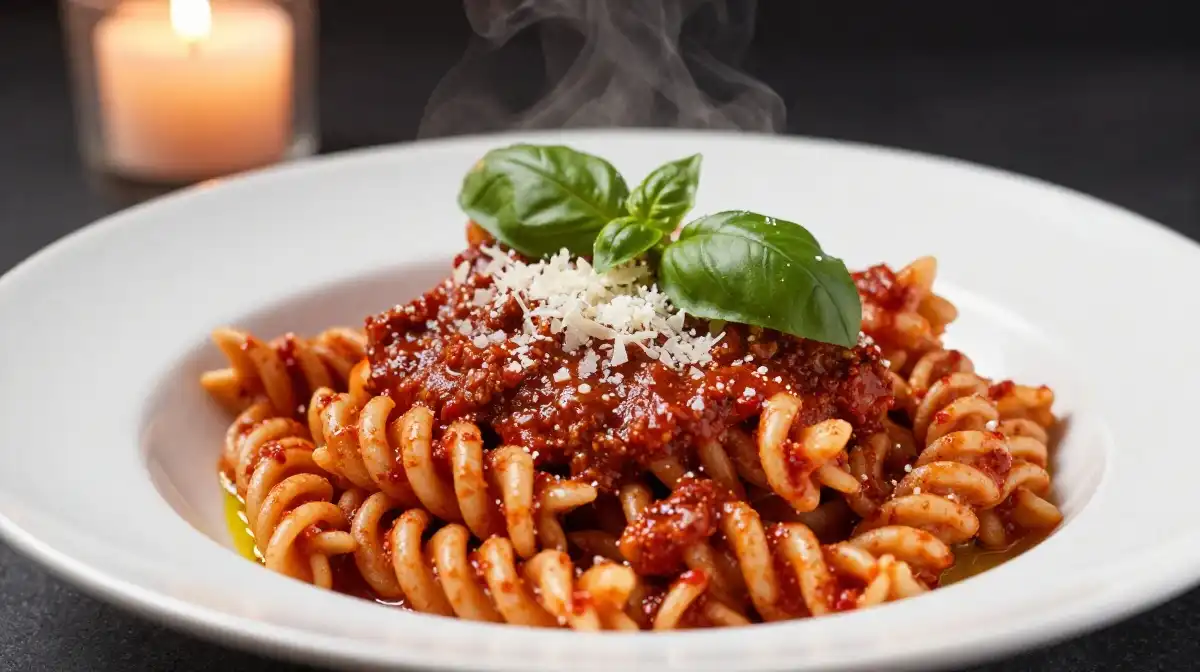
How to make red pepper pesto pasta that genuinely impresses requires understanding one crucial technique that most home cooks overlook. Never add cold pesto directly to hot pasta from a jar or bowl — it breaks and turns greasy. Instead warm the pesto gently in a wide pan over low heat for 60 seconds before tossing with pasta.
How to make red pepper pesto for pasta with perfect sauce consistency means always reserving at least half a cup of starchy pasta water before draining. Add the drained pasta to your warm pesto and toss vigorously while streaming in pasta water tablespoon by tablespoon until every strand is glossily coated. The starch in the water emulsifies the olive oil and creates a cohesive sauce that clings rather than pools at the bottom. Finish with extra parmesan, fresh basil, and a drizzle of good olive oil. Serve immediately — this pasta waits for nobody.
How to Make Red Pepper Pesto as a Dip Spread and Sauce
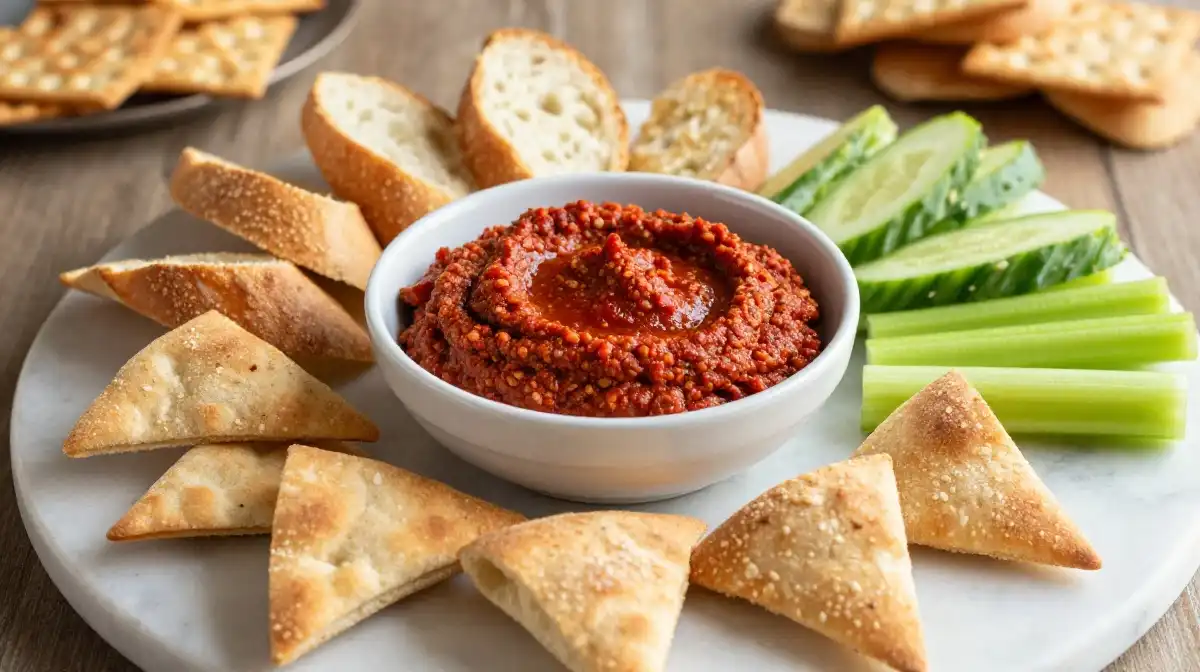
How to make red pepper pesto dip that stops a party in its tracks requires one simple adjustment to your base recipe. Make the pesto slightly thicker than usual by reducing olive oil by one tablespoon and increasing nuts by two tablespoons. This creates a scoopable consistency that holds its shape on a cracker or crudité without running everywhere.
How to make red pepper pesto spread for sandwiches works best with a touch of cream cheese blended in — about two tablespoons per cup of pesto. This addition creates a spreadable, creamy consistency that stays put on bread rather than soaking in and making everything soggy. Red pepper pesto with cream cheese as a spread on a bagel with smoked salmon is honestly one of the best quick lunches imaginable. Serve your dip version with warm pita, sliced baguette, cucumber rounds, and celery sticks for a visually stunning appetizer spread.
How to Make Red Pepper Pesto With Sun Dried Tomatoes for Extra Depth
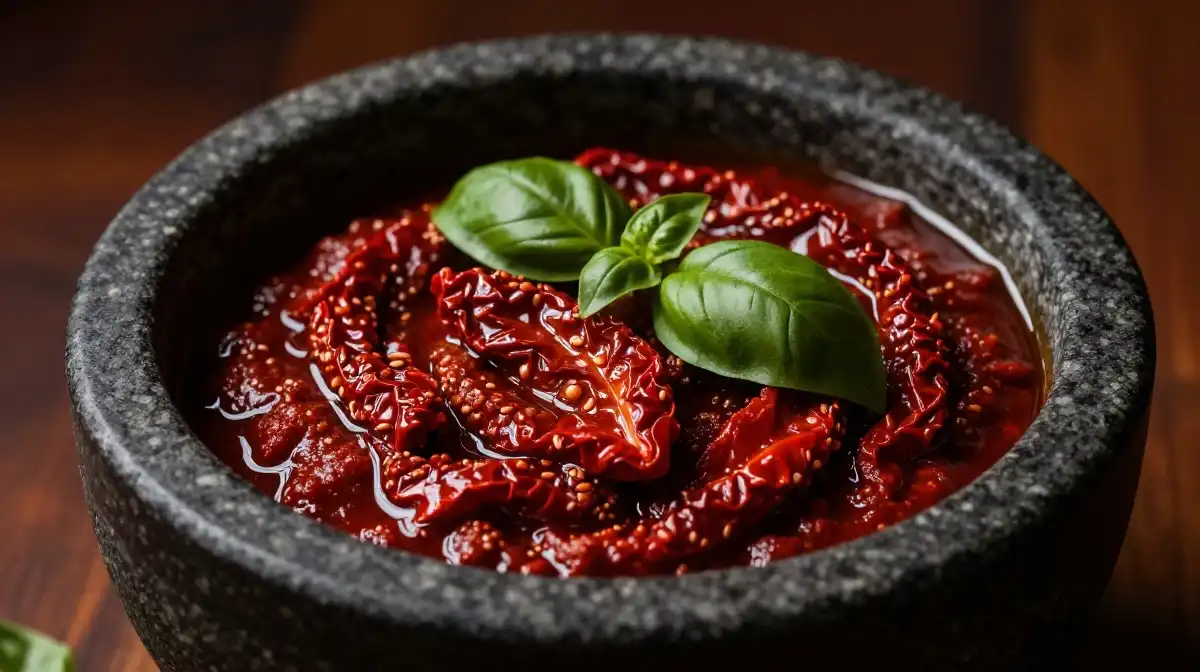
Red pepper pesto with sundried tomatoes is the version you make when you want to genuinely blow someone’s mind at dinner. Sun-dried tomatoes add an intense, jammy, concentrated tomato flavor that amplifies the roasted pepper’s natural sweetness and creates a sauce so complex it tastes like it took hours to develop. It didn’t — but nobody needs to know that.
Use oil-packed sun dried tomatoes rather than the dry-packed variety — they blend more smoothly and contribute additional rich olive oil flavor to the sauce. Add five to six pieces per batch of pesto and reduce your fresh olive oil addition slightly to compensate. The combination of roasted red peppers, sun dried tomatoes, garlic, lemon juice, and parmesan in one sauce creates layered umami depth that rivals any restaurant condiment. This particular variation works spectacularly as a red pepper pesto for pizza base or stirred through red pepper pesto pasta with Italian sausage and wilted spinach.
Best Cheese and Herb Combinations for Your Red Pepper Pesto
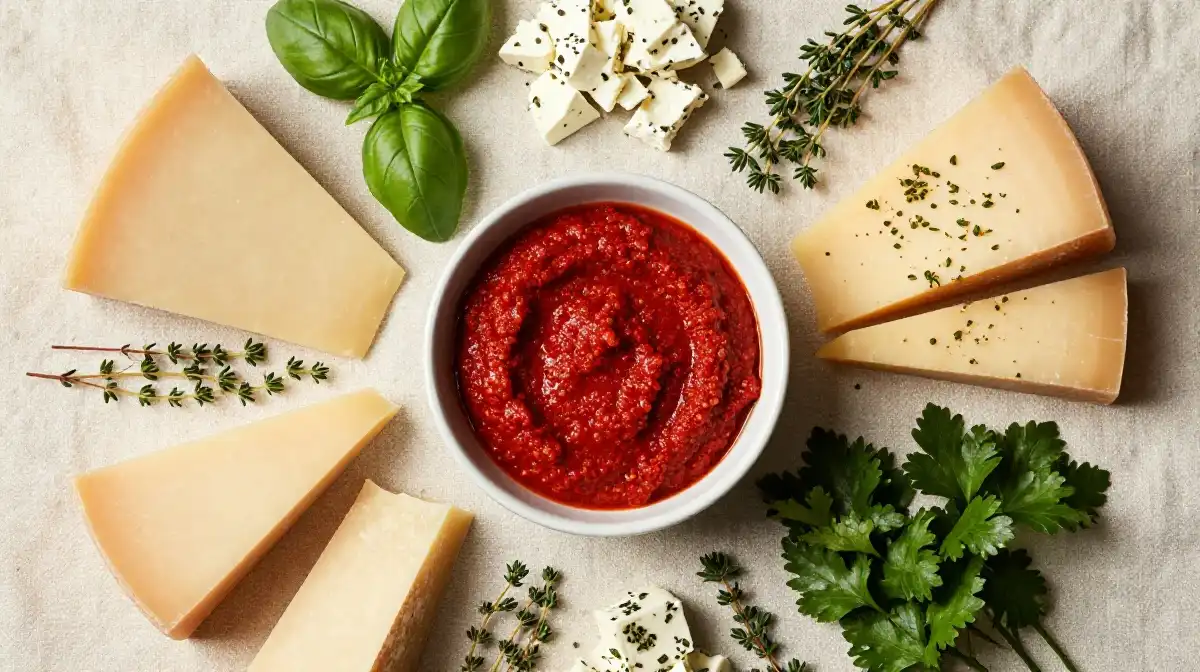
Cheese selection in red pepper pesto with parmesan style preparations shapes the entire flavor profile of your final sauce. Parmigiano-Reggiano — the real stuff aged 24 months minimum — delivers sharp, crystalline, deeply savory notes that elevate every other ingredient around it. Use a microplane to grate it finely for the smoothest possible integration into the sauce.
Pecorino Romano offers a sharper, saltier, more aggressive profile that creates a bold red pepper pesto with basil combination with serious personality. Red pepper pesto with feta crumbled in during blending adds a creamy, tangy, briny quality that makes the sauce taste almost Greek-inspired — brilliant when you’re heading toward a Mediterranean direction. For herbs beyond basil, try fresh oregano for earthiness, flat-leaf parsley for brightness, or fresh thyme for subtle floral warmth. Each herb combination creates a genuinely distinct sauce worth exploring across multiple batches.
| Cheese | Flavor Profile | Best Herb Pairing |
|---|---|---|
| Parmigiano-Reggiano | Sharp, crystalline, savory | Fresh basil |
| Pecorino Romano | Salty, bold, aggressive | Fresh oregano |
| Feta | Tangy, briny, creamy | Flat-leaf parsley |
| Cream Cheese | Mild, smooth, rich | Fresh thyme |
| Ricotta | Delicate, airy, sweet | Fresh mint |
How to Store and Freeze Red Pepper Pesto for Maximum Freshness
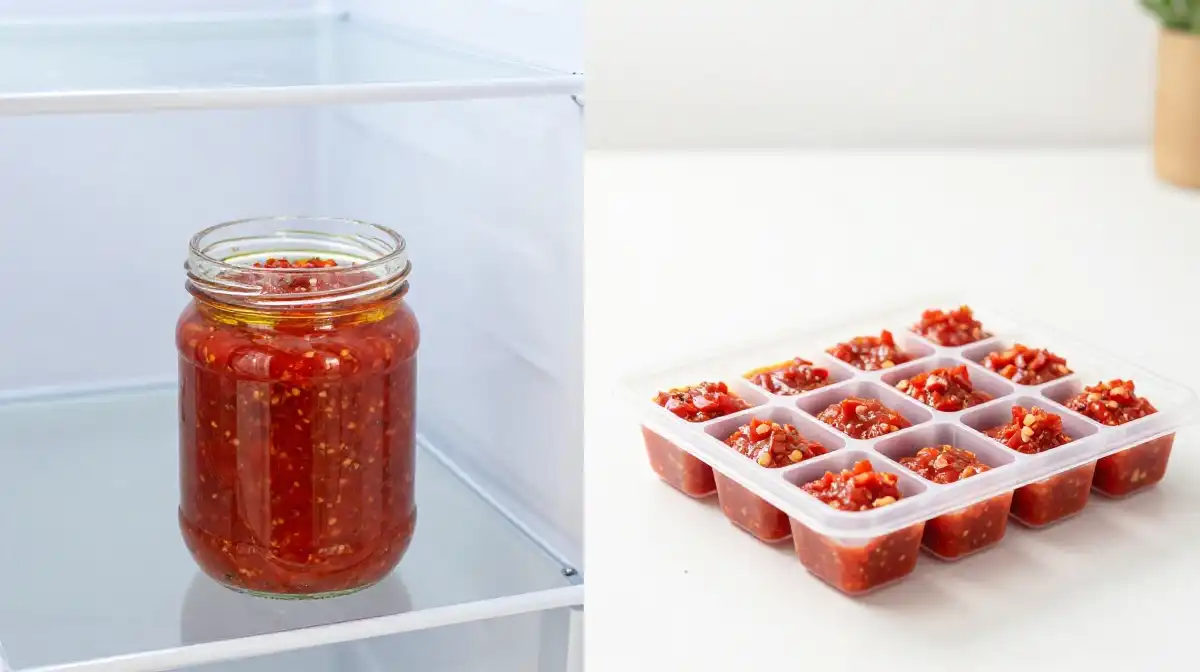
How to store red pepper pesto properly preserves that vibrant color and fresh flavor for as long as possible. Transfer finished pesto to a clean glass jar and smooth the surface flat. Pour a thin layer of olive oil over the top — this oxygen barrier prevents oxidation and keeps the sauce from turning dark and dull on the surface. Seal tightly and refrigerate.
Refrigerated red pepper pesto storage maintains peak quality for up to seven days. How to freeze red pepper pesto extends that dramatically — up to three months in the freezer without significant flavor loss. The most practical freezing method uses an ice cube tray. Spoon pesto into each cube compartment, freeze solid overnight, then transfer frozen cubes to a labeled zip-lock bag. Each cube equals approximately two tablespoons — perfect for single-serving pasta or a quick spread without thawing an entire batch. How to freeze red pepper pesto in this portioned format makes weeknight cooking genuinely effortless.
Common Red Pepper Pesto Mistakes to Avoid for Perfect Results
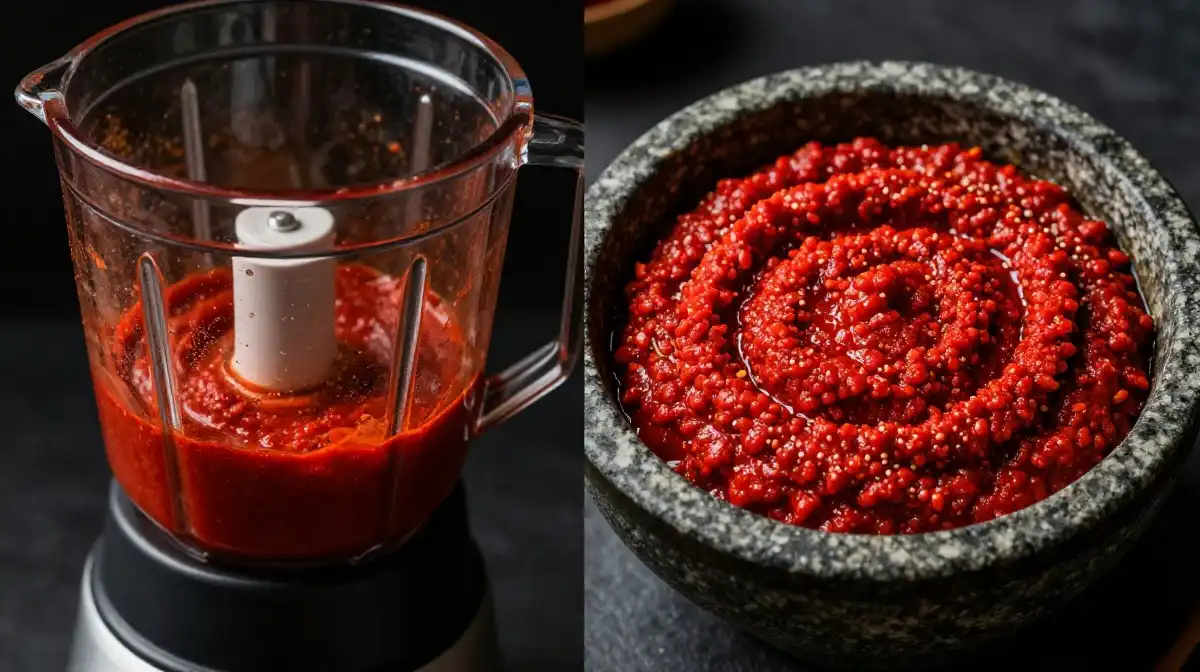
Even confident home cooks make mistakes that quietly undermine their pesto. The most damaging error is over-processing the sauce into a completely smooth puree. Traditional pesto — including the red pepper variety — should retain some texture. Pulse rather than blend continuously. Stop when the mixture looks rustic and slightly coarse. Over-blending also generates heat that oxidizes basil and dulls the vibrant color almost instantly.
Another critical mistake involves under-seasoning. Red pepper pesto with lemon needs enough acid to brighten every other flavor in the sauce — don’t be timid with your lemon juice. Taste constantly and adjust. Many cooks also skip toasting their nuts which costs significant flavor depth for zero extra effort. Finally never add olive oil too quickly — streaming it in slowly while the processor runs creates proper emulsification. Dumping it in all at once breaks the sauce and creates a greasy separated mess that no amount of additional blending will fully rescue. Slow down. Good pesto rewards patience every time.