
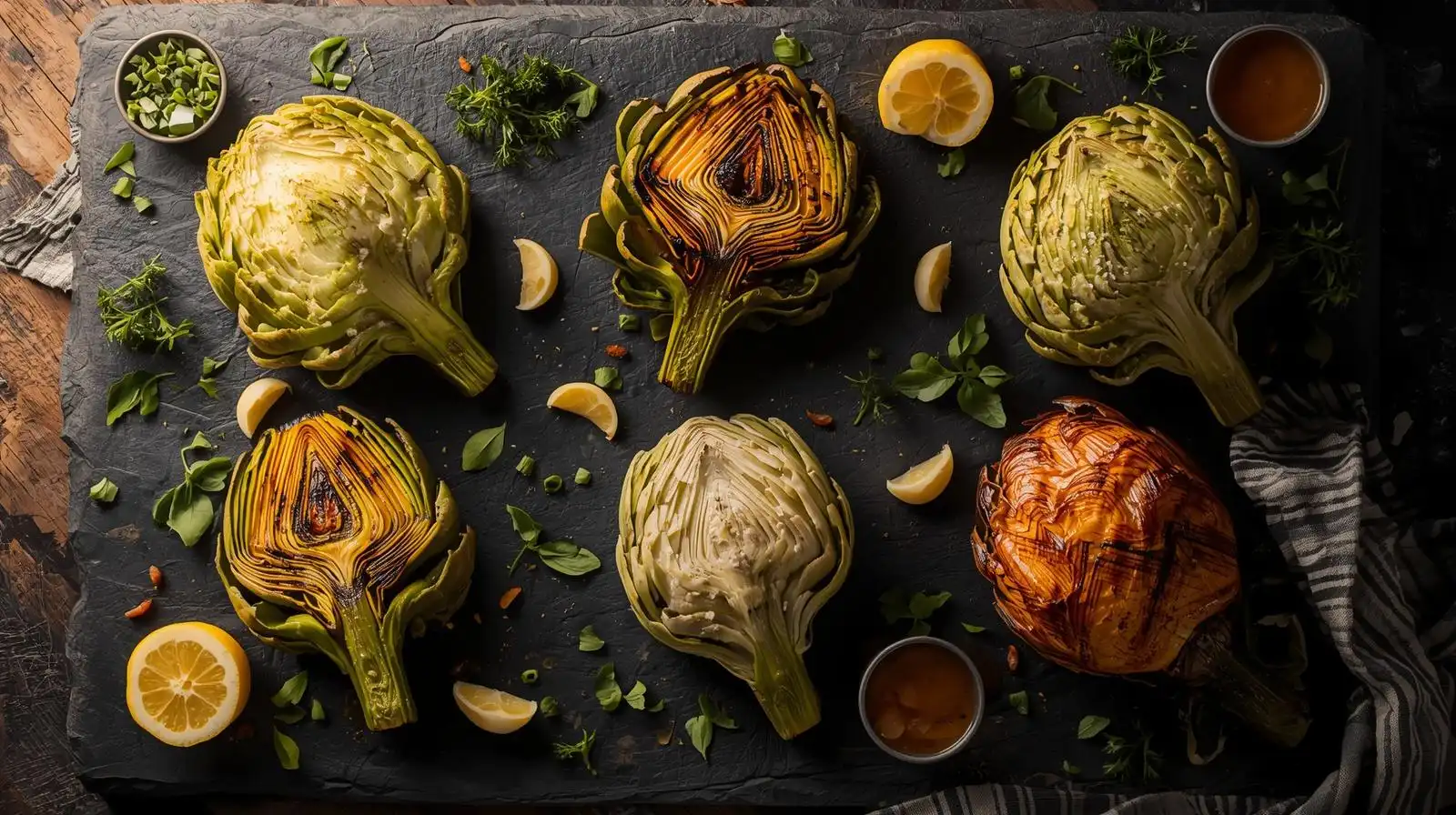
How to Cook Artichokes: The Complete Guide to Every Method and Every Style
Artichokes intimidate a lot of home cooks. They look complicated. They feel like a puzzle wrapped in thorny leaves with no obvious starting point. But here’s the truth — once you understand how to cook artichokes properly, this remarkable vegetable becomes one of the most rewarding things you’ll ever put on your dinner table. Rich, nutty, slightly sweet, and deeply satisfying, a perfectly cooked artichoke paired with a great dipping sauce is a genuinely special eating experience. This complete guide covers every method, every technique, and every question you’ll ever have.
What Are Artichokes and Why They Are Worth Learning to Cook
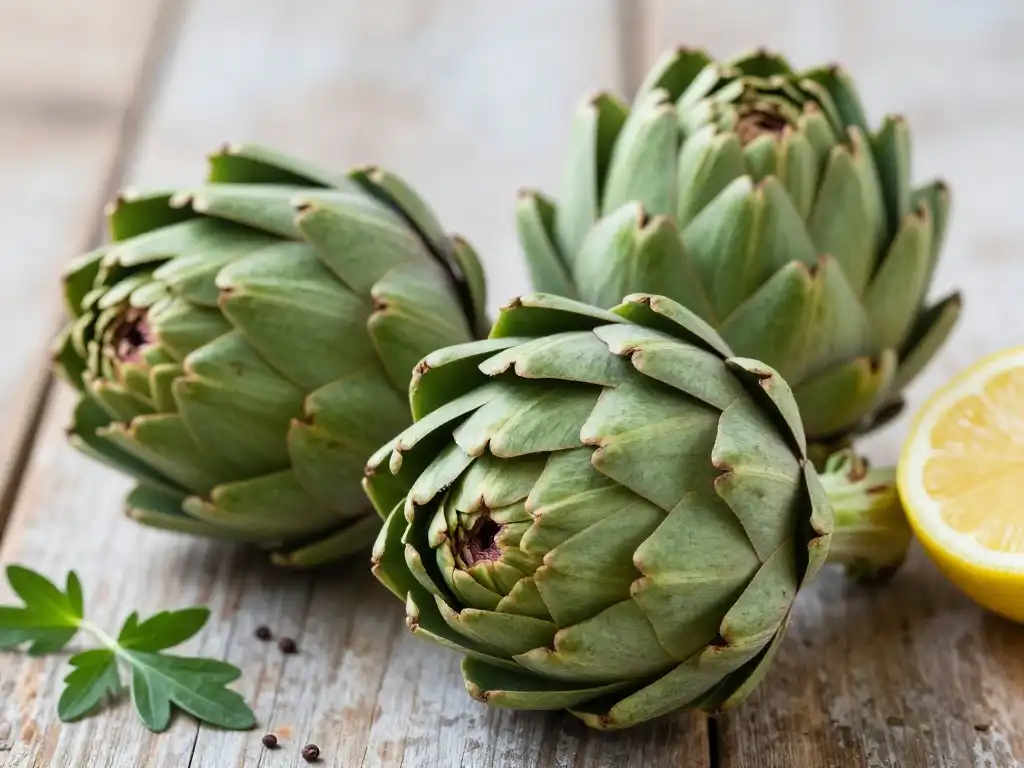
The artichoke — scientifically known as Cynara scolymus — is actually an edible thistle native to the Mediterranean region. What you eat is the flower bud harvested before it blooms. The fleshy base of each leaf, the tender heart, and the meaty stem all offer distinctly different textures and flavors that reward patient, curious eaters in ways few other vegetables manage.
What do cooked artichokes taste like is a question every curious beginner asks. The flavor sits somewhere between asparagus and celery with a subtle nuttiness and a lingering mild sweetness. This sweetness comes from cynarin — a unique organic compound found exclusively in artichokes that temporarily blocks sweetness receptors on your tongue, making everything you eat or drink afterward taste noticeably sweeter. It’s a fascinating quirk that makes artichokes one of the most genuinely interesting vegetables in the entire produce section. Are artichokes healthy to eat is equally worth answering — they rank among the highest antioxidant vegetables ever tested, according to Healthline.
How to Choose and Buy the Best Fresh Artichokes Every Time
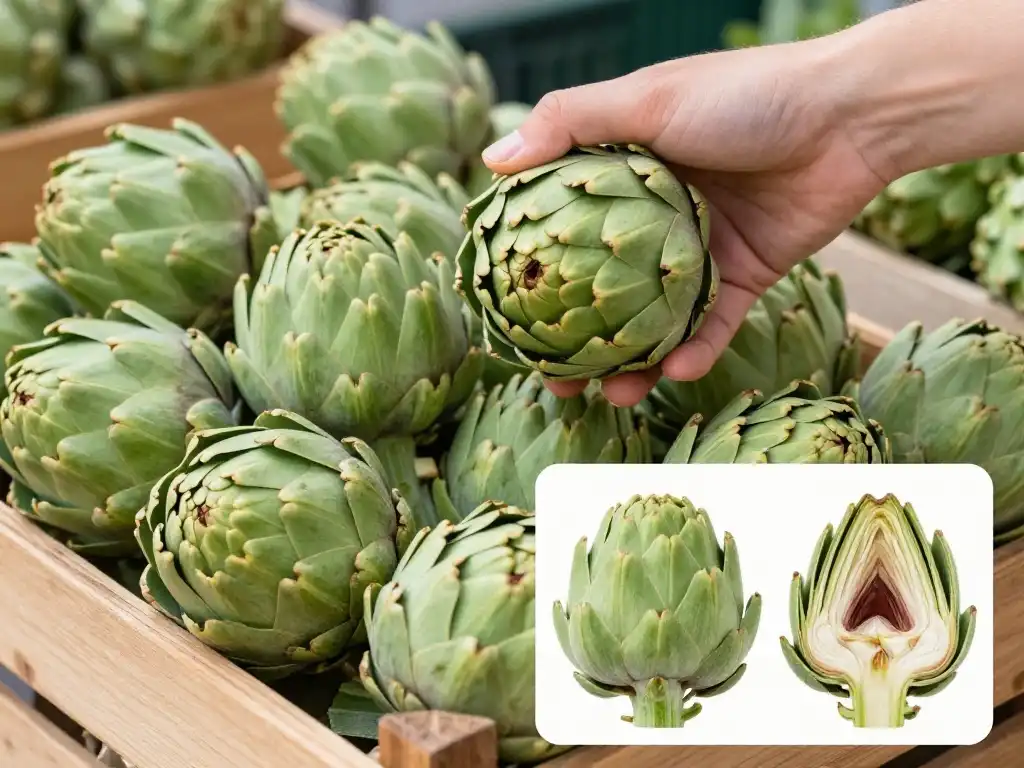
Selecting great artichokes at the market sets your entire cooking experience up for success before you ever turn on the stove. Look for artichokes that feel heavy and dense for their size — weightiness signals freshness and moisture content. The leaves should press firmly together rather than splaying open loosely, which indicates the bud is still tight and hasn’t begun drying out.
Color matters too but not in the way most people expect. How to cook fresh artichokes that deliver consistently excellent results starts with choosing specimens that are deep green and firm — sometimes with bronze-tipped leaves caused by frost exposure, which actually intensifies flavor rather than indicating damage. Avoid artichokes with brown, dried, or shriveled leaves and any that feel lightweight or hollow when you squeeze them. Peak artichoke season in the USA runs from March through May with a smaller second season in October — shopping during these windows guarantees the best quality, flavor, and value for your money.
How to Clean Trim and Prepare Artichokes Before Cooking
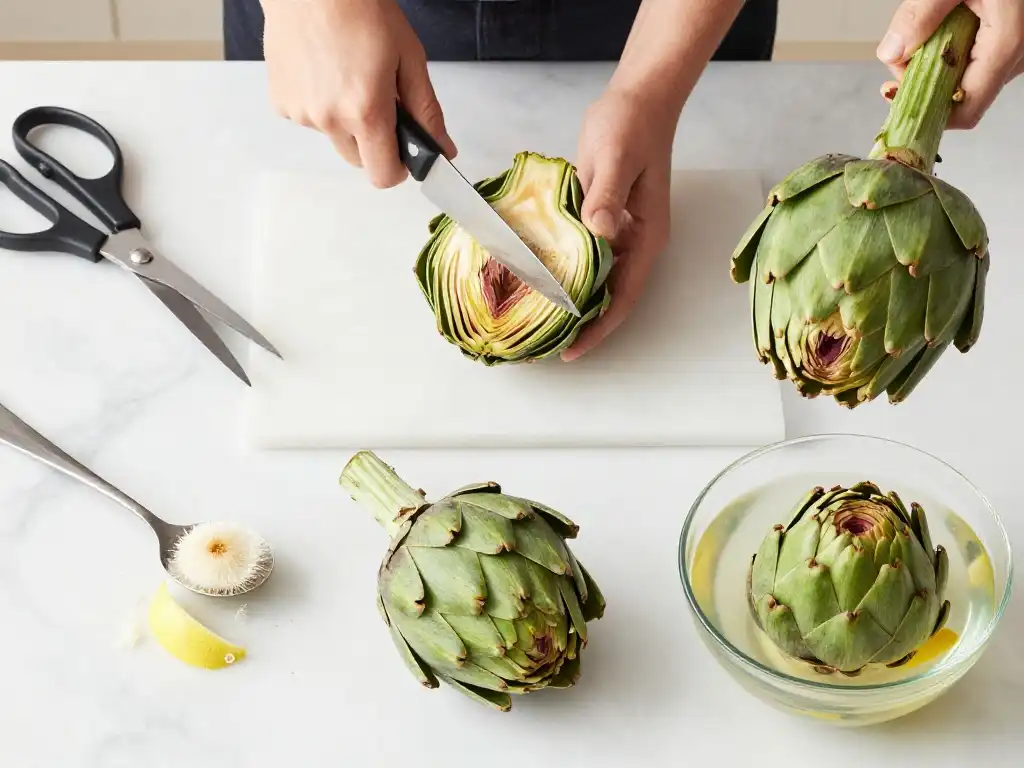
How to clean artichokes before cooking properly takes about five minutes and makes an enormous difference in your final result. Start by filling a large bowl with cold water and squeezing in the juice of one whole lemon. This acidulated water prevents the cut surfaces from oxidizing and turning an unappetizing brown color — artichoke flesh darkens almost immediately upon exposure to air.
you may also like this: 13 Broccoli Orzo: The Easiest Creamiest One Pot Recipe That Will Become Your Weekly Favorite
How to trim artichokes for cooking follows a logical sequence. Use kitchen scissors to snip the sharp thorny tips from the outer leaves — this step is purely practical and makes the finished artichoke much easier and more pleasant to eat. Slice off the top quarter of the entire artichoke using a sharp serrated knife to expose the inner leaves. Peel the tough outer skin from the stem using a vegetable peeler — the stem is completely edible and tastes exactly like the heart. How to remove artichoke choke before cooking involves spreading the center leaves apart and using a sturdy spoon to scoop out the fuzzy, fibrous choke located directly above the heart. Drop each prepared artichoke immediately into your lemon water to prevent browning while you work through the remaining ones.
How to Boil Artichokes Perfectly for Tender Delicious Results
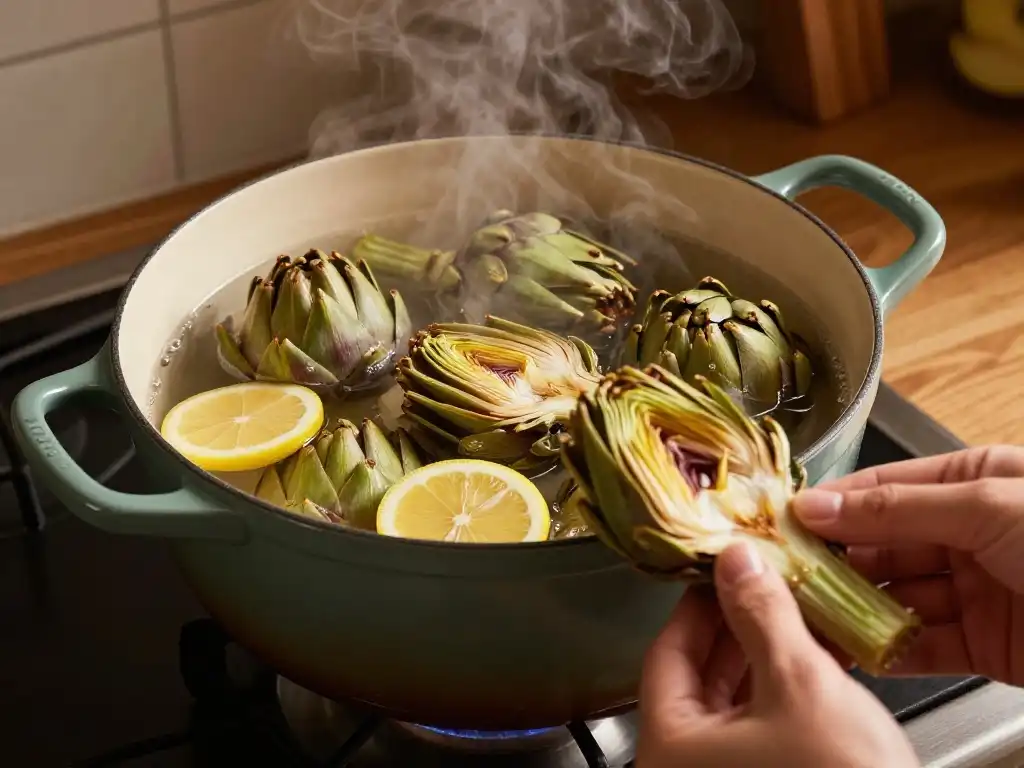
How to boil artichokes is the most straightforward method and produces consistently tender, juicy results that suit beginners perfectly. Fill a large pot — a Dutch oven works ideally — with enough salted water to fully submerge your artichokes. Add one halved lemon, two crushed garlic cloves, a bay leaf, and a splash of white wine to the water. These aromatics infuse gently into the artichoke during cooking and build subtle background flavor.
How long to cook artichokes by boiling depends on their size. Small artichokes need 20–25 minutes. Medium artichokes require 30–40 minutes. Large globe artichokes need 40–50 minutes at a steady simmer with the lid partially on. How to cook artichokes on stovetop this way produces beautifully tender leaves but keep artichokes submerged by placing a heavy lid or heatproof plate directly on top — they float stubbornly and the portion above water cooks unevenly. How to cook artichokes whole by boiling produces the most forgiving, consistent results of any method — genuinely excellent for beginners building confidence.
| Artichoke Size | Boiling Time | Doneness Test |
|---|---|---|
| Small (baby) | 20–25 minutes | Leaf pulls easily |
| Medium | 30–40 minutes | Outer leaf separates cleanly |
| Large (globe) | 40–50 minutes | Knife pierces stem with zero resistance |
How to Steam Artichokes the Easiest and Most Foolproof Method
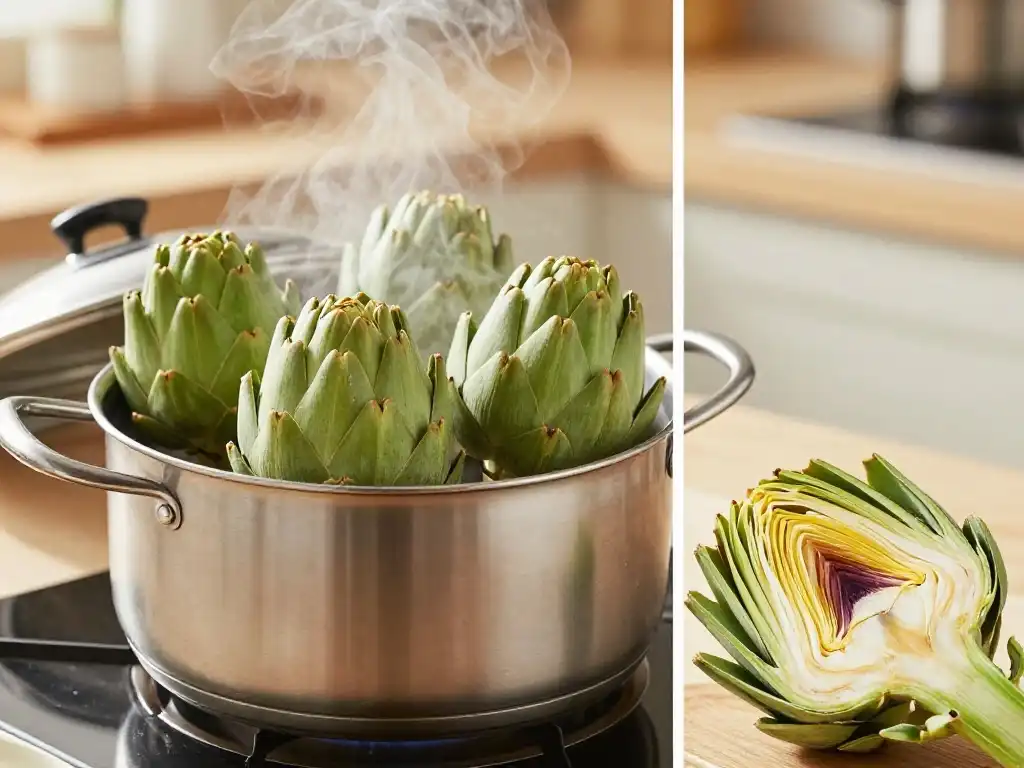
How to steam artichokes preserves more nutrients than boiling because the vegetable never sits submerged in water leaching out its vitamins. It’s arguably the most foolproof method available and produces artichokes with a slightly more concentrated, intense flavor that boiling can’t quite match. You need a pot large enough to hold your artichokes upright and a steam basket that keeps them above the water line.
Add two inches of water to your pot along with a halved lemon and a few crushed garlic cloves. Place trimmed artichokes stem-side up in the steam basket — inverting them allows steam to circulate inside the leaves from below while condensation drips down through the choke. Cover tightly and bring to a vigorous boil then reduce to a steady simmer. How to cook artichokes without steamer is simple — balance artichokes on a few large garlic cloves or a folded aluminum foil ring elevated above the water line. Steam medium artichokes 35–45 minutes. Large ones need 45–60 minutes. How to cook artichokes quickly via steaming means choosing smaller artichokes deliberately — size is the single biggest variable controlling your total cooking time.
How to Roast Artichokes in the Oven for Deep Caramelized Flavor
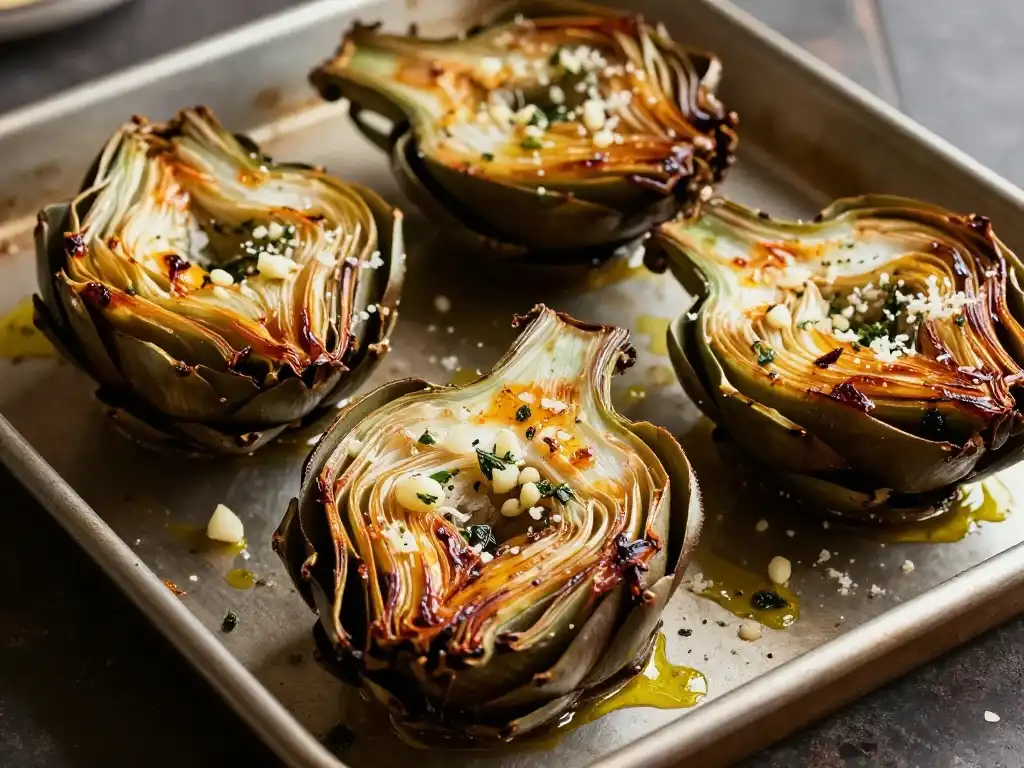
How to roast artichokes in the oven transforms this vegetable in ways boiling and steaming simply cannot. High dry heat caramelizes the natural sugars in the leaves and heart, developing a deep, nutty, almost smoky sweetness that makes roasted artichokes taste genuinely luxurious. The exterior leaves turn slightly crispy while the heart stays tender and rich.
How to bake artichokes successfully starts with halving them lengthwise after initial preparation — this maximizes surface area exposure to the oven’s heat. How to cook artichokes with olive oil and garlic for roasting means brushing every cut surface generously with good quality olive oil then stuffing minced garlic, fresh herbs, and a pinch of sea salt and red pepper flakes between the leaves before wrapping tightly in aluminum foil. Roast at 425°F for 25 minutes wrapped then open the foil and roast another 15 minutes uncovered to caramelize the cut surfaces beautifully. A final squeeze of lemon and a scatter of parmesan cheese right before serving takes roasted artichokes to a genuinely extraordinary level.
How to Grill Artichokes for Smoky Charred Perfection
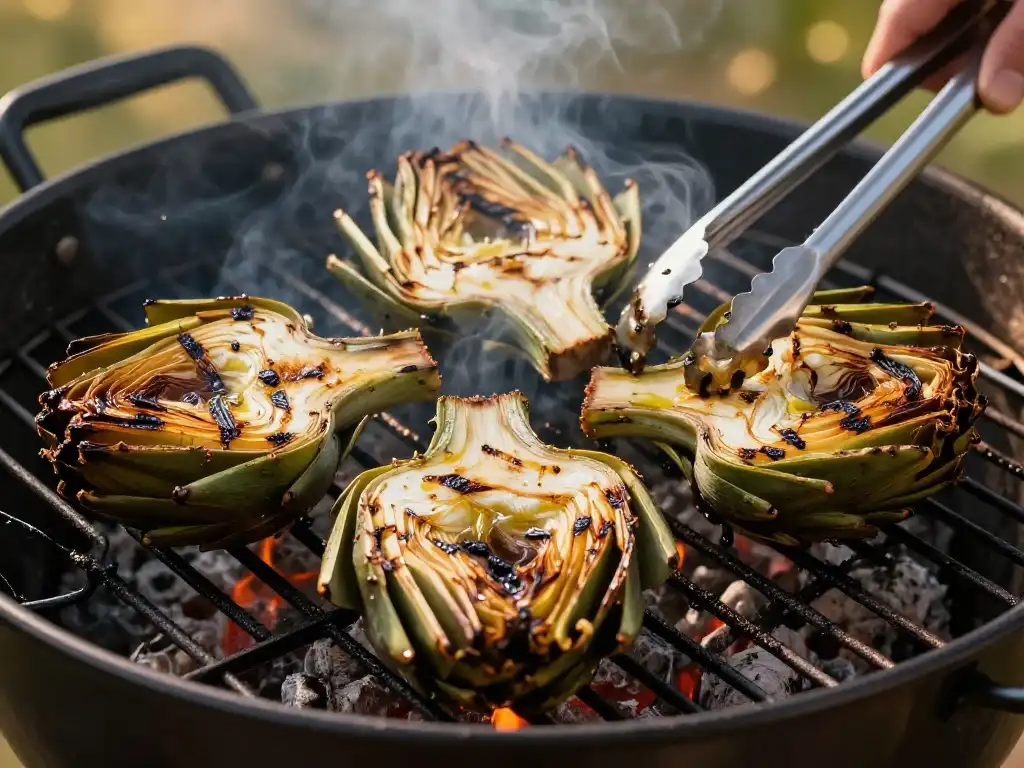
Grilled artichokes are a revelation. The open flame adds a smokiness and char that no indoor cooking method replicates and the slightly crispy, caramelized leaf edges create a textural experience completely unlike boiled or steamed versions. This is the method to choose when you want to genuinely impress guests at a summer gathering.
How to grill artichokes requires one crucial preliminary step — pre-cook them first. Raw artichokes placed directly on a grill take too long to cook through and the exterior burns to charcoal before the interior turns tender. Steam or boil your artichokes until almost done — about 75% of the full cooking time — then halve them lengthwise, brush every surface with olive oil, season generously with sea salt, black pepper, and minced garlic, and place cut-side down on a hot oiled grill grate over medium-high heat. Grill four to five minutes per side until gorgeous char marks develop. How to cook artichokes with herbs on the grill — tuck fresh thyme or rosemary sprigs alongside them on the grate for the final two minutes to infuse a subtle herbal smokiness. Finish with a hard squeeze of lemon right off the flame.
How to Cook Artichokes in Instant Pot and Pressure Cooker
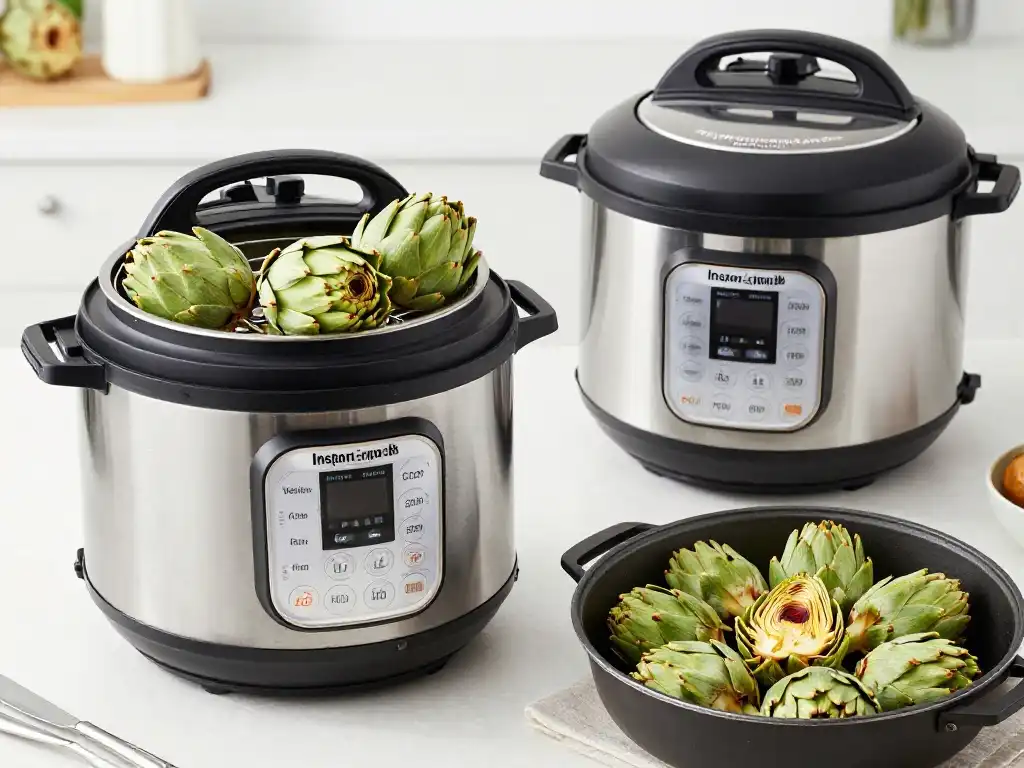
How to cook artichokes in instant pot or any pressure cooker dramatically compresses cooking time without sacrificing a single bit of tenderness or flavor. This method produces artichokes just as good as stovetop steaming in a fraction of the time — genuinely transformative for busy weeknight cooking.
How to cook artichokes in pressure cooker starts with adding one cup of water or vegetable broth to the pot’s inner vessel along with a halved lemon and two crushed garlic cloves. Place a trivet or steam rack inside and set prepared artichokes stem-side up on top. Seal the lid, set the valve to sealing, and pressure cook on high for 9–12 minutes depending on size — small artichokes need 9 minutes, large globe artichokes need 12. Allow five minutes of natural pressure release then switch to quick release. How to know when artichokes are done cooking in a pressure cooker is simple — insert a thin knife into the stem base. Zero resistance means perfect tenderness. These cook so fast that how to cook artichokes quickly becomes genuinely achievable even on the busiest weeknight imaginable.
How to Cook Artichokes in Air Fryer for Quick Crispy Results
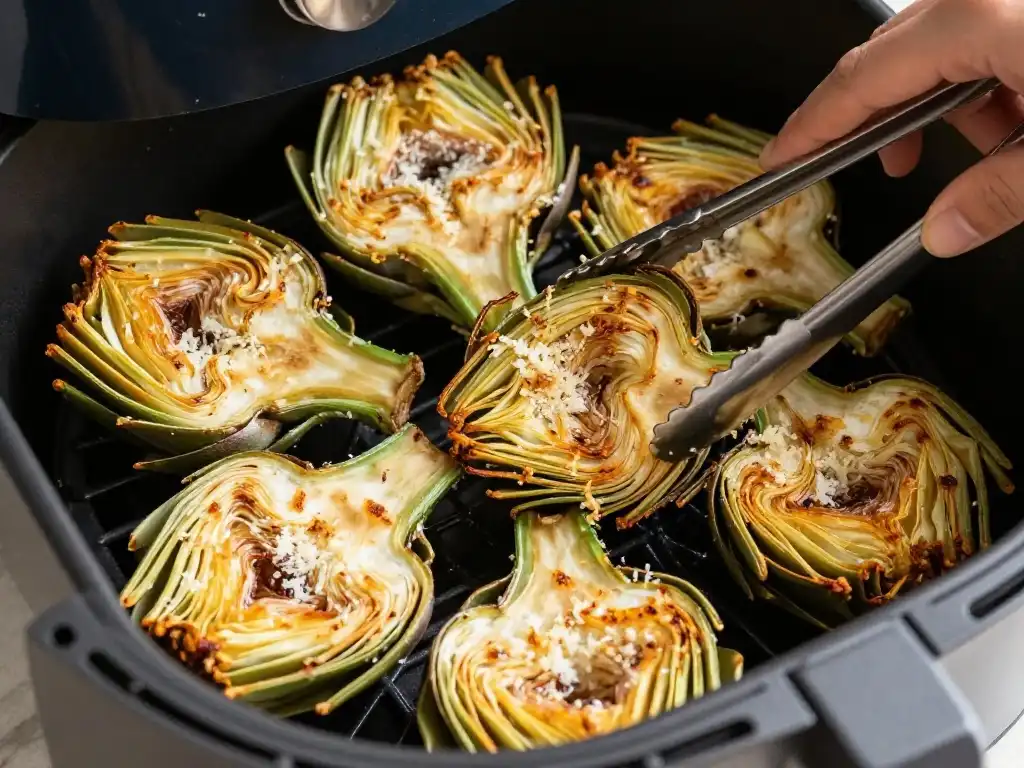
How to cook artichokes in air fryer produces results that genuinely surprise first-timers. The circulating hot air creates incredibly crispy leaf tips with tender, almost creamy interiors — a textural contrast that other methods struggle to achieve. It’s also the fastest hands-off method available for pre-cooked artichoke halves.
Like grilling, air frying works best on artichokes that have been pre-steamed or pre-boiled until almost fully tender. Halve your pre-cooked artichokes, brush every surface with olive oil, season with sea salt, garlic powder, and parmesan cheese, and place cut-side up in your air fryer basket without overlapping. Cook at 400°F for eight to ten minutes until the edges turn golden and slightly crispy. How to cook artichokes with butter in the air fryer — melt two tablespoons of butter with a crushed garlic clove and brush this over the artichoke halves before air frying instead of plain olive oil. The butter browns and crisps the surface more dramatically than oil alone and creates an incredible aroma that fills your kitchen immediately.
How to Cook Baby Artichokes and Artichoke Hearts
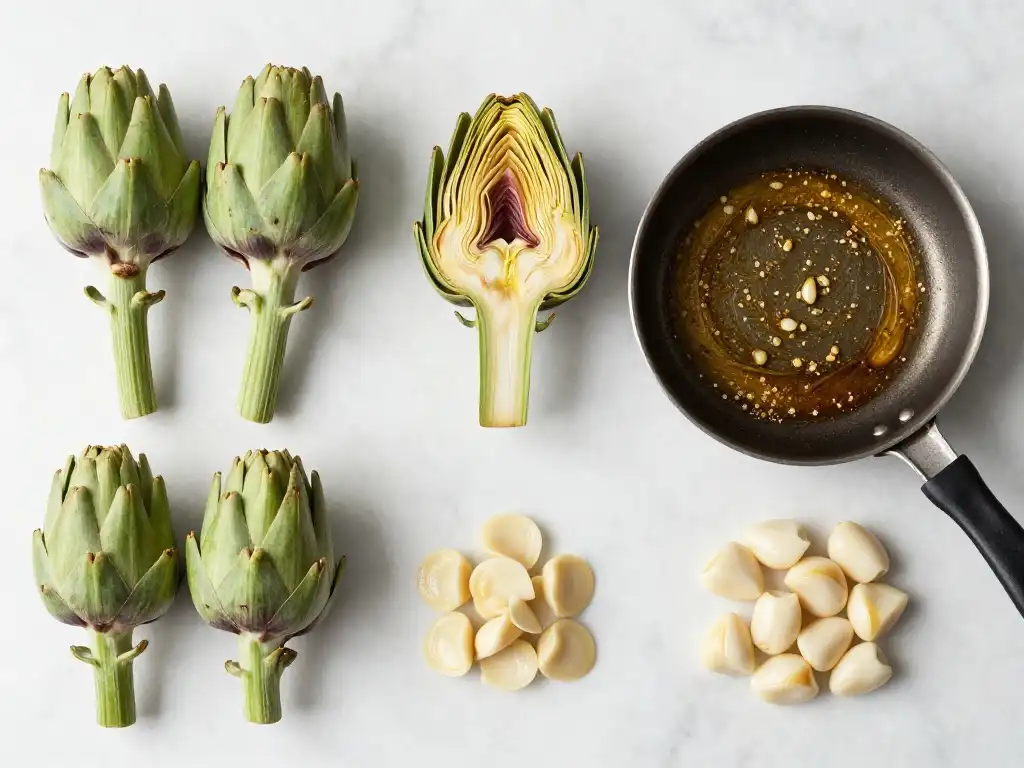
How to cook baby artichokes differs meaningfully from cooking their full-sized counterparts. Baby artichokes are the smaller buds that grow lower on the same plant — they’re fully formed but haven’t developed the tough fuzzy choke yet, which means the entire artichoke is edible from tip to stem. This makes preparation significantly simpler and faster.
Trim baby artichokes by snapping off the tough outer leaves until you reach the pale yellow-green inner leaves, cutting off the top third, and trimming the stem. Drop immediately into lemon water. How to cook artichokes on stovetop quickly for baby varieties means sautéing halved babies in olive oil with crushed garlic and a splash of white wine or vegetable broth over medium-high heat for 10–12 minutes until golden and tender — a gorgeous quick preparation requiring zero pre-cooking. How to cook artichoke hearts from fresh involves removing all leaves and the choke entirely, leaving just the dense, meaty bottom. Slice and sauté in butter with garlic and lemon juice for an incredibly rich, concentrated flavor that works beautifully tossed through pasta or served over crusty bread.
How to Tell When Artichokes Are Done Cooking Perfectly
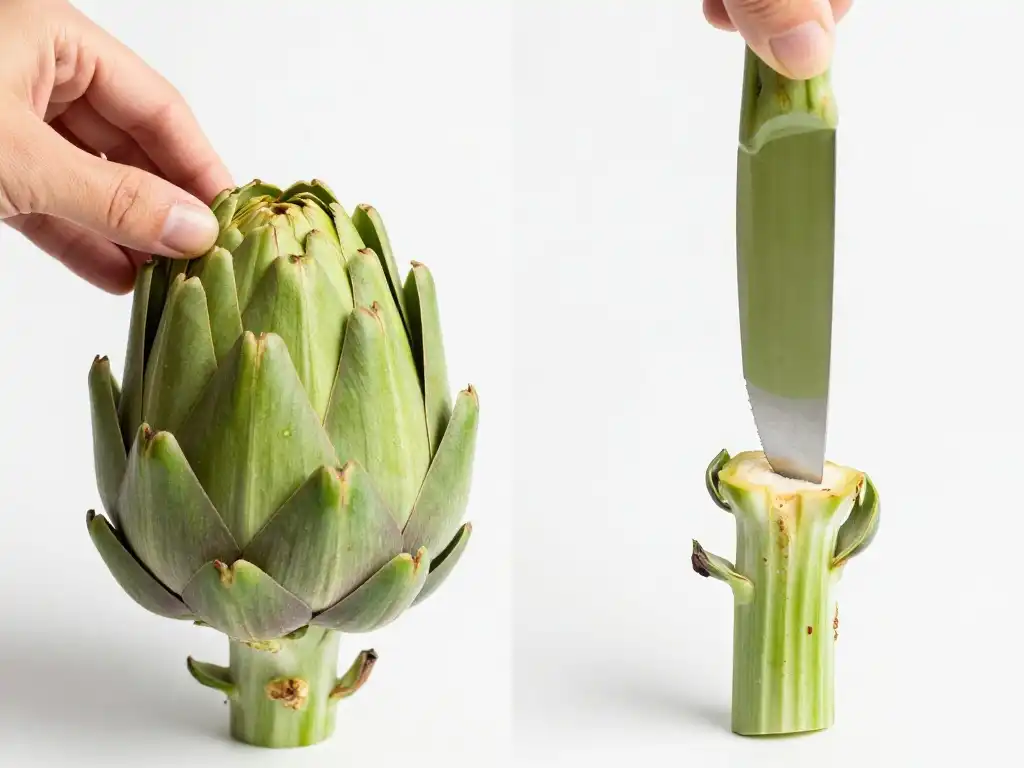
How to know when artichokes are done cooking is the question every beginner struggles with most. Unlike pasta or eggs where timing is relatively precise, artichokes require a combination of tests to confirm doneness rather than relying on the clock alone. Cooking times vary based on artichoke size, age, and freshness in ways that make fixed timers unreliable.
The most reliable doneness test is the leaf pull test. Grasp a large outer leaf near the base and pull firmly — a done artichoke releases its leaf with gentle consistent resistance, like pulling a bookmark from a closed book. If the leaf tears away raggedly or requires significant force, it needs more cooking time. The knife test confirms what the leaf test suggests — insert a thin sharp knife or skewer into the thickest part of the stem base. How to cook artichokes tender means cooking until that knife slides through with absolutely zero resistance, like pushing into soft butter. If you feel any firmness or fibrous resistance at all, return it to heat for five more minutes and test again. Never rush this — an undercooked artichoke is genuinely unpleasant and wastes all the effort you’ve invested.
Best Dipping Sauces and Seasonings for Cooked Artichokes
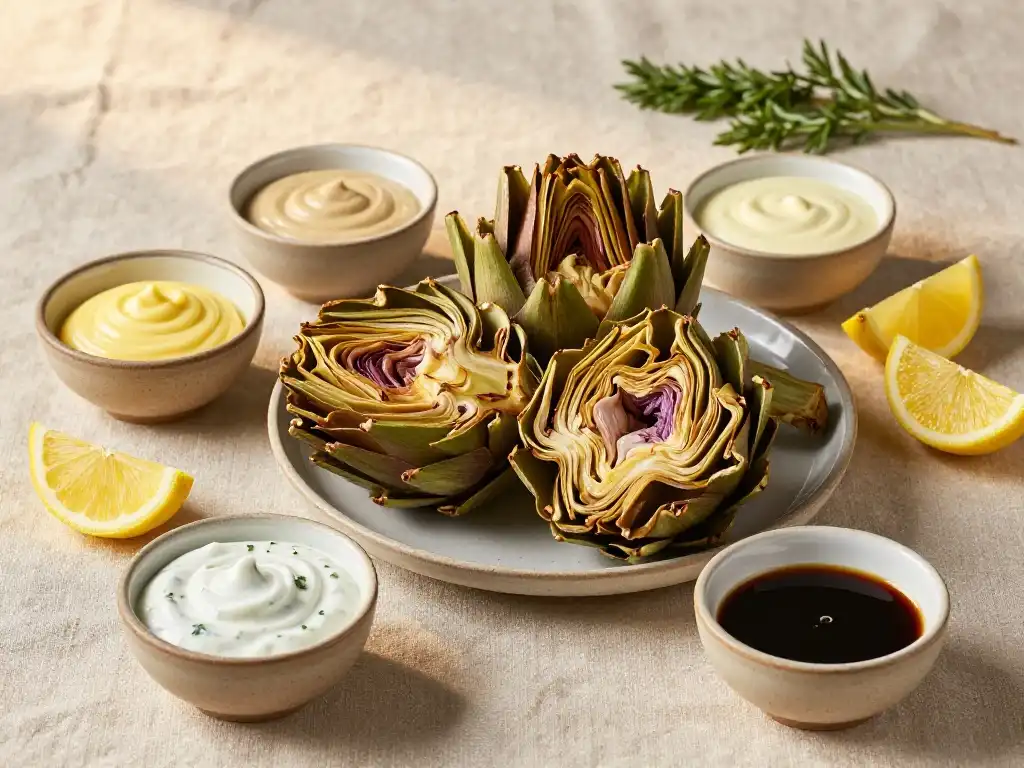
A great dipping sauce transforms a good artichoke into an unforgettable eating experience. What to dip artichokes in when eating generates passionate debate among devoted artichoke lovers and the honest answer is — almost anything rich, creamy, or garlicky works brilliantly. The artichoke’s mild, slightly sweet flavor complements bold sauces without being overwhelmed by them.
How to cook artichokes with dipping sauce pairings span from supremely simple to genuinely elevated. Melted butter with lemon juice and minced garlic is the classic American approach — straightforward, rich, and deeply satisfying. Mayonnaise blended with roasted garlic, lemon zest, and a pinch of sea salt creates a quick aioli that takes two minutes and impresses every guest. Hollandaise sauce — buttery, eggy, and slightly tangy — elevates artichokes to special-occasion territory. For a lighter option, blend Greek yogurt with fresh herbs, lemon juice, and olive oil for a bright, Mediterranean-inspired dip. How to cook artichokes with lemon butter sauce means melting four tablespoons of butter in a small saucepan, adding two tablespoons of fresh lemon juice, one minced garlic clove, and a pinch of sea salt — done in under three minutes and genuinely outstanding.
| Dipping Sauce | Key Ingredients | Flavor Profile |
|---|---|---|
| Lemon Garlic Butter | Butter, lemon, garlic | Rich, classic, warming |
| Garlic Aioli | Mayo, roasted garlic, lemon | Creamy, bold, satisfying |
| Hollandaise | Butter, egg yolks, lemon | Luxurious, tangy, elegant |
| Herb Yogurt Dip | Greek yogurt, herbs, lemon | Light, bright, Mediterranean |
| Balsamic Vinaigrette | Olive oil, vinegar, Dijon | Sharp, sophisticated, tangy |
How to Eat Artichokes After Cooking Step by Step
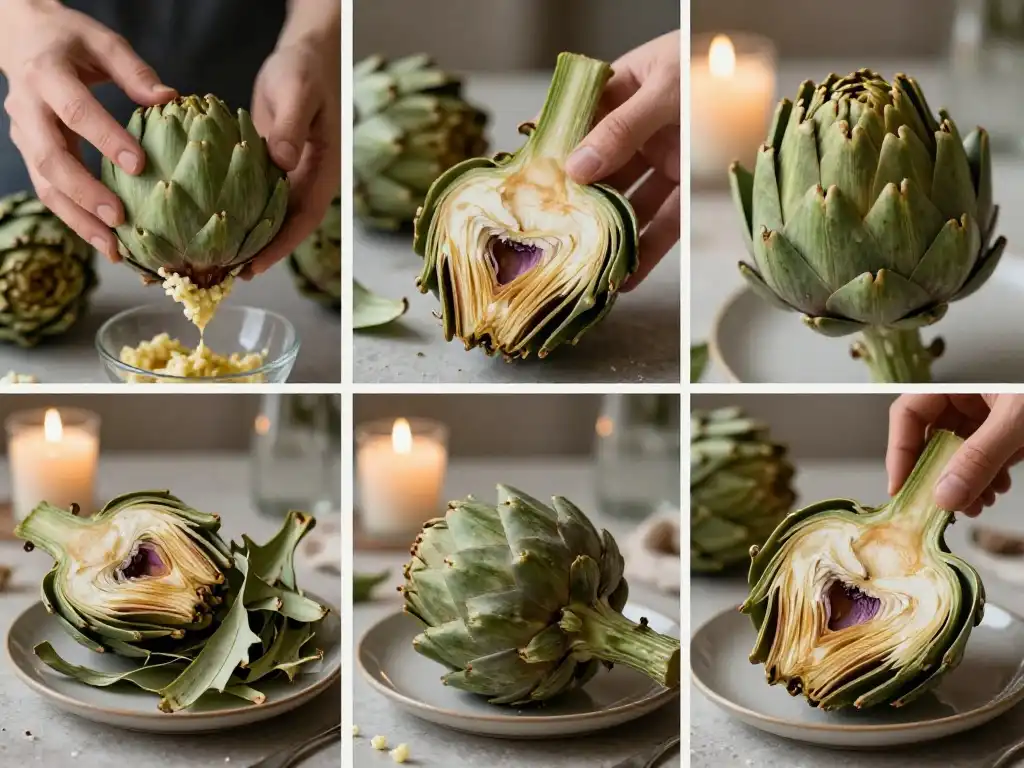
How to eat artichokes after cooking confuses first-timers completely and that confusion keeps many people from ever ordering or cooking them again. It shouldn’t. Eating an artichoke is genuinely enjoyable once you understand the simple mechanics — and there’s something almost ceremonial about the process that makes a shared artichoke feel like a special occasion.
How to cook artichokes and eat the leaves properly works like this — pull one outer leaf from the artichoke and hold the pointed tip between your fingers. Dip the fleshy pale base end into your sauce. Place that fleshy end between your front teeth and drag the leaf firmly through your teeth while pressing down — you’ll scrape off a small amount of tender, flavorful flesh. The rest of the leaf is inedible and tough. Discard it. Continue pulling leaves one by one working inward as they become progressively more tender, smaller, and more flavorful. When you reach the pale inner cone of small leaves, remove them as a cluster — underneath sits the fuzzy choke. Scrape this out completely with a spoon — it’s inedible and unpleasant. What remains beneath is the artichoke heart — the most prized part of the entire vegetable. Slice it, dip it generously, and eat every last bite.
How to Store and Reheat Cooked Artichokes for Best Results
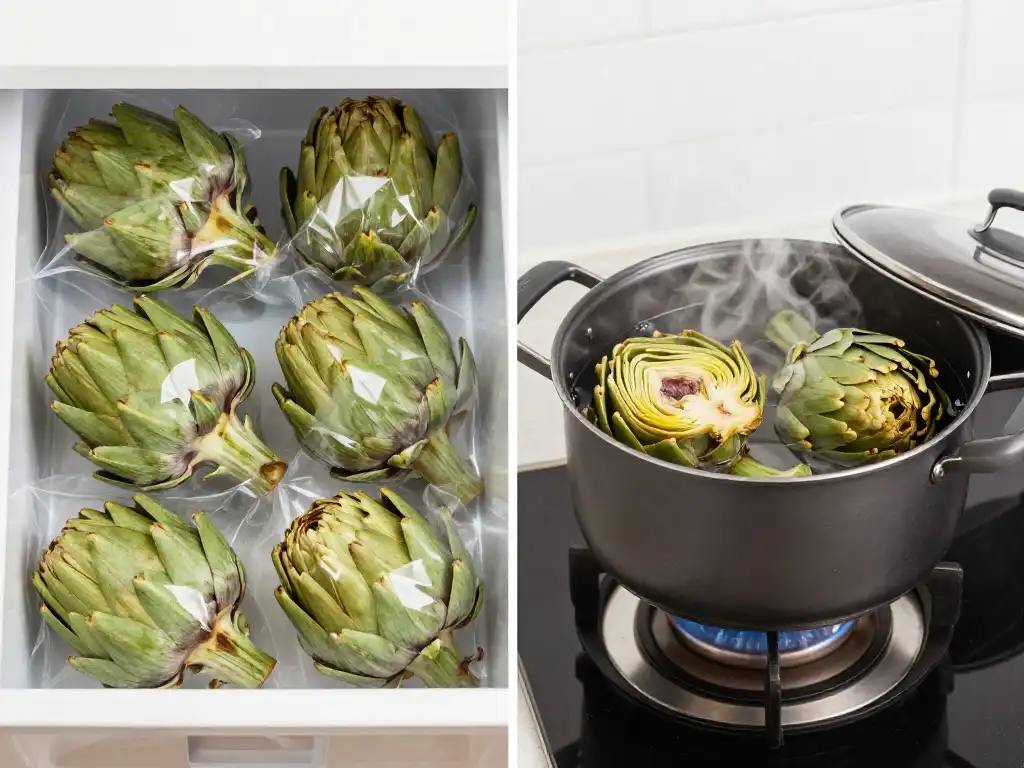
How to store cooked artichokes properly keeps them tasting fresh for several days after cooking. Cool completely at room temperature before refrigerating — never seal hot artichokes in an airtight container as trapped steam creates condensation that degrades texture and promotes faster spoilage. Wrap whole cooked artichokes individually in plastic wrap or store in sealed airtight containers.
Refrigerated cooked artichokes stay excellent for three to four days. How to reheat cooked artichokes without turning them mushy requires gentle, moist heat. Steam them again for five to seven minutes over boiling water — this restores moisture without overcooking the already tender flesh. Alternatively wrap in damp paper towels and microwave on 70% power for 90 seconds to two minutes. How to cook artichokes in microwave from raw is also possible — place prepared whole artichokes in a microwave-safe dish with two tablespoons of water, cover tightly with plastic wrap leaving one small vent, and microwave on high for six to eight minutes for medium artichokes. How to cook frozen artichokes requires thawing overnight in the refrigerator first then sautéing, roasting, or steaming as you would fresh — never microwave frozen artichoke hearts directly as uneven heating destroys their delicate texture.
Health Benefits of Artichokes and Why You Should Eat Them More
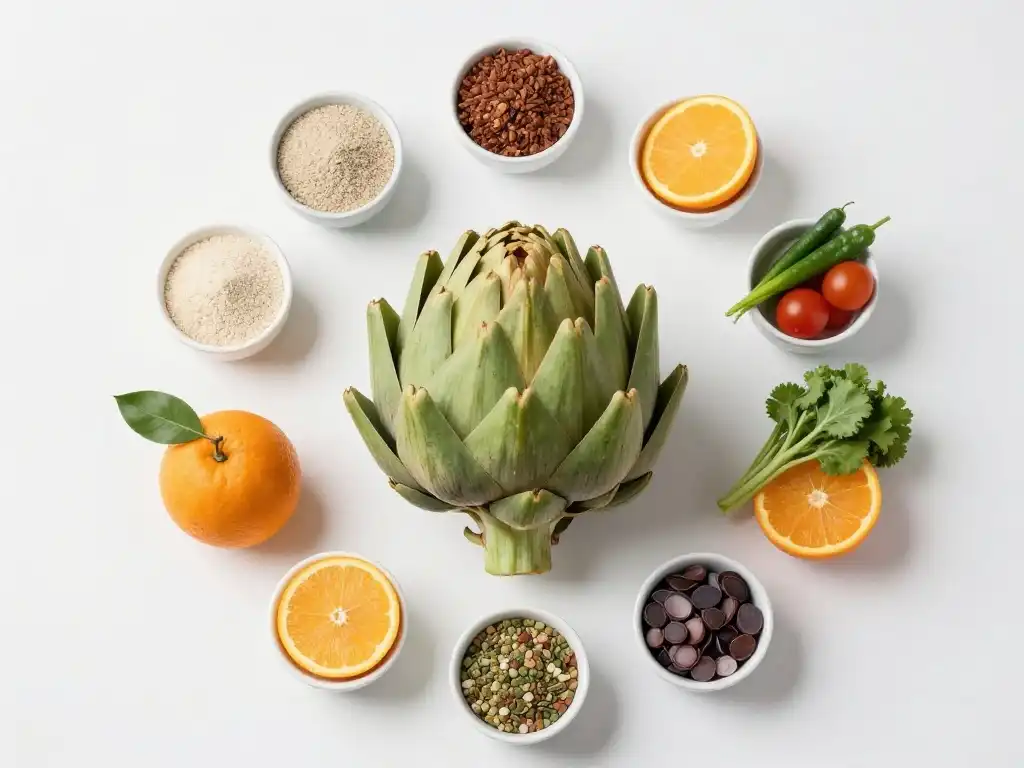
Artichokes aren’t just delicious — they’re nutritionally extraordinary in ways that most people genuinely don’t know. Are artichokes healthy to eat isn’t really a question worth debating — the evidence is overwhelming and impressively consistent. A single medium artichoke delivers 7 grams of dietary fiber, significant amounts of vitamin C, vitamin K, folate, magnesium, and potassium, all for approximately 60 calories total.
The cynarin compound found in artichokes actively stimulates bile production in the liver, supporting fat digestion and contributing meaningfully to liver health according to multiple clinical studies. Inulin fiber — a powerful prebiotic found in high concentrations in artichokes — feeds beneficial gut bacteria and supports digestive health in ways that most fiber sources simply don’t. Artichokes consistently rank among the top ten antioxidant-richest foods tested by the USDA, with anti-inflammatory compounds that support cardiovascular health over time. The ancient Romans consumed artichokes as medicine long before they ever appeared on dinner tables. Given everything modern nutrition science now confirms about this remarkable Mediterranean vegetable, the Romans were considerably ahead of their time. Eating artichokes more often isn’t just a culinary upgrade — it’s genuinely one of the better health decisions you can make at the grocery store.
One Comment