14 No Knead Focaccia: The Easiest Crispy Fluffy Italian Bread You Will Ever Bake at Home
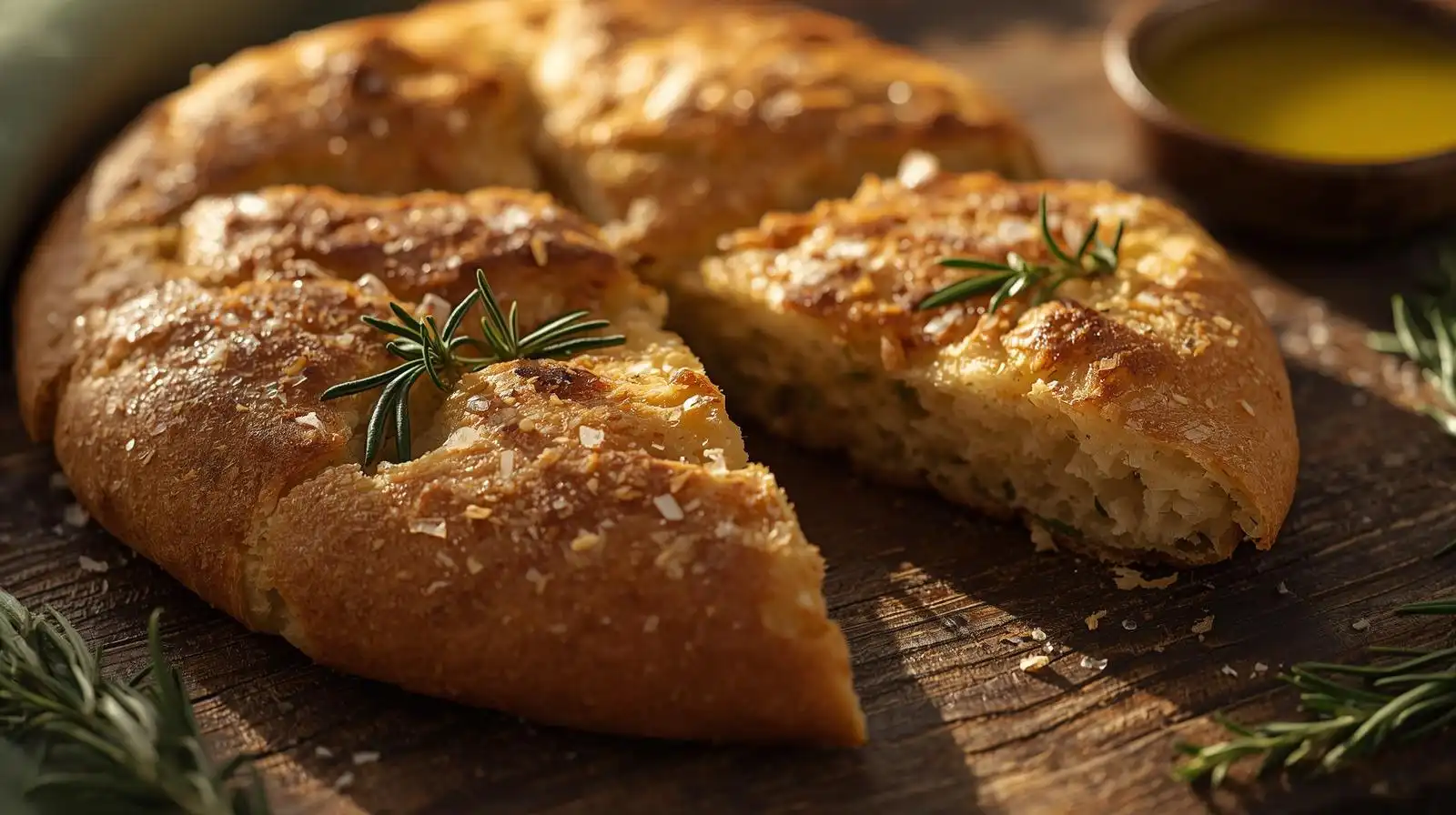
Some recipes genuinely change how you think about baking. No knead focaccia is one of those recipes. No mixer required. No kneading. No special skills. Just flour, water, yeast, olive oil and a little patience — and in return you get golden, crispy-edged, pillowy-centered Italian bread that tastes like something from a proper Ligurian bakery transported directly to your American kitchen.
1. Why No Knead Focaccia Is the Most Rewarding and Foolproof Bread Recipe for Every Baker
Bread baking intimidates millions of Americans who assume it requires professional skills, expensive equipment and years of practice to produce anything worth eating. No knead focaccia demolishes every one of those assumptions simultaneously and completely. This bread succeeds through time rather than technique — the long, slow fermentation process develops the gluten structure and complex flavor that kneading achieves in traditional bread recipes through pure mechanical muscle work.
The reward-to-effort ratio of homemade focaccia no knead is genuinely extraordinary and unlike almost any other homemade bread recipe available to American home bakers at any skill level. Ten minutes of actual active preparation produces a bread so good that dinner guests consistently assume you either bought it from an artisan bakery or spent your entire afternoon in the kitchen laboring over something considerably more complex than what you actually did with minimal effort and maximum satisfaction.
2. Ingredients You Need to Make Perfect No Knead Focaccia at Home
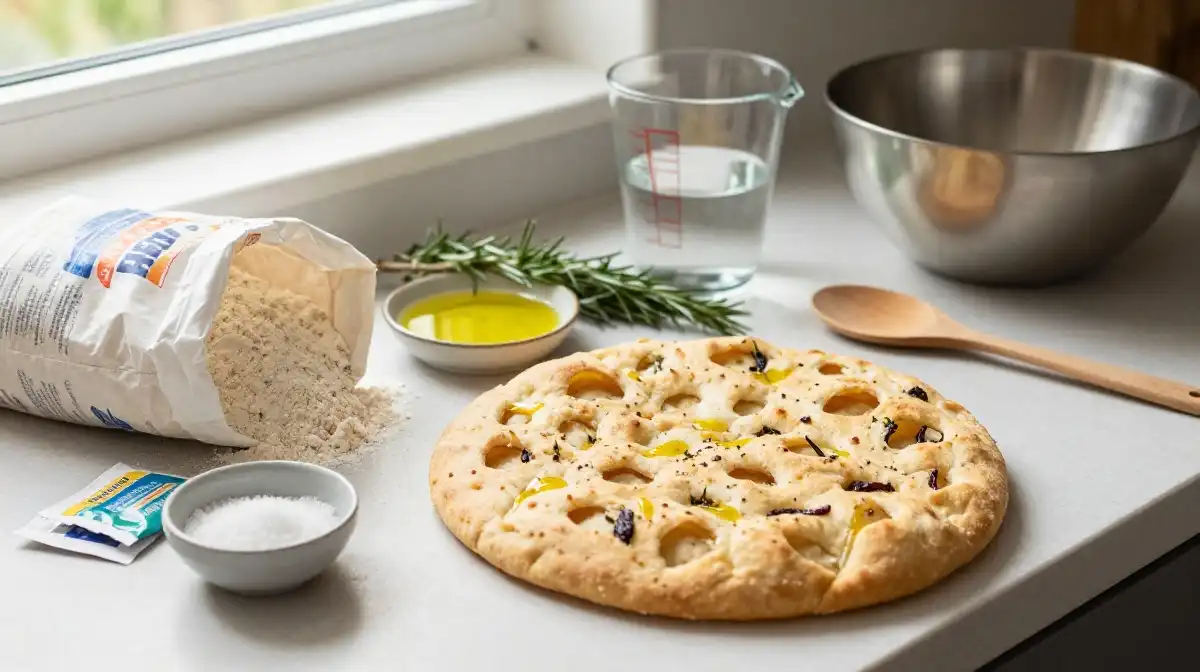
Outstanding no knead focaccia recipe results begin with understanding what each ingredient contributes and why quality matters more in this simple recipe than in more complex ones with longer ingredient lists. With only five core ingredients — flour, water, yeast, salt and olive oil — there’s nowhere to hide inferior ingredients because each one plays an essential, visible role in the finished bread’s flavor, texture and overall character.
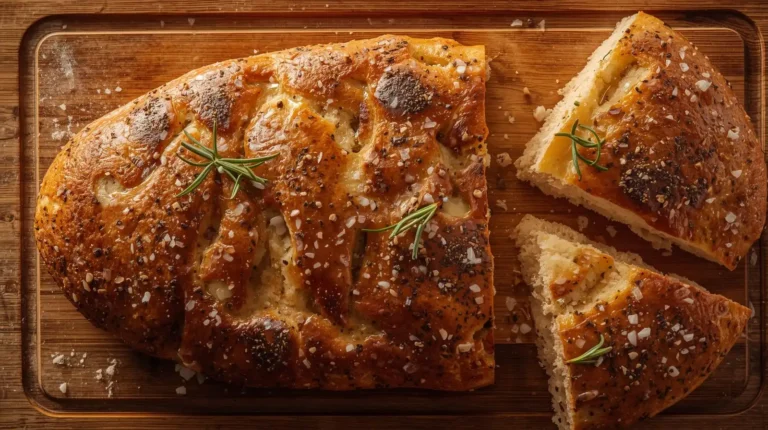
Focaccia with olive oil requires quality extra-virgin olive oil used generously — this is non-negotiable and not the moment for budget substitutes. The olive oil serves three distinct purposes simultaneously: it creates the crispy golden bottom crust through contact with the hot pan, it flavors the bread throughout the dough itself and it provides that characteristic glossy, slightly glistening surface that makes properly made focaccia look so beautifully appetizing and authentically Italian from across the room.
| Ingredient | Amount | Quality Notes |
|---|---|---|
| All-purpose or bread flour | 4 cups (480g) | Bread flour gives better chew |
| Warm water | 2 cups (480ml) | 100-110°F — not hotter |
| Active dry or instant yeast | 2 tsp | Check expiration date |
| Fine sea salt | 2 tsp | Plus flaky salt for topping |
| Extra virgin olive oil | 6 tbsp total | Quality matters enormously |
| Flaky sea salt | For topping | Maldon or fleur de sel |
| Fresh rosemary | Several sprigs | Optional but highly recommended |
| Garlic cloves | 3–4 cloves | Thinly sliced for topping |
3. The Science Behind No Knead Focaccia and Why It Works So Brilliantly
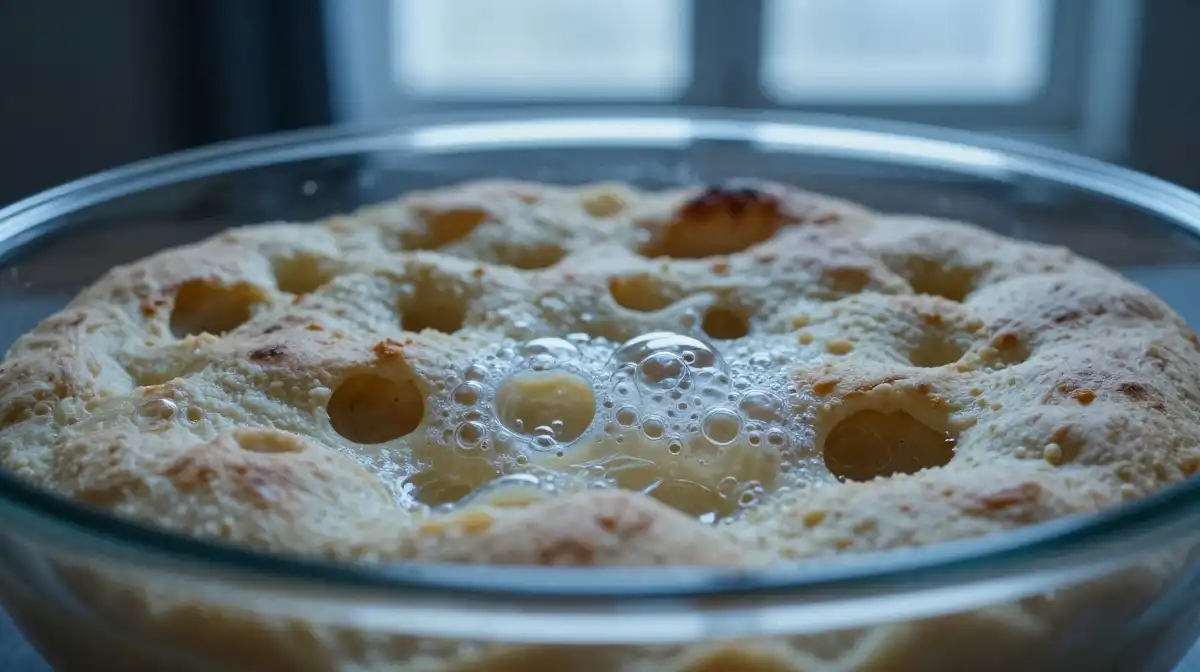
Understanding why no knead bread recipe works so magnificently makes you a better baker because you stop following instructions blindly and start making intelligent decisions based on what’s actually happening inside your dough at each stage. Gluten — the protein network that gives bread its structure and chew — develops through two methods: mechanical kneading or time. The no-knead method uses time instead of muscle to achieve identical gluten development through a process called autolyse.
you may also like this: 14 Black Pepper Focaccia That Fills Your Kitchen With the Most Incredible Aroma Imaginable
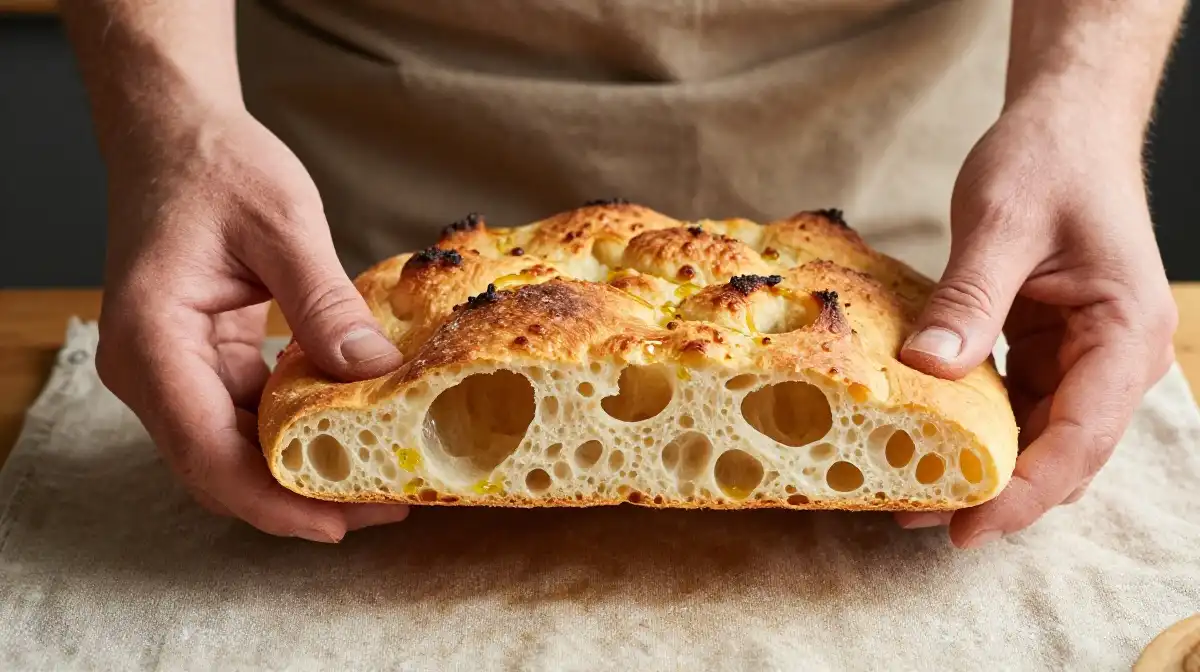
No knead focaccia dough hydration tips begin with understanding that this dough runs considerably wetter than conventional bread dough — typically 80% to 100% hydration versus 60% to 65% for standard sandwich bread. This high water content is intentional and essential. Water molecules physically separate flour proteins and allow them to align into gluten strands slowly during the extended rest period without any mechanical assistance. The resulting gluten network creates the open, irregular crumb structure full of large air pockets that gives fluffy focaccia recipe its signature pillowy interior texture.
4. Step-by-Step Guide to Making No Knead Focaccia From Scratch
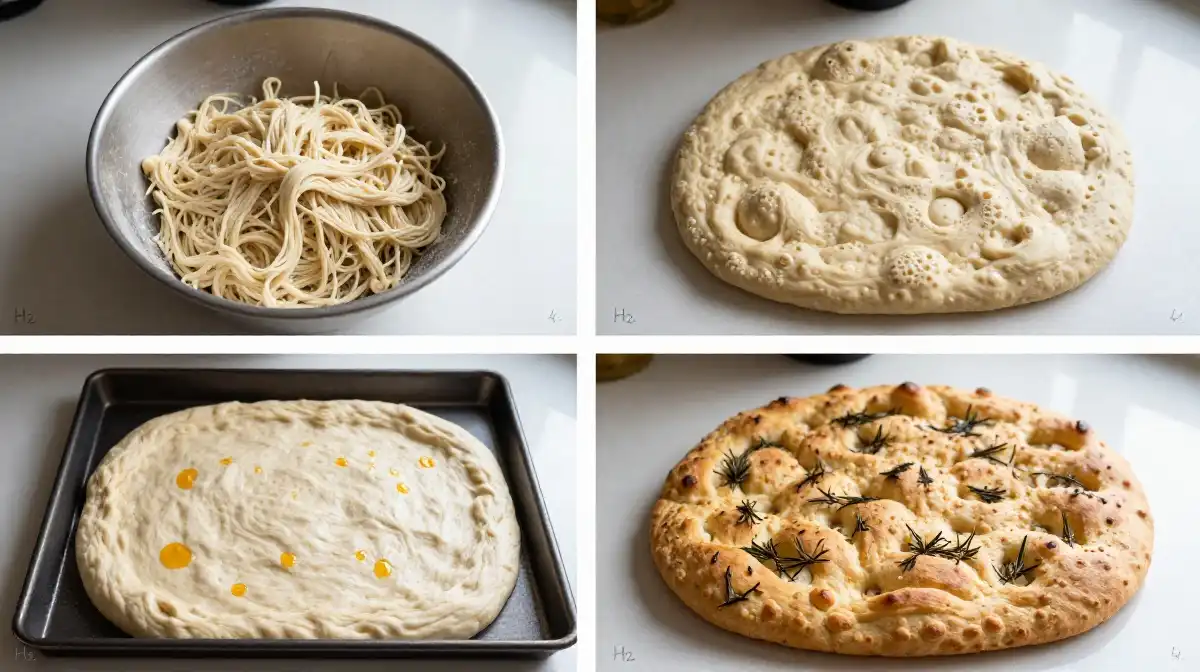
How to make no knead focaccia successfully requires following a precise sequence that respects the natural fermentation timeline this bread depends upon entirely for its flavor and structure. Combine flour, instant yeast and fine sea salt in a large bowl — whisk dry ingredients together thoroughly before adding any liquid. Pour warm water over the dry mixture and stir with a rubber spatula or wooden spoon until no dry flour remains visible and a shaggy, sticky dough forms that looks genuinely unpromising but is already on its way to becoming something spectacular.
Drizzle two tablespoons of quality olive oil over the dough surface, cover the bowl tightly with plastic wrap and allow the dough to rest and ferment for a minimum of two hours at room temperature. After this initial room-temperature rest, oil your baking pan generously with two tablespoons of olive oil then transfer the dough into the pan. Gently stretch it toward the pan edges — don’t force it if it resists. Cover loosely and allow a second 45-minute rest before dimpling and adding toppings for the final bake.
| Step | Action | Time Required |
|---|---|---|
| 1 | Mix dry ingredients together | 2 minutes |
| 2 | Add warm water and stir to shaggy dough | 3 minutes |
| 3 | Add olive oil and cover bowl | 1 minute |
| 4 | First rise at room temperature | 2 hours minimum |
| 5 | Oil pan and transfer dough | 3 minutes |
| 6 | Stretch dough toward pan edges | 2 minutes |
| 7 | Cover and second rise in pan | 45 minutes |
| 8 | Preheat oven to 450°F | 20 minutes |
| 9 | Dimple dough, add toppings | 3 minutes |
| 10 | Drizzle olive oil generously | 1 minute |
| 11 | Bake until deep golden | 20–25 minutes |
| 12 | Cool 10 minutes before slicing | 10 minutes |
5. How to Make Overnight No Knead Focaccia for Maximum Flavor and Airy Texture
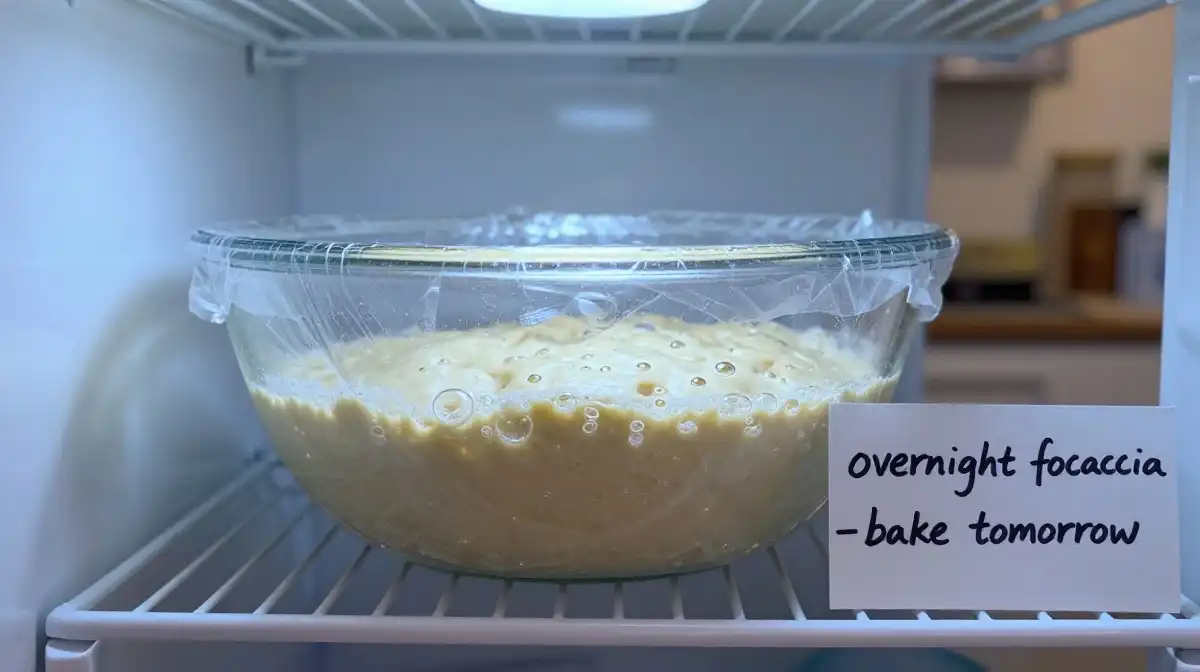
No knead focaccia overnight recipe produces the most complex, most flavorful and most texturally impressive results of any timing variation available to home bakers with even minimal advance planning ability. Cold fermentation in the refrigerator over eight to eighteen hours allows enzymes in the flour to break down starches into simple sugars while simultaneously developing organic acids that create the subtle tanginess and aromatic depth that same-day focaccia simply cannot develop in its compressed timeline.
Mix your dough following the standard method then immediately cover and refrigerate rather than allowing room-temperature fermentation. Overnight focaccia recipe dough works best when removed from the refrigerator 90 minutes before baking — this warming period relaxes the cold-tightened gluten and allows the dough to puff visibly before dimpling and baking. The extra yeast activity during this warming period creates dramatically larger air pockets resulting in no knead focaccia fluffy and airy texture that makes the overnight method specifically worth the minimal additional planning it requires from any organized home baker.
6. How to Make Same Day No Knead Focaccia When You Don’t Have Time to Wait
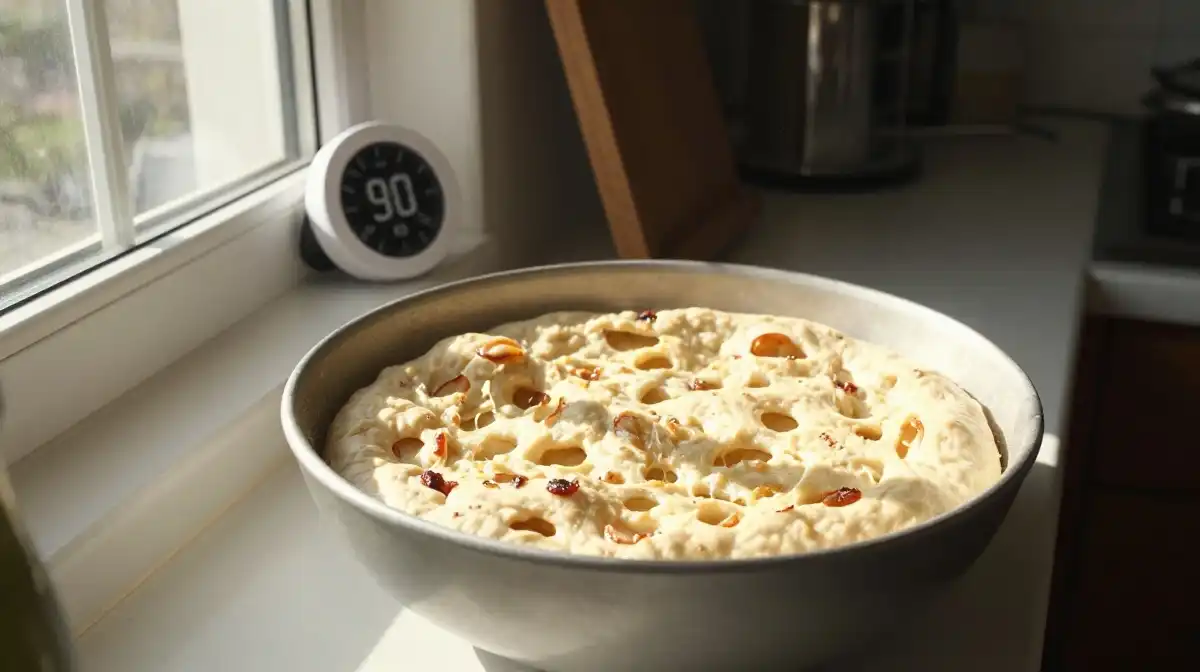
No knead focaccia same day recipe delivers genuinely excellent results in approximately three hours total from mixing bowl to table — a realistic weekend baking timeline that accommodates spontaneous bread-baking decisions made on Saturday morning when dinner guests are arriving that evening. The key to maximizing flavor in an accelerated timeline is slightly increasing the yeast quantity to half a teaspoon above the standard amount and ensuring your water temperature hits precisely 110°F to activate yeast activity as efficiently as possible.
Easy no knead focaccia for beginners attempting the same-day version should place their covered dough bowl in the warmest spot in their house — inside an oven with just the light on, near a warm window or on top of the refrigerator where heat naturally rises. This warm environment accelerates fermentation meaningfully reducing the required rise time from two hours to approximately 90 minutes while still developing adequate flavor complexity for a genuinely impressive same-day result that most dinner guests will enthusiastically compliment and request the recipe for before leaving your home.
7. Best Toppings for No Knead Focaccia That Take It From Good to Absolutely Spectacular
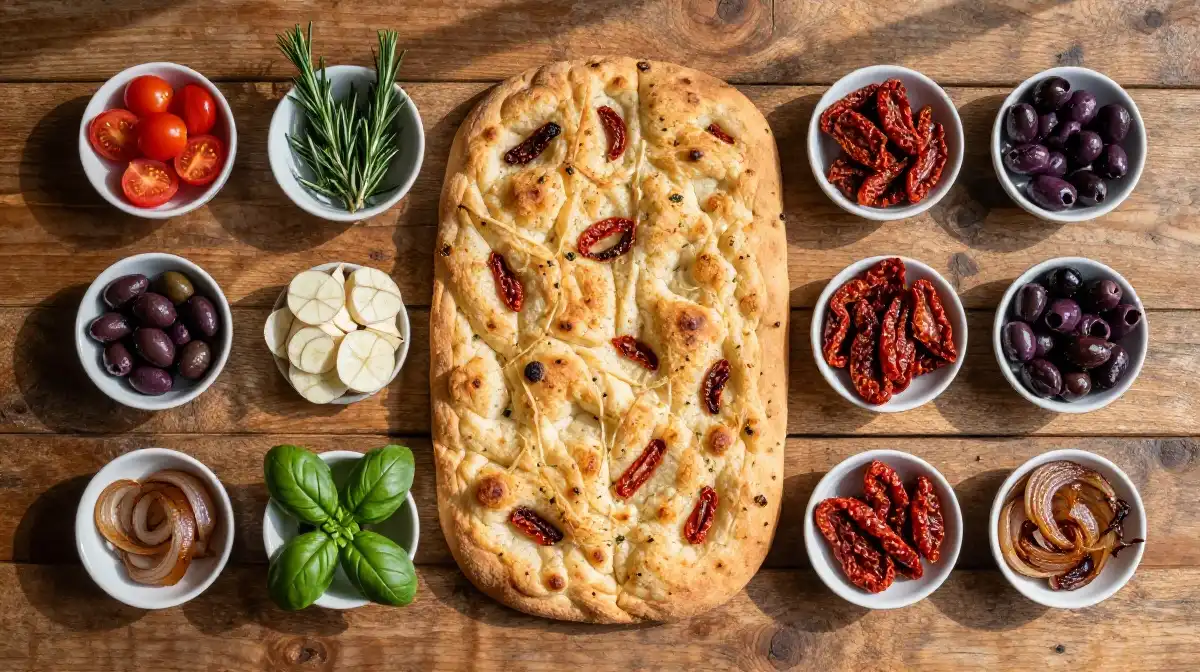
Focaccia with toppings transforms this already excellent bread into something truly customizable and personally expressive — the dimpled surface of properly made focaccia acts as a natural reservoir for toppings pressed into the dough that bake directly into the bread surface rather than simply sitting on top and falling off during slicing. This structural integration of toppings into the bread itself is what makes focaccia fundamentally different and more satisfying than pizza or flatbread alternatives.
Focaccia with herbs using fresh rosemary represents the most classic and most beloved topping combination in Italian baking tradition but modern American home bakers have enthusiastically expanded the topping repertoire in creative directions that honor the bread’s Italian heritage while reflecting local seasonal ingredient availability. Cherry tomatoes halved and pressed cut-side-down into the dimpled dough create sweet, jammy pockets of concentrated tomato flavor after baking. Thinly sliced red onion, pitted olives, sun-dried tomatoes, caramelized onion and thinly sliced fresh fennel all press beautifully into focaccia dough and roast magnificently during baking.
| Topping | Preparation | Flavor Profile | Season |
|---|---|---|---|
| Fresh rosemary and sea salt | Press sprigs into dough | Classic herbal Italian | Year round |
| Cherry tomatoes and basil | Halve and press cut-side down | Sweet, summery | Summer |
| Caramelized onion and thyme | Cook onions first | Rich, sweet, savory | Fall/Winter |
| Kalamata olives and oregano | Press whole olives in | Briny, bold Mediterranean | Year round |
| Sliced garlic and rosemary | Press raw thin slices | Intensely savory | Year round |
| Sun-dried tomato and feta | Press pieces into dough | Tangy, rich, salty | Year round |
| Fig and gorgonzola | Press fresh fig slices | Sweet, luxurious | Fall |
8. How to Get Those Perfect Air Bubbles in Your No Knead Focaccia Every Single Time
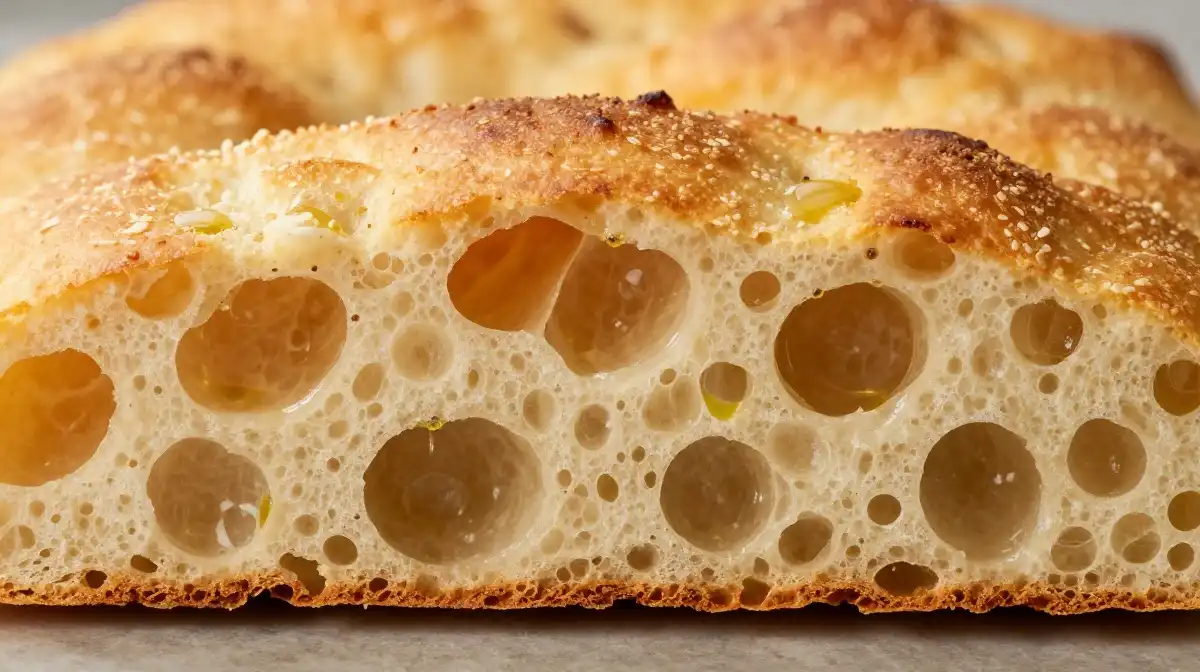
No knead focaccia air bubbles secret lies entirely in respecting the fermentation process and resisting every impulse to rush, deflate or over-manipulate the dough during its critical development stages. Large, irregular air pockets form when yeast produces carbon dioxide gas that becomes trapped within a developed gluten network strong enough to contain the expanding gas without collapsing — this is why proper hydration, adequate fermentation time and gentle handling all matter equally and simultaneously.
How to make focaccia without kneading successfully while preserving those magnificent air bubbles requires one crucial technique during the dimpling stage — use well-oiled fingers and press dimples with confident, direct downward pressure rather than tentative pokes that compress and redistribute gas rather than creating the deep holes that characterize properly dimpled, beautifully bubbled authentic focaccia. Pouring additional olive oil generously into every dimple before baking fills each pocket with oil that sizzles and fries the bread bottom during baking while simultaneously weighing down the dimple centers enough to preserve the air bubble structure surrounding each depression throughout the entire baking process.
9. Best Pan for Baking No Knead Focaccia That Delivers Crispy Golden Results
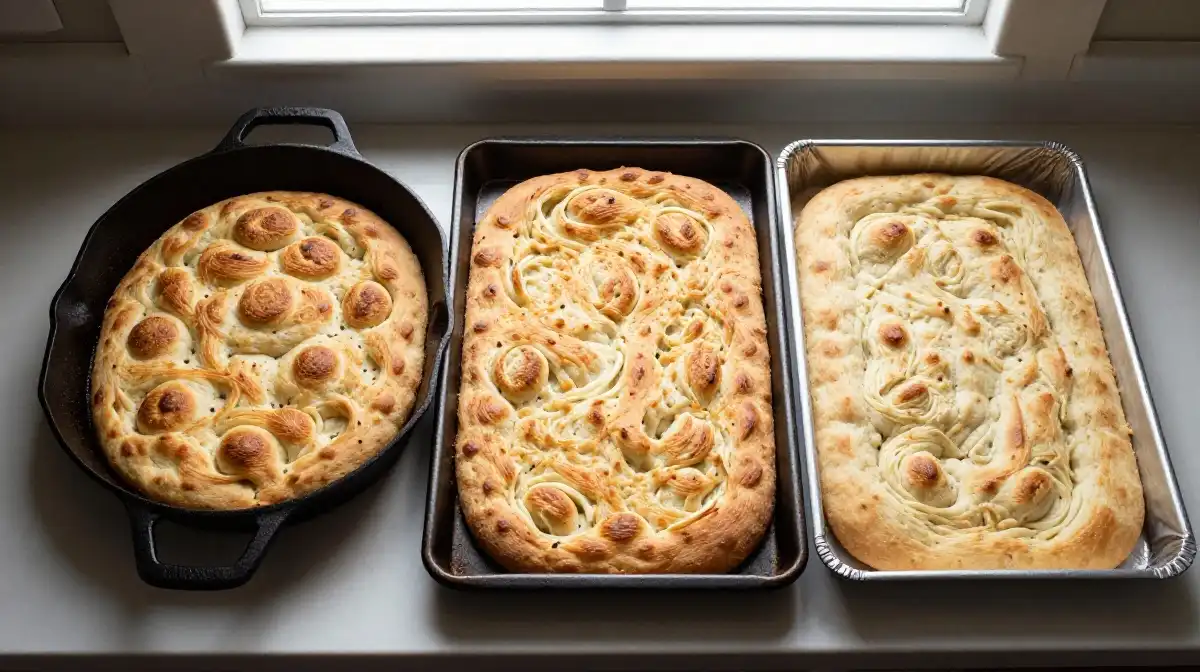
Pan selection determines the bottom crust quality of your crispy focaccia bread more than any other equipment decision you make throughout the entire baking process. A well-seasoned cast iron skillet, a dark metal quarter sheet pan or a heavy-gauge aluminum baking pan all produce excellent results through different mechanisms — cast iron retains and radiates intense direct heat creating a particularly crispy bottom while dark metal absorbs oven heat aggressively for uniform browning across the entire base.
No knead focaccia in cast iron pan using a 12-inch well-seasoned skillet produces arguably the most spectacular crispy bottom of any pan option because cast iron’s superior heat retention creates immediate, intense contact cooking the moment cold dough touches the pan surface. Glass and ceramic baking dishes conduct heat too slowly and produce pale, soft, disappointing focaccia bottoms that lack the essential crispiness that makes properly baked focaccia so texturally satisfying and genuinely different from regular bread. Avoid non-stick pans with chemical coatings because the high 450°F baking temperature required for proper focaccia caramelization exceeds the safe temperature range of most non-stick coatings.
10. How to Make No Knead Focaccia Extra Crispy on the Outside and Fluffy Inside
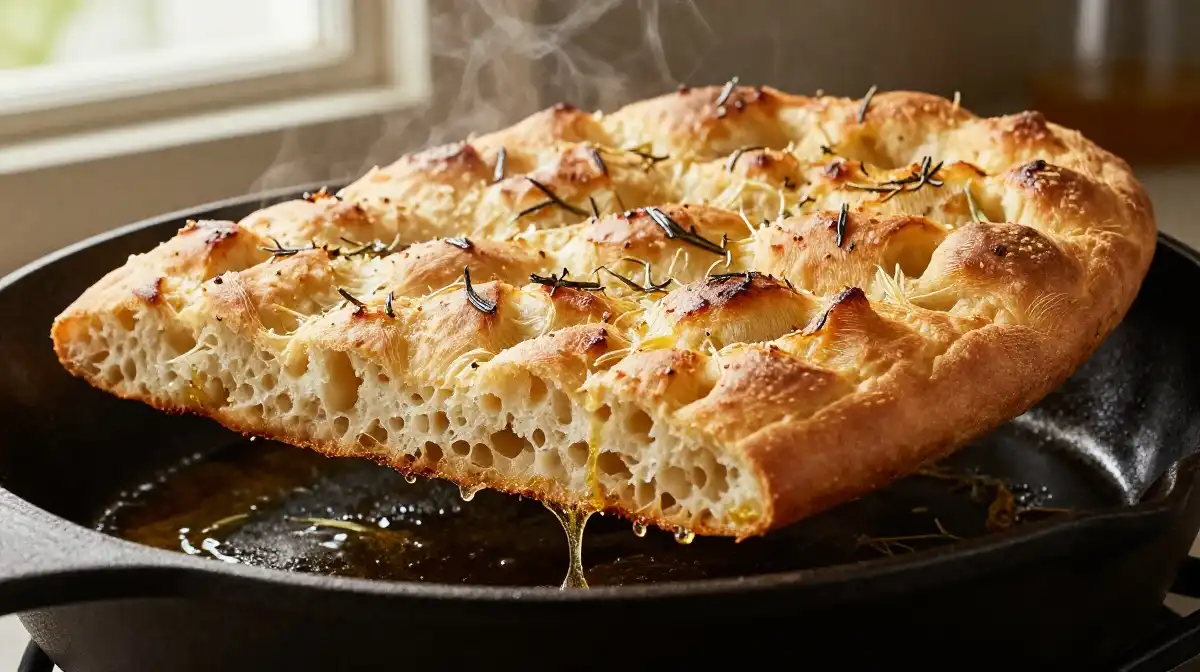
Crispy no knead focaccia recipe success requires managing two seemingly contradictory goals simultaneously — creating a crackling, golden, almost fried exterior while maintaining a soft, pillowy, open-crumbed interior that provides satisfying contrast in every single bite. The solution lies in three specific technique decisions that work together to achieve this textural paradox that makes truly great focaccia so distinctively satisfying compared to any other bread style.
No knead focaccia baking temperature of 450°F represents the non-negotiable minimum for achieving proper caramelization — lower temperatures produce pale, bready focaccia lacking the golden crust that defines the authentic Italian version. Use generous olive oil in the pan — at least two tablespoons coating every surface before the dough goes in. Preheat your oven for a full 20 to 25 minutes before baking and consider placing your pan on the lowest oven rack for the first ten minutes then moving to the center rack for the remaining baking time creating maximum bottom heat exposure early before transitioning to more even overall baking for the final golden surface.
11. No Knead Focaccia With Rosemary Garlic and Sea Salt the Classic Italian Way
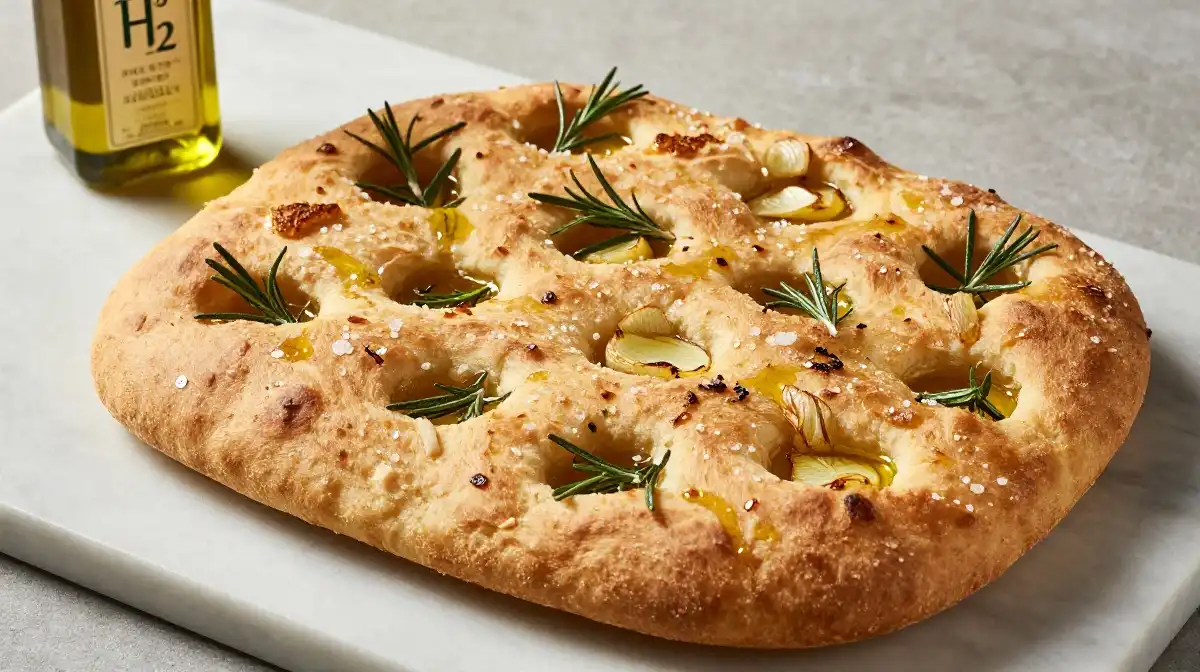
No knead focaccia with rosemary and olive oil represents the most traditional, most timeless and most genuinely authentic expression of this ancient Italian bread tradition that Ligurian bakers have refined over centuries of daily production. Rosemary is not merely a topping here — it’s an essential flavor element that releases its aromatic essential oils directly into the surrounding olive oil during baking creating a fragrant, herbal perfume throughout every layer of the finished bread from bottom crust to dimpled surface.
Focaccia with sea salt applied at the right moment makes an enormous difference that seems disproportionate to such a simple final step. Flaky sea salt — Maldon, fleur de sel or Cyprus flakes — scattered generously over the olive-oil-drizzled surface immediately before entering the oven partially dissolves during baking creating concentrated bursts of mineral saltiness in every bite rather than uniform background saltiness that fine salt mixed into the dough provides. No knead focaccia with garlic using thinly sliced raw garlic pressed into the dimples caramelizes beautifully during baking turning sweet and mellow — a completely different flavor experience from raw garlic that makes every garlic-topped slice genuinely addictive.
12. Creative No Knead Focaccia Variations That Will Impress Everyone at Your Table
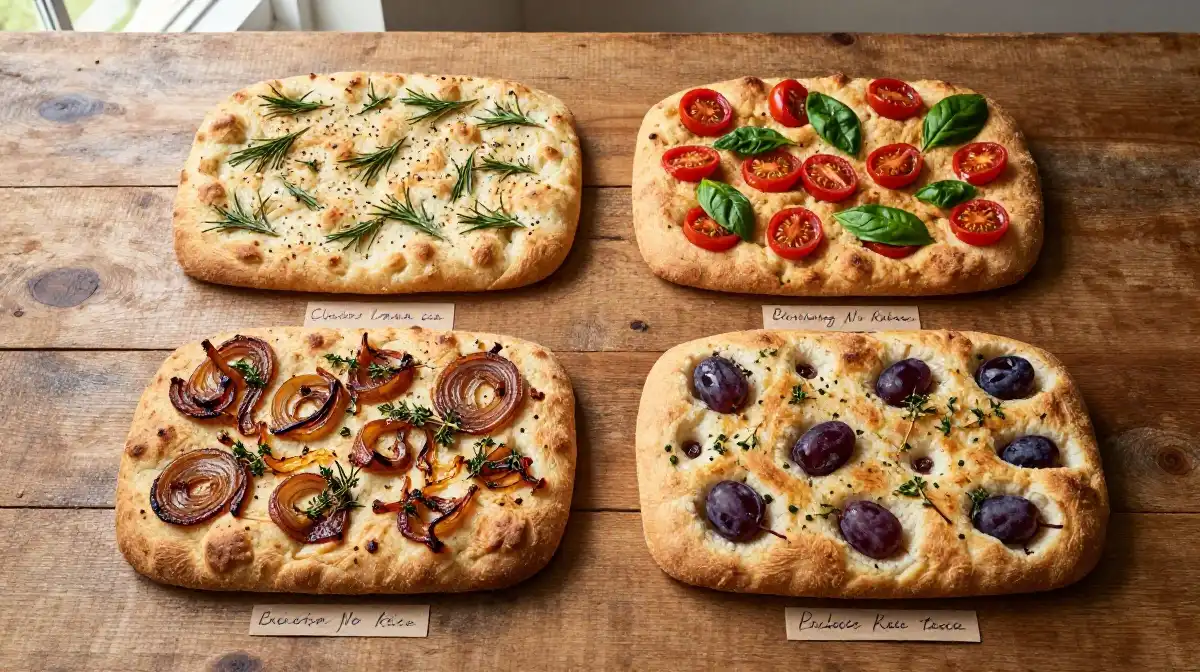
Italian focaccia bread recipe traditions actually encompass extraordinary regional diversity that most Americans never encounter beyond the standard rosemary version — focaccia al formaggio from Recco uses two paper-thin dough sheets sandwiching melted stracchino cheese, focaccia di Genova uses no toppings at all relying entirely on olive oil and sea salt for its perfect simplicity and focaccia barese from Puglia incorporates cherry tomatoes pressed into its surface before baking creating a beautiful rustic regional variation.
Focaccia with toppings creativity in American home kitchens has produced genuinely inspired variations that honor the bread’s structural qualities while incorporating local flavor preferences and seasonal ingredient availability throughout the year. Sweet focaccia topped with fresh grapes, rosemary and sugar creates a traditional Tuscan harvest bread called schiacciata con l’uva that surprises and delights guests unfamiliar with Italian bread’s naturally sweet applications. Easy focaccia bread recipe variations using everything bagel seasoning, fresh corn and scallions or roasted garlic and brie have all earned devoted followings among American home bakers who share their results enthusiastically across food-focused social media communities.
13. Common No Knead Focaccia Mistakes to Avoid for Perfect Results Every Time
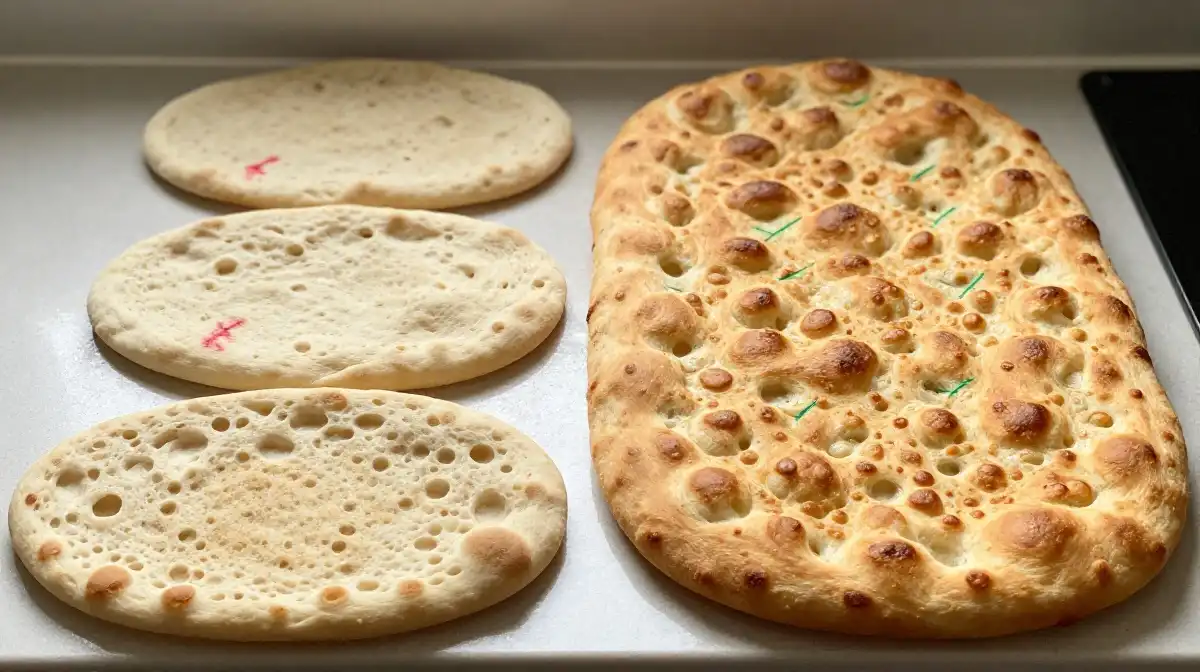
Using water that’s too hot is mistake number one that kills yeast before fermentation ever begins and produces flat, dense, flavorless focaccia that no amount of quality olive oil or beautiful toppings can rescue. Water temperature between 100°F and 110°F activates yeast perfectly — hotter than 115°F damages yeast proteins irreversibly and colder than 90°F fails to activate yeast efficiently enough for proper fermentation within a reasonable timeline.
Not using enough olive oil is mistake number two that produces dry, pale focaccia lacking the characteristic golden crispiness and rich olive flavor that defines properly made authentic Italian bread. Be genuinely generous — two full tablespoons in the pan before the dough goes in and another two tablespoons drizzled over the dimpled surface before baking creates the oil-rich environment that makes focaccia taste so distinctively luxurious. Skipping the second rise in the pan is mistake number three — this 45-minute rest after stretching the dough into the pan allows the gluten to relax and the yeast to resume activity creating the puffy, pre-bake volume that produces no knead focaccia fluffy and airy interior texture after baking completes.
14. How to Store Freeze and Reheat No Knead Focaccia Without Losing Any Crispiness
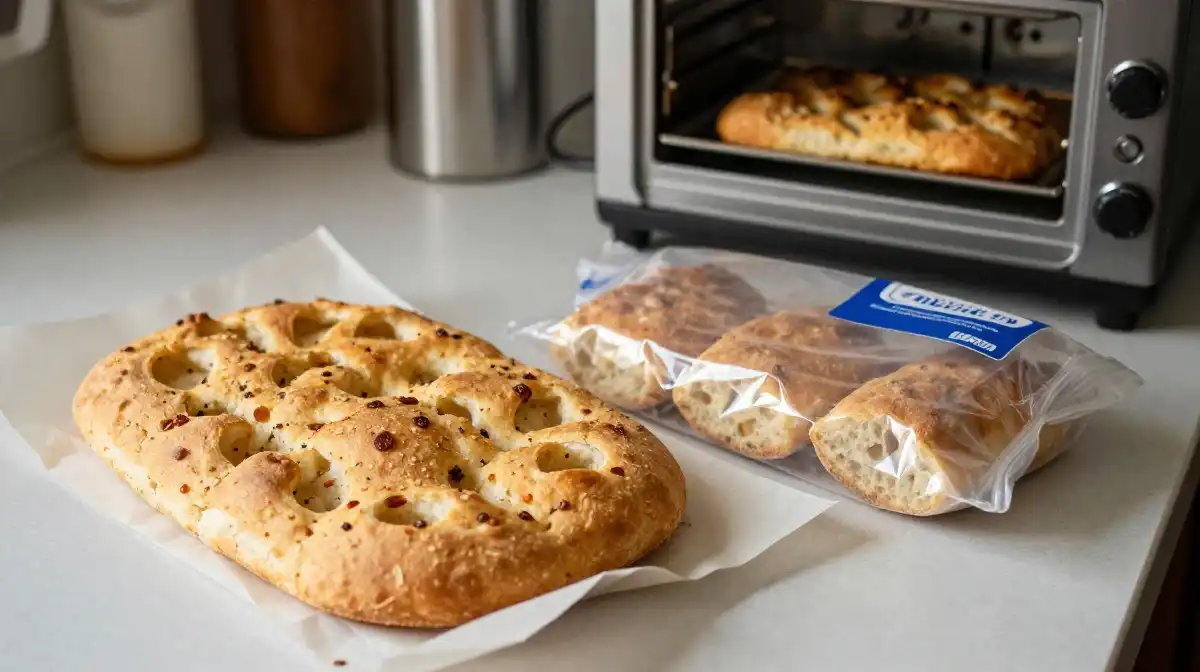
Simple focaccia bread recipe storage requires understanding that focaccia stales faster than enriched breads because its high water content and open crumb structure allow moisture to escape more quickly during ambient room temperature storage. Store completely cooled focaccia wrapped loosely in parchment paper rather than plastic wrap at room temperature for up to two days — plastic wrap traps moisture against the crust creating sogginess that ruins the crispy texture that made the bread so satisfying when freshly baked.
Freezing extends homemade focaccia no knead storage to two full months without significant quality loss when handled correctly from the beginning. Slice the completely cooled focaccia into individual portions, wrap each piece tightly in plastic wrap then place in a labeled freezer bag. Reheat frozen focaccia at 375°F for eight to ten minutes directly from frozen — this direct oven reheating method restores remarkable crispiness that microwave reheating completely destroys by converting exterior moisture into steam that softens rather than crisps the bread surface. The oven method produces results genuinely close to freshly baked quality that makes batch baking and freezing an excellent strategy for always having outstanding bread available instantly.
15. Conclusion
No knead focaccia stands as perhaps the single most accessible, most rewarding and most genuinely impressive bread any American home baker learns to make regardless of their current skill level or baking experience. It requires almost no active effort. It needs no special equipment. And it produces results so spectacularly golden, crispy and pillowy that it permanently changes how you think about homemade bread and what you’re capable of baking for yourself and the people you care about.
Start with the classic rosemary, garlic and sea salt version tonight or tomorrow morning. Master the timing and the dimpling technique completely. Then explore the overnight method for weekend entertaining when you want the absolute best flavor this recipe can deliver. Build your personal focaccia repertoire from that solid foundation and watch this humble Italian flatbread become the most requested, most celebrated and most satisfying thing that regularly emerges from your home oven throughout every season of the year.