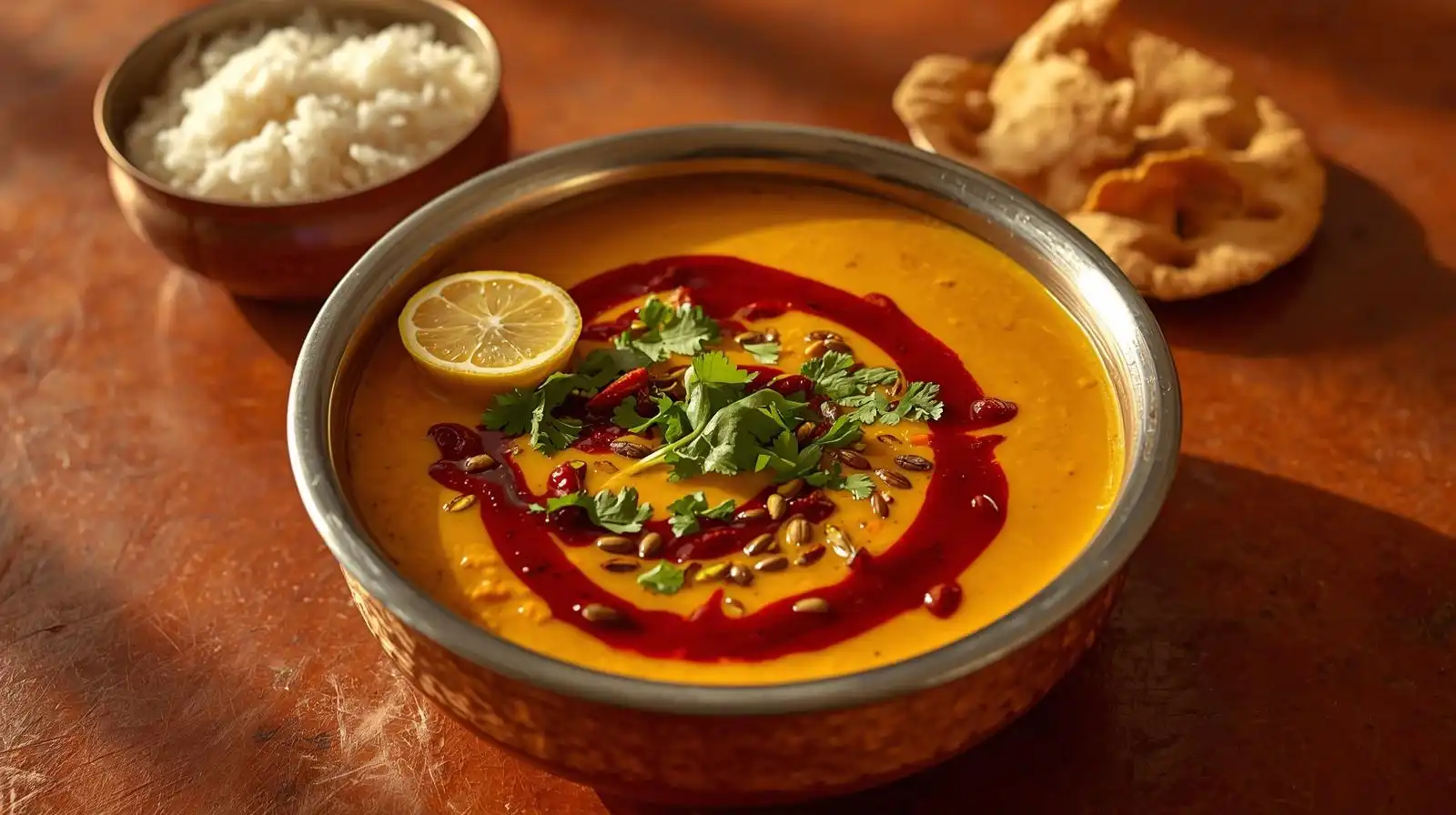
15 Moong Dal: The Golden Lentil That Heals Nourishes and Delights Every Bowl
Some foods transcend the ordinary and become something close to sacred in the cultures that have relied on them for centuries. Moong dal is one of those foods. This small golden lentil has nourished generations across South Asia, Southeast Asia, and now increasingly across American kitchens where health-conscious cooks are discovering what Ayurvedic healers have known for five thousand years — that moong dal is not just food but medicine in the most delicious form imaginable. It’s warming, deeply satisfying, extraordinarily nutritious, and somehow manages to taste genuinely comforting while simultaneously being one of the healthiest things you can eat on any given day.
What Is Moong Dal and Why the Whole World Is Falling in Love With It
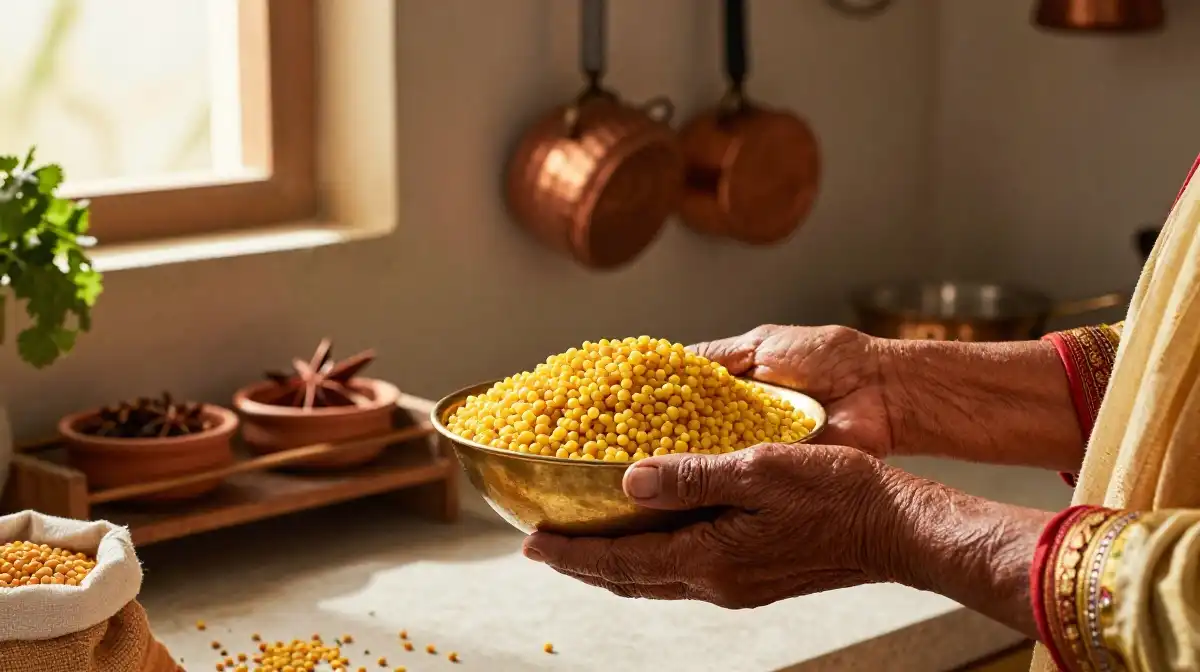
What is moong dal in its most precise botanical and culinary definition? Moong dal comes from the mung bean — Vigna radiata — a small green legume native to the Indian subcontinent that has been cultivated for human consumption for at least four thousand years. When the whole green mung bean is split and hulled it becomes split yellow moong dal — the small flat yellow lentil most commonly used in Indian home cooking. When the whole bean is left intact with its outer green skin it becomes whole green moong dal — used differently in cooking and producing a nuttier earthier flavor that the hulled version lacks. Both forms belong to the same plant but cook differently, taste differently, and serve different culinary purposes within the enormous variety of preparations that South Asian cuisine has developed around this remarkable ingredient.
Moong dal Indian recipe traditions span the entire subcontinent from Kashmir in the north to Kerala in the south with every region producing distinct interpretations shaped by local spice palettes, cooking techniques, and cultural preferences. American cooks are discovering moong dal through multiple simultaneous pathways — through Indian-American restaurant cuisine, through the growing Ayurvedic wellness movement that champions moong dal as a cleansing digestive food, through plant-based eating trends that celebrate legumes as protein-rich meat alternatives, and through the simple discovery that easy moong dal recipe preparations produce some of the most satisfying and most nutritionally impressive meals available in the entire global cooking repertoire for investment of time, effort, and money.
Incredible Health Benefits of Moong Dal That Make It a Superfood
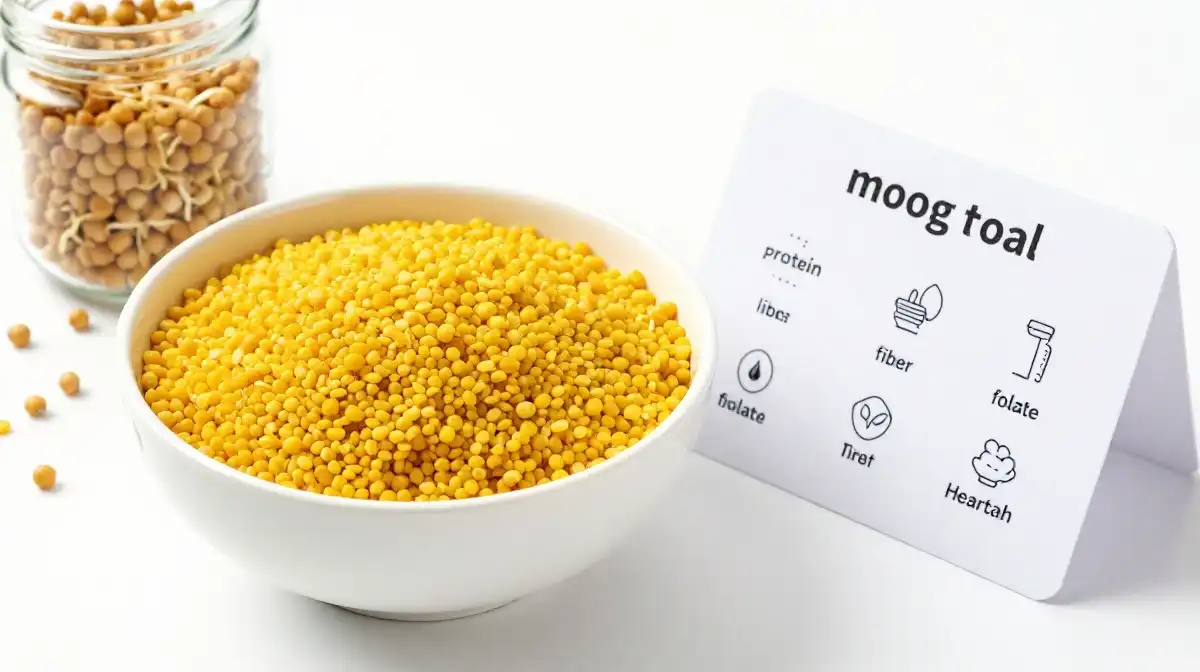
What are the health benefits of moong dal that have made it the cornerstone of Ayurvedic medicine and the subject of increasingly enthusiastic attention from Western nutritional science? Moong dal nutrition per cooked cup is genuinely extraordinary — 14 grams of plant-based protein, 15 grams of dietary fiber, significant quantities of folate, iron, magnesium, potassium, zinc, and B vitamins, all delivered within approximately 212 calories. Moong dal protein content makes it one of the most protein-dense plant foods available at any price point — particularly valuable for the growing proportion of American adults reducing animal protein consumption for health, environmental, or ethical reasons.
Moong dal health benefits extend well beyond simple macronutrient and micronutrient provision into areas of genuinely therapeutic biological activity that scientific research is increasingly validating. A 2017 study published in the Journal of Agricultural and Food Chemistry identified specific peptides in mung beans with measurable ACE-inhibitory activity that supports healthy blood pressure management. The dal’s resistant starch feeds beneficial gut bacteria — specifically Bifidobacterium and Lactobacillus species — that produce short-chain fatty acids supporting colon health, immune function, and mood regulation through the gut-brain axis. Moong dal for weight loss works through its combination of protein and fiber that extends satiety significantly — research consistently shows that high-fiber legume consumption at breakfast reduces total daily calorie intake by 12 to 15% compared to equivalent-calorie low-fiber breakfasts.
| Nutrient | Per Cooked Cup | % Daily Value | Primary Benefit |
|---|---|---|---|
| Protein | 14g | 28% | Muscle support, satiety |
| Dietary Fiber | 15g | 54% | Digestive health, cholesterol |
| Folate | 321mcg | 80% | Cell health, pregnancy |
| Iron | 2.8mg | 16% | Energy, oxygen transport |
| Magnesium | 97mg | 23% | Bone health, sleep |
| Potassium | 537mg | 11% | Heart health, blood pressure |
| Zinc | 1.7mg | 15% | Immune function, healing |
Best Types of Moong Dal and How Each One Cooks Differently
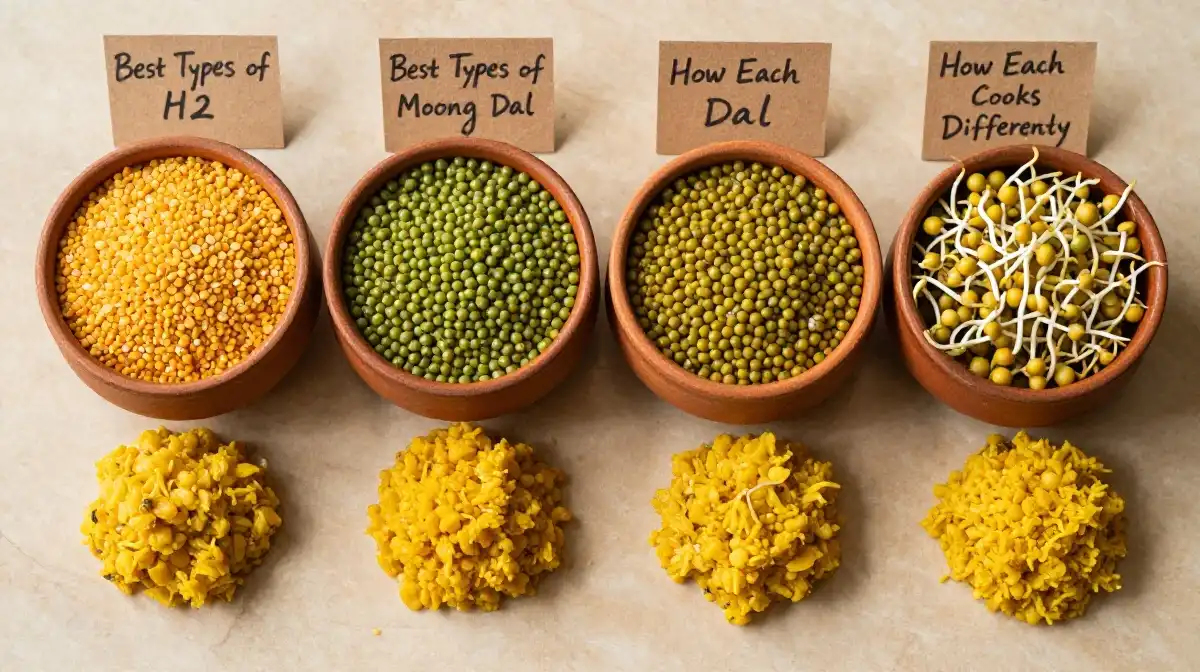
Split yellow moong dal — the most widely used and most accessible form — cooks fastest of all lentil varieties, requiring no pre-soaking for most applications and reaching a fully soft creamy consistency in twenty to twenty-five minutes of gentle simmering. Its mild earthy flavor and creamy texture make it the most versatile dal for soups, tadka preparations, and khichdi where a smooth cohesive consistency is the desired result. This is the variety most beginners should start with because its forgiving cooking behavior produces reliable results without extensive experience or precise technique.
you may also like this: 13 Easy Quinoa Vegetable Soup That Is Hearty Healthy and Ready in 30 Minutes
Whole green moong dal requires overnight soaking before cooking and takes considerably longer — forty-five to sixty minutes of simmering — to reach the tender consistency that proper dal preparation requires. Its outer green skin adds earthy complexity and significantly more dietary fiber than the hulled yellow version provides. Moong dal with spinach and other leafy greens pairs most naturally with the whole green variety whose assertive earthy character can stand up to strong vegetables without losing its own flavor identity beneath them. Many experienced Indian cooks prefer whole green moong specifically for its more robust flavor and its more satisfying chewy-tender texture that split yellow dal’s completely smooth consistency never achieves regardless of preparation technique.
| Type | Soak Required | Cook Time | Texture | Flavor | Best For |
|---|---|---|---|---|---|
| Split Yellow Moong | Optional (30 min) | 20-25 min | Smooth, creamy | Mild, earthy | Soup, tadka, khichdi |
| Whole Green Moong | Yes (8 hours) | 45-60 min | Tender, slightly firm | Earthy, robust | Curry, sprouting |
| Split Green Moong | Optional (30 min) | 25-30 min | Medium smooth | Earthier than yellow | Versatile |
| Sprouted Moong | No cooking needed | N/A | Crisp, crunchy | Fresh, grassy | Salads, raw eating |
How to Soak and Prepare Moong Dal Before Cooking for Best Results
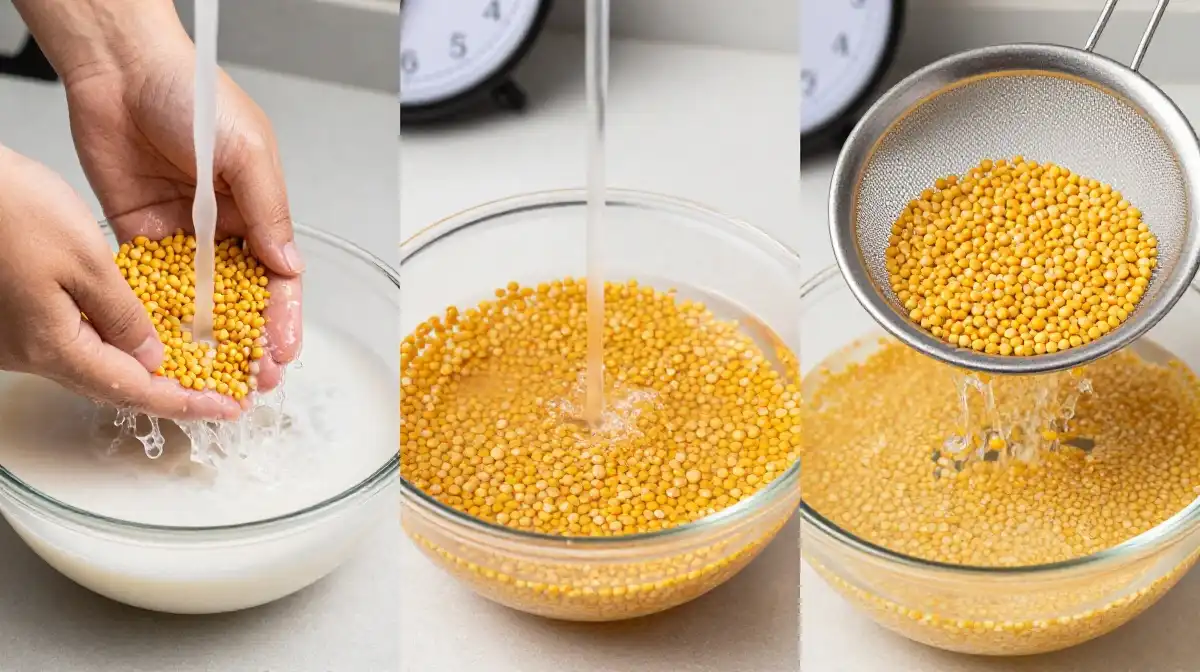
How to soak moong dal before cooking and why the soaking decision matters more than most home cooks realize — soaking dramatically reduces cooking time, improves digestibility by breaking down oligosaccharide compounds responsible for digestive discomfort, and produces a more evenly cooked result where every lentil reaches tenderness simultaneously rather than the uneven cooking that dry unsoaked dal sometimes produces. Split yellow moong dal benefits from thirty minutes of soaking minimum — longer soaking of two to four hours produces the most digestible and most quickly cooking result. Whole green moong dal requires overnight soaking of eight to twelve hours — attempting to cook un-soaked whole green moong produces a batch where the outer green skin remains tough even after extended cooking while the interior has become mushy.
Preparation beyond soaking involves one often-overlooked step that professional Indian cooks perform consistently — washing the dal thoroughly before soaking by placing it in a bowl and rubbing it between your palms under running water until the water runs completely clear rather than cloudy. This washing removes surface starch, dust, and any residual processing compounds that contribute to a slight bitterness in the finished dal that careful washing eliminates entirely. How to make moong dal creamy at the cooking stage requires covering the pot and maintaining a gentle simmer rather than aggressive boiling — violent boiling breaks dal unevenly and produces a grainy rather than smooth creamy consistency that the properly gentle simmering method achieves with remarkable reliability across every variety of split dal preparation.
Best Spices and Tadka for an Authentic and Flavorful Moong Dal
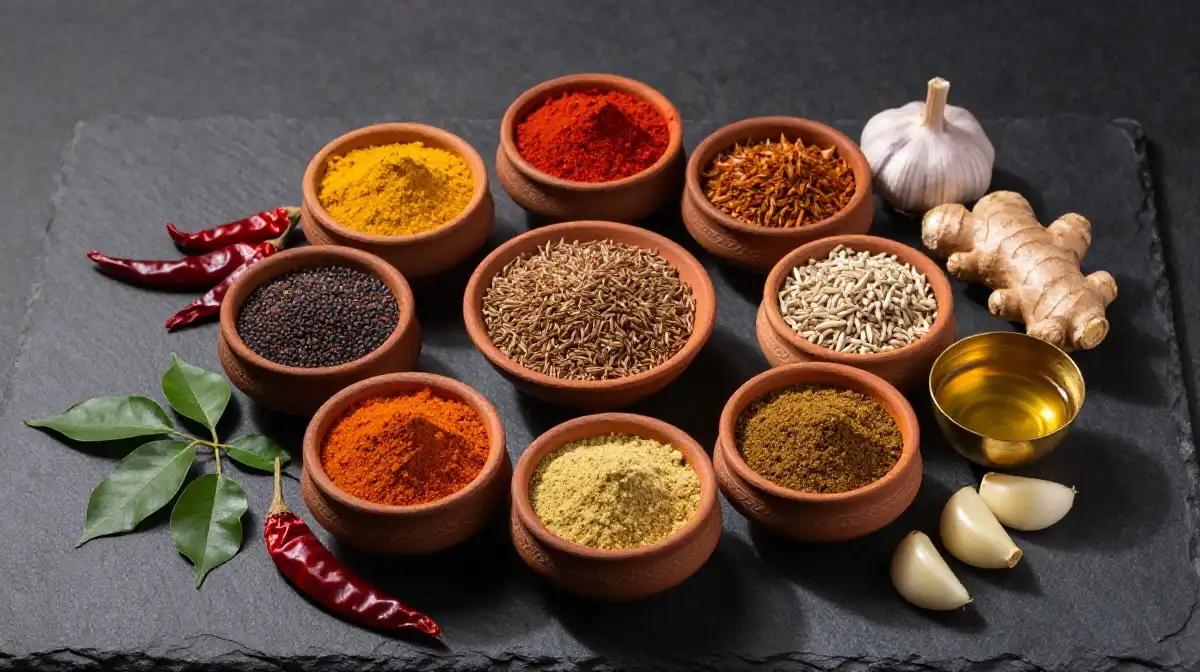
What spices go in moong dal to create the authentic aromatic character that distinguishes genuinely excellent dal from flat disappointing versions that contain all the right ingredients but somehow never quite taste like the real thing? The spice foundation consists of turmeric — added directly to the simmering dal for its earthy warmth and brilliant golden color — red chili powder for heat, coriander powder for citrusy floral depth, and garam masala added at the very end for the warm complex spice character that defines finished Indian cooking’s aromatic signature. These four spices form the backbone around which the tadka’s more volatile aromatics layer additional complexity during the final dramatic finishing stage.
The tadka — literally meaning tempering — is the most transformative technique in all of South Asian cooking and the element that most dramatically distinguishes authentically prepared moong dal tadka from disappointing versions. Heat ghee or neutral oil in a small pan over high heat until shimmering. Add mustard seeds and wait for them to pop — this popping releases sulfur compounds that create mustard’s characteristic pungent aroma. Add cumin seeds immediately after and watch them darken within seconds — the darkening indicates that their fat-soluble flavor compounds are dissolving into the hot ghee creating an extraordinarily fragrant carrier oil. Add asafoetida — just a pinch of this intensely pungent yellow powder that seems like an unlikely ingredient until you taste the depth it contributes. Add dried red chilies, curry leaves if available, and minced garlic and ginger — cook for sixty seconds until fragrant then pour this entire sizzling aromatic mixture directly over the finished dal with a dramatic crackling sound that signals both the tadka’s completion and the dish’s imminent perfection.
How to Make Classic Yellow Moong Dal Tadka From Scratch Step by Step
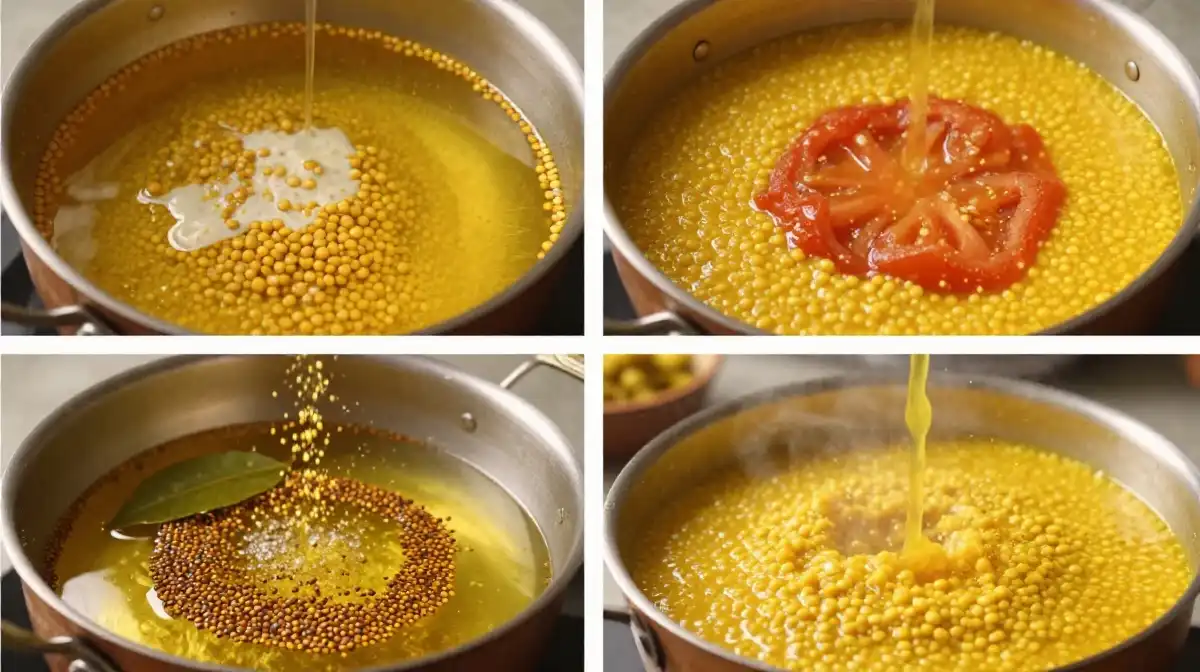
How to make yellow moong dal that achieves the authentic depth of flavor that Indian home cooks produce so naturally requires understanding the two-stage cooking process — simmering the dal to perfect creamy consistency and then transforming it completely through the dramatic tadka addition. Rinse one cup of split yellow moong dal thoroughly until water runs clear then soak for thirty minutes in cold water. Drain and add to a pot with three cups of water, half teaspoon of turmeric, one teaspoon of salt, and two medium tomatoes roughly chopped. Bring to a boil then reduce to a gentle simmer and cook partially covered for twenty to twenty-five minutes until the dal has completely dissolved into a smooth creamy consistency with no visible individual lentils remaining.
How to make moong dal tadka for the authentic restaurant finish begins by preparing the aromatic tempering while the dal simmers. Heat two tablespoons of ghee in a small heavy pan over high heat. Add one teaspoon of mustard seeds and cover immediately — they will pop vigorously within thirty seconds releasing their aromatic compounds. Add one teaspoon of cumin seeds and watch them darken in ten seconds. Add a pinch of asafoetida, two dried red chilies, ten to twelve curry leaves if available, one tablespoon of minced garlic, and one teaspoon of minced ginger. Add half teaspoon of red chili powder and coriander powder — cook for thirty seconds until the spices bloom in the fragrant ghee creating an extraordinarily aromatic mixture. Pour this sizzling tadka directly over the finished dal and stir gently to partially combine while leaving visible swirls of the tadka across the surface. Finish with lemon juice and generous fresh cilantro.
How to Make Creamy Moong Dal Soup That Warms Your Soul
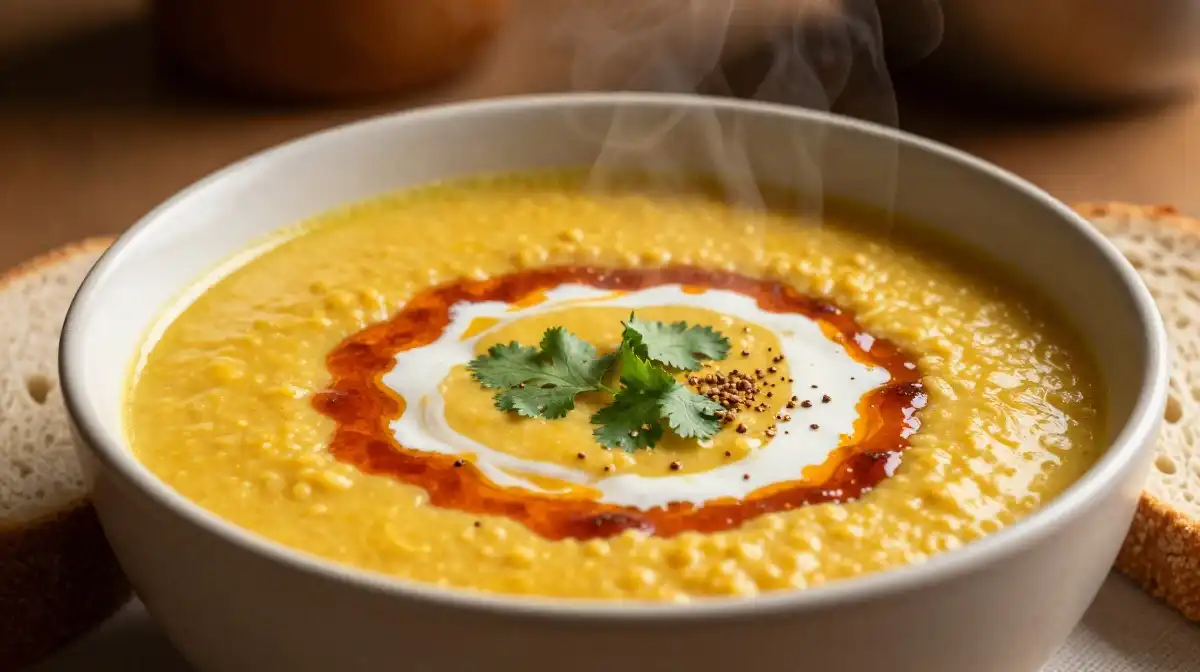
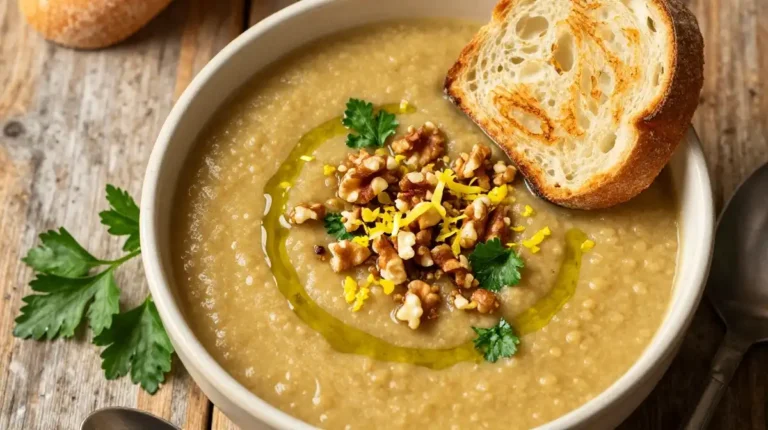
How to make moong dal soup that achieves genuine depth and warmth without requiring hours of preparation is one of the most satisfying discoveries available to American home cooks exploring Indian cuisine for the first time. Moong dal soup builds its richness through a simple aromatic foundation — sauté diced onion in ghee or olive oil for six to seven minutes until deeply golden rather than merely translucent. Golden onions contribute a sweetness and depth that hastily cooked pale onions cannot develop — this patient onion caramelization is the single most important flavor-building step in the entire soup preparation. Add garlic, ginger, turmeric, coriander powder, and a pinch of garam masala — cook for ninety seconds until the kitchen fills with an extraordinary aromatic warmth.
Moong dal with ginger and moong dal with tomatoes in the soup preparation creates a beautifully balanced flavor profile where ginger’s bright warming spice, tomato’s gentle acidity, and the dal’s earthy creaminess work together in genuinely complementary harmony. Add two cups of rinsed split yellow moong dal, five cups of vegetable broth or water, and two medium diced tomatoes — simmer for twenty-five minutes until the dal has completely dissolved. Use an immersion blender to puree completely for a velvety smooth restaurant-quality result, or leave partially chunky for more textural interest. How to thicken moong dal soup that has become too thin involves continuing to simmer uncovered for five to eight additional minutes — the dal continues thickening through further starch release and water evaporation creating the ideal consistency without any flour or other thickening agents required.
How to Make Moong Dal Khichdi the Ultimate Indian Comfort Food
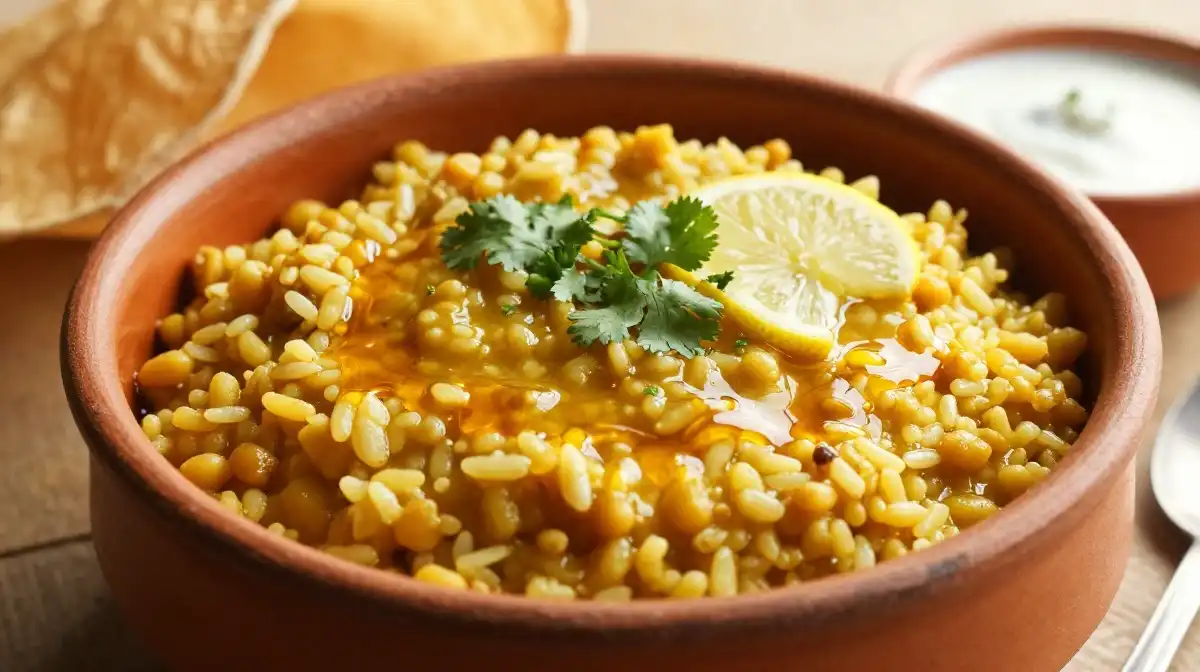
How to make moong dal khichdi that achieves the perfect porridge-like consistency — called pej in Hindi — that defines great khichdi is genuinely one of the most comforting cooking achievements available in any culinary tradition. Moong dal khichdi combines split yellow moong dal and basmati rice in a one-pot preparation that cooks them together until they’ve merged into a cohesive whole that’s simultaneously soupy and substantial, delicate and deeply nourishing. The classic ratio is one part dal to one part rice — though one-to-one-half dal to rice creates a slightly firmer khichdi while two parts dal to one part rice creates a creamier more porridge-like result that Ayurvedic practitioners recommend specifically for digestive healing and recovery from illness.
How to make moong dal with rice in khichdi form requires heating ghee generously in a heavy pot before adding the aromatics — the ghee is not optional and cannot be substituted with vegetable oil in authentic khichdi without losing the characteristic richness and the specific fat-soluble flavor compounds that ghee contributes uniquely. Sauté cumin seeds, mustard seeds, curry leaves, diced onion, garlic, ginger, and tomatoes in generous ghee for five minutes until fragrant and softened. Add rinsed dal and rice with four to five cups of water, turmeric, salt, and garam masala. Simmer covered for twenty-five to thirty minutes stirring every five minutes until the dal and rice have merged into a unified creamy whole. Serve with additional ghee drizzled across the surface, fresh cilantro, and a squeeze of lemon juice that cuts through the richness with bright citrus freshness.
How to Make Moong Dal in Instant Pot and Pressure Cooker
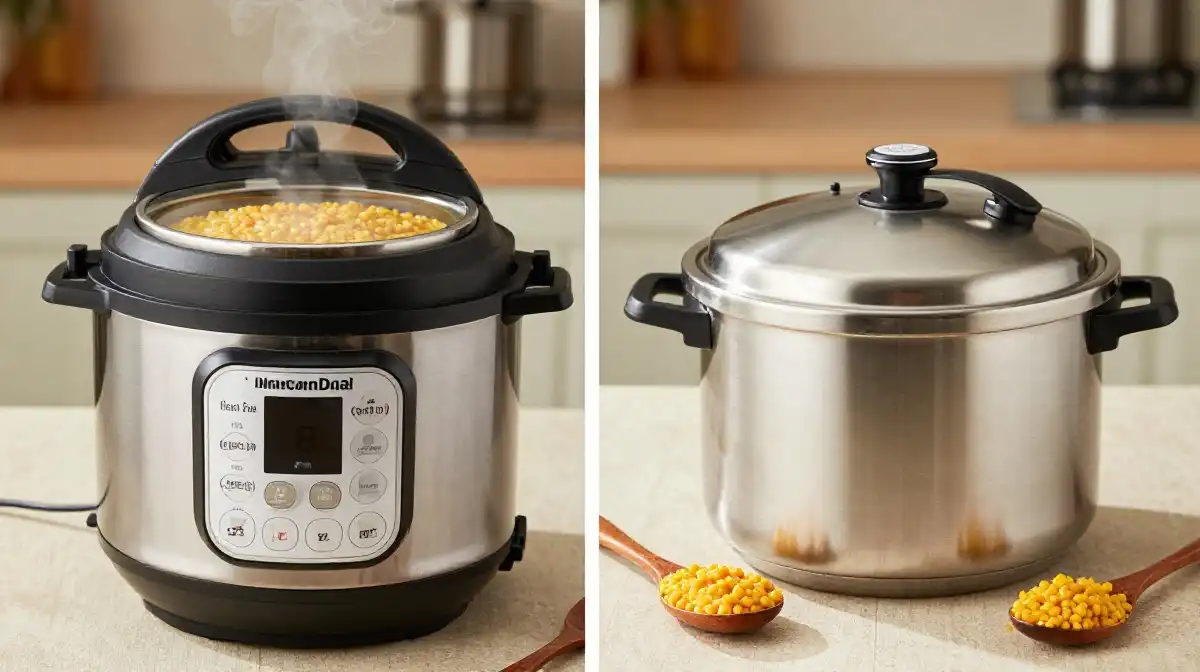
How to cook moong dal in instant pot produces remarkably excellent results in dramatically compressed time — a complete preparation from start to serving-ready bowl in under twenty minutes compared to the forty to forty-five minutes that stovetop preparation requires. Moong dal instant pot technique uses the sauté function to build the aromatic base directly in the Instant Pot insert — sauté onion in ghee for four minutes using the sauté setting, add garlic, ginger, and spices for one minute. Add rinsed dal, water or broth at a ratio of one part dal to two and a half parts liquid, and additional flavorings. Seal the lid and cook on high pressure for eight minutes for split yellow moong dal or twelve minutes for whole green moong dal — followed by a ten-minute natural pressure release.
Moong dal pressure cooker preparation in a conventional stovetop pressure cooker follows similar principles — build the aromatic base in the cooker’s base before adding dal and liquid, seal, and cook on high pressure for six to eight minutes after the cooker reaches full pressure. The pressure cooking environment drives liquid into the dal’s cellular structure more rapidly and more completely than atmospheric simmering achieves — creating a smoother more evenly cooked result in significantly less time. Moong dal slow cooker preparation works beautifully for set-it-and-forget-it weeknight convenience — add all ingredients to the slow cooker in the morning and return to perfectly cooked creamy dal eight hours later on the low setting. The tadka must still be prepared separately on the stovetop and poured over the finished slow cooker dal immediately before serving since the slow cooker’s enclosed environment cannot recreate the dramatic sizzling aromatic chemistry that tadka preparation requires.
How to Make Vegan Moong Dal With Coconut Milk and Fresh Herbs
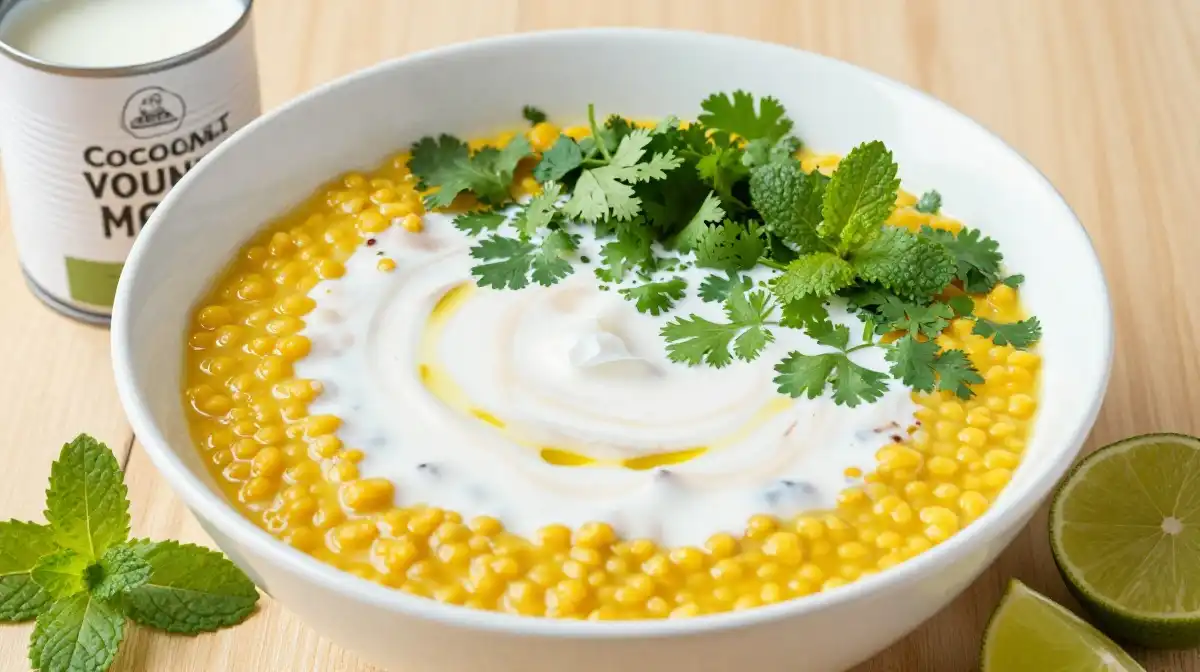
How to make moong dal vegan that achieves genuine richness and satisfying depth without ghee requires understanding which plant-based fats most closely replicate ghee’s specific contribution to dal’s flavor and texture. Moong dal vegan preparations using refined coconut oil produce the closest approximation to ghee’s richness because coconut oil’s high saturated fat content creates similar heat stability and similar fat-soluble flavor compound extraction during the tadka stage that ghee performs so magnificently. Extra-virgin coconut oil adds a subtle tropical sweetness that works particularly well in moong dal with coconut milk preparations where the coconut flavor is already present as a deliberate design element rather than an unexpected intrusion.
Moong dal with coconut milk creates a South Indian-inspired preparation of extraordinary creaminess and depth — replacing half the water or broth with full-fat canned coconut milk in the final ten minutes of cooking transforms the dal’s character completely into something sweeter, richer, and more complex than the standard preparation produces. Add the coconut milk after the dal has already cooked to full tenderness — adding it earlier causes the coconut cream to separate during extended cooking and produces a less attractive and less flavored result. Fresh cilantro added in genuinely generous quantities — far more than American recipes typically suggest — provides the bright herbal freshness that balances coconut milk’s richness and creates a beautifully composed flavor contrast that makes every spoonful of this vegan version genuinely exciting.
How to Make Moong Dal With Vegetables for a Complete Healthy Meal
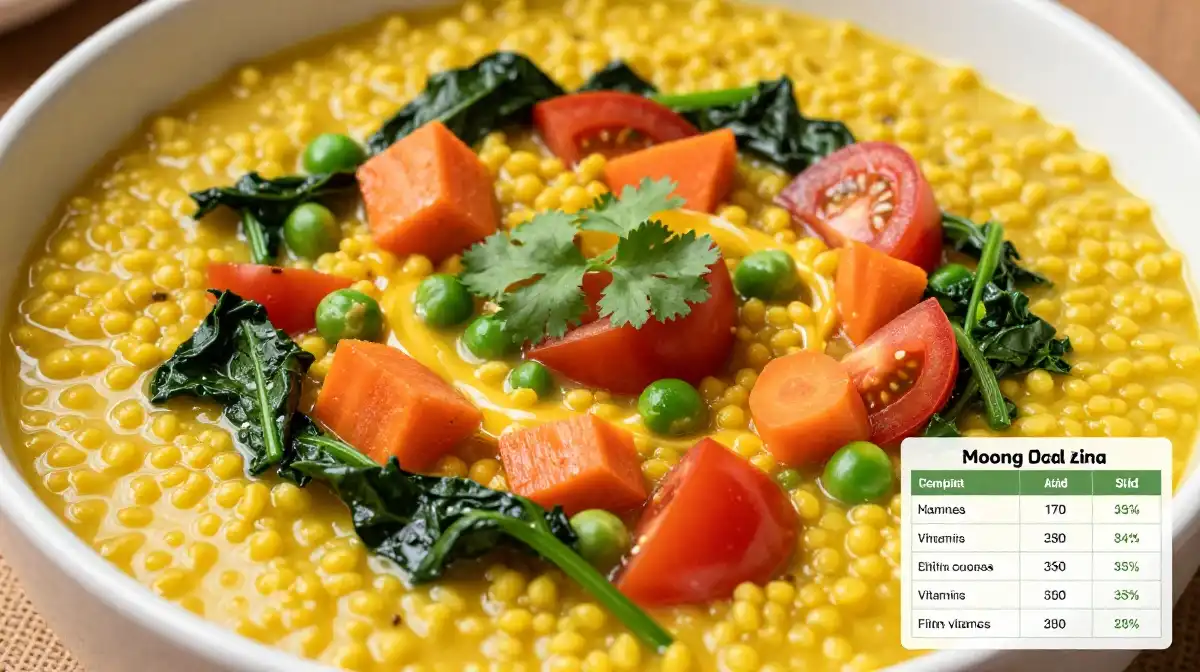
How to make moong dal with vegetables that creates a genuinely complete and nutritionally balanced meal rather than a simple lentil soup with token vegetable additions requires selecting vegetables that cook in the same time window as the dal and that contribute meaningful flavor and textural contrast to the finished dish. Moong dal with spinach represents the most classic and most nutritionally synergistic vegetable addition — the spinach’s iron absorption is significantly enhanced by the dal’s vitamin C content when the two are cooked together, creating a nutritional partnership that makes the combined dish more beneficial than either ingredient consumed separately regardless of their individual nutritional merit.
Diced onion, tomatoes, and garlic form the aromatic vegetable foundation that most moong dal with vegetables preparations build upon — these three together with appropriate spicing create a flavorful cooking medium that the dal absorbs during its simmering time. Harder vegetables like diced carrots and cubed sweet potato should be added at the beginning of cooking with the dal. Medium vegetables like diced zucchini and bell peppers work best added halfway through cooking when the dal is partially softened. Leafy vegetables like spinach and kale go in during the final two minutes when their brief exposure to heat wilts them perfectly without destroying their nutrients or reducing their vivid green color to the dull khaki that extended cooking produces in heat-sensitive green vegetables consistently and irreversibly.
How to Make Restaurant Style Moong Dal Fry at Home
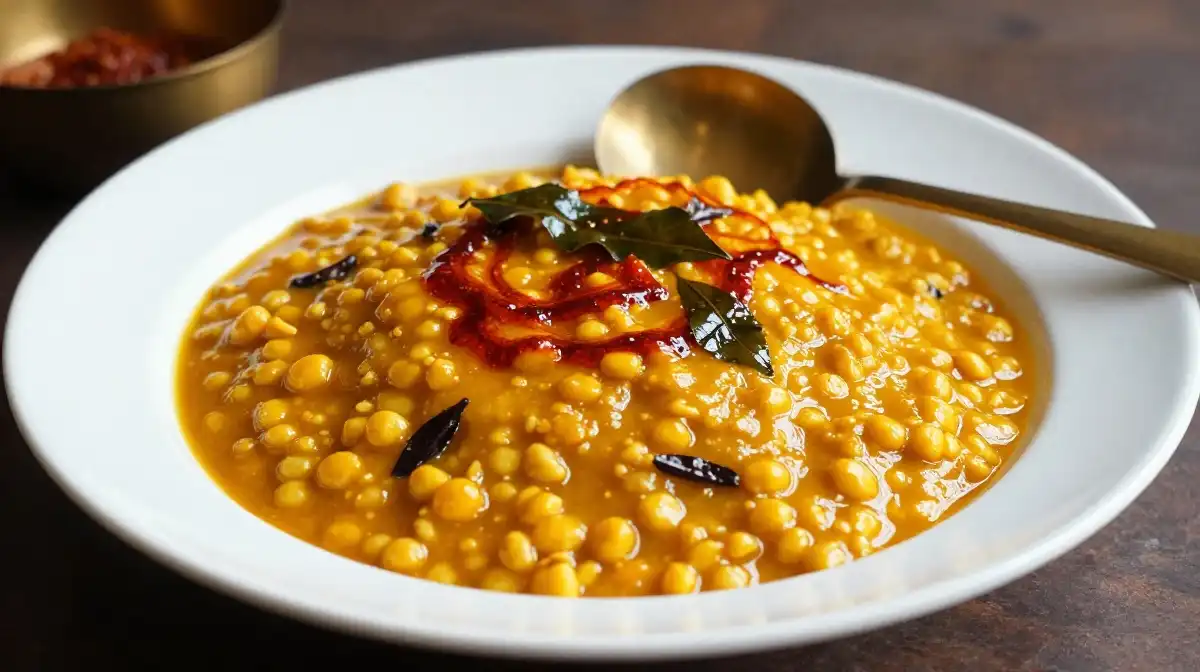
How to make restaurant style moong dal that recreates the depth, the glossy appearance, and the aromatic intensity of great Indian restaurant dal requires understanding what professional dal preparation does differently from home cooking — and then applying those same techniques in your home kitchen with confidence and appropriate ingredient generosity. Moong dal fry restaurant style uses significantly more ghee than most home recipes specify — professional kitchens apply ghee with a liberality that creates the characteristic richness and surface sheen that distinguishes great restaurant dal from home cooking versions that taste pleasant but somehow lighter and less complex than their restaurant equivalents.
Restaurant moong dal fry also uses a two-stage seasoning approach that home recipes frequently collapse into one — a full tadka of mustard seeds, cumin seeds, asafoetida, curry leaves, dried red chilies, garlic, and ginger added at the beginning of cooking to build the flavor foundation, followed by a second smaller fresh tadka poured over the finished dal immediately before serving that provides aromatic freshness that the first tadka’s compounds have partially lost during extended cooking. This two-tadka technique is the professional secret that creates the complex layered aromatic character that restaurant dal consistently achieves and that most home cooking explanations never reveal because most home cooks who taste restaurant dal don’t realize it involves two separate tempering stages rather than the single tadka that standard recipes describe.
How to Make Moong Dal for Weight Loss and Healthy Eating
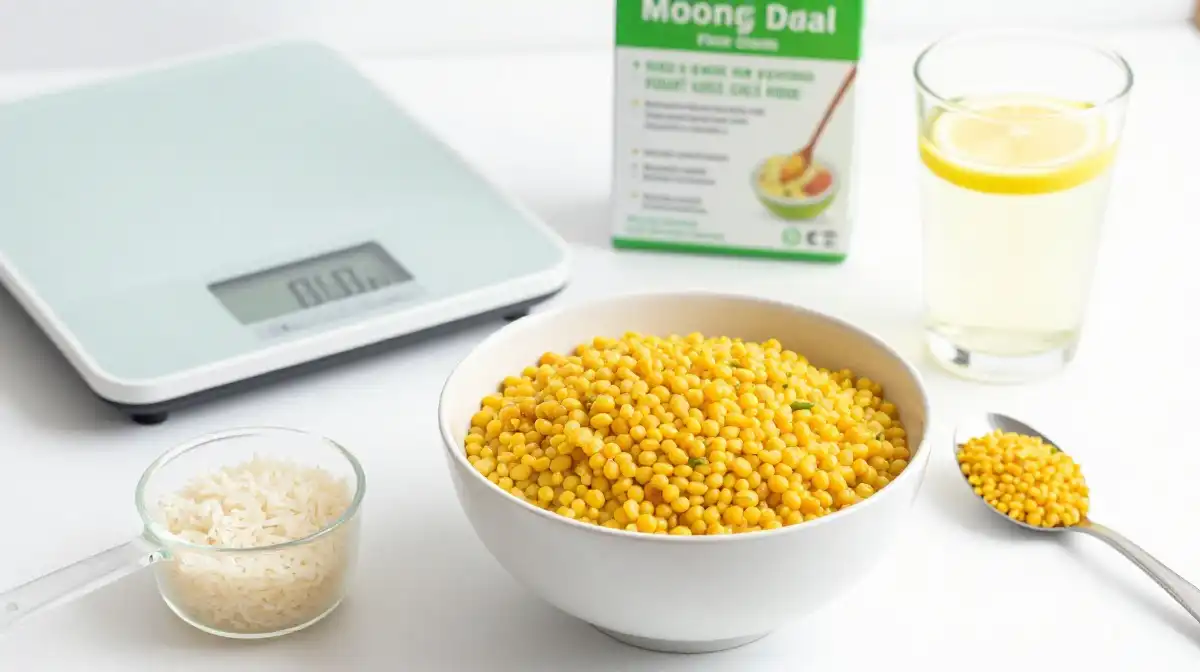
How to make moong dal for weight loss that genuinely supports caloric deficit eating without triggering the hunger and energy crashes that most calorie-restricted diets produce requires understanding why this particular legume performs so exceptionally well in weight management contexts. The combination of 14 grams of protein and 15 grams of fiber per cooked cup creates a satiety effect that persists for four to six hours after eating — significantly longer than equivalent-calorie servings of most other food categories. A 2019 clinical study published in Obesity Research found that participants who ate legumes at least four times weekly lost 35% more weight than calorie-matched non-legume-eating control groups over twelve weeks of observation.
Moong dal easy recipe for weight loss preparation maximizes these satiety benefits through specific cooking choices that influence how quickly its nutrients absorb and how long satisfaction persists after eating. Cooking the dal to a coarser semi-textured consistency rather than completely smooth increases resistant starch content — resistant starch escapes digestion in the small intestine and ferments in the large intestine feeding beneficial bacteria while contributing zero digestible calories. Use ghee in modest quantities rather than avoiding fat entirely — the fat slows gastric emptying extending satiety while simultaneously enabling absorption of fat-soluble vitamins from the dal and accompanying vegetables. Serve moong dal with rice as a smaller rice portion alongside a larger dal portion rather than the equal ratios that khichdi typically uses — this simple adjustment reduces total caloric density while maintaining the meal’s nutritional completeness.
How to Store and Reheat Moong Dal Without Losing Flavor
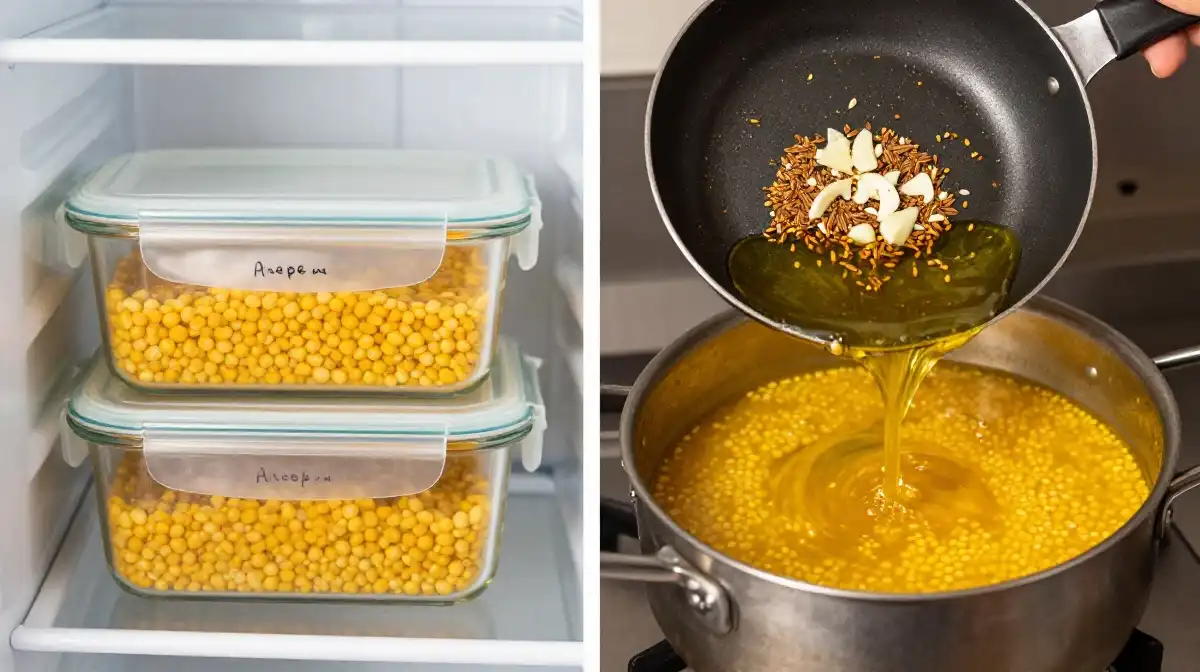
How to store moong dal leftovers correctly preserves both the depth of flavor that slow simmering developed and the creamy consistency that careful cooking achieved through appropriate technique throughout the preparation. Allow the dal to cool completely at room temperature before transferring to glass airtight containers — hot dal sealed in containers creates condensation that dilutes the flavor and creates a humid environment less conducive to safe extended storage than the properly cooled alternative. Moong dal stores beautifully in the refrigerator for four to five days — and many experienced dal cooks specifically observe that day-two and day-three reheated dal tastes more deeply flavored and more complexly integrated than the freshly made version as the spice flavors continue developing and melding during refrigerator storage.
How to reheat moong dal without losing the creamy consistency that characterizes properly made dal requires compensating for the thickening that occurs as dal cools and the starch molecules set during refrigerator storage. Add two to three tablespoons of water or broth to the stored dal before reheating — in a saucepan over medium-low heat with gentle stirring for three to four minutes or in the microwave at seventy percent power for ninety seconds stirring once. Always prepare a fresh small tadka to pour over reheated dal — even thirty seconds of cumin seeds and garlic sizzling in hot ghee poured over the reheated dal restores the aromatic freshness that refrigerator storage diminishes and transforms adequately reheated leftovers into something that tastes genuinely freshly made rather than obviously leftover.
Common Moong Dal Mistakes to Avoid for Perfect Results Every Time
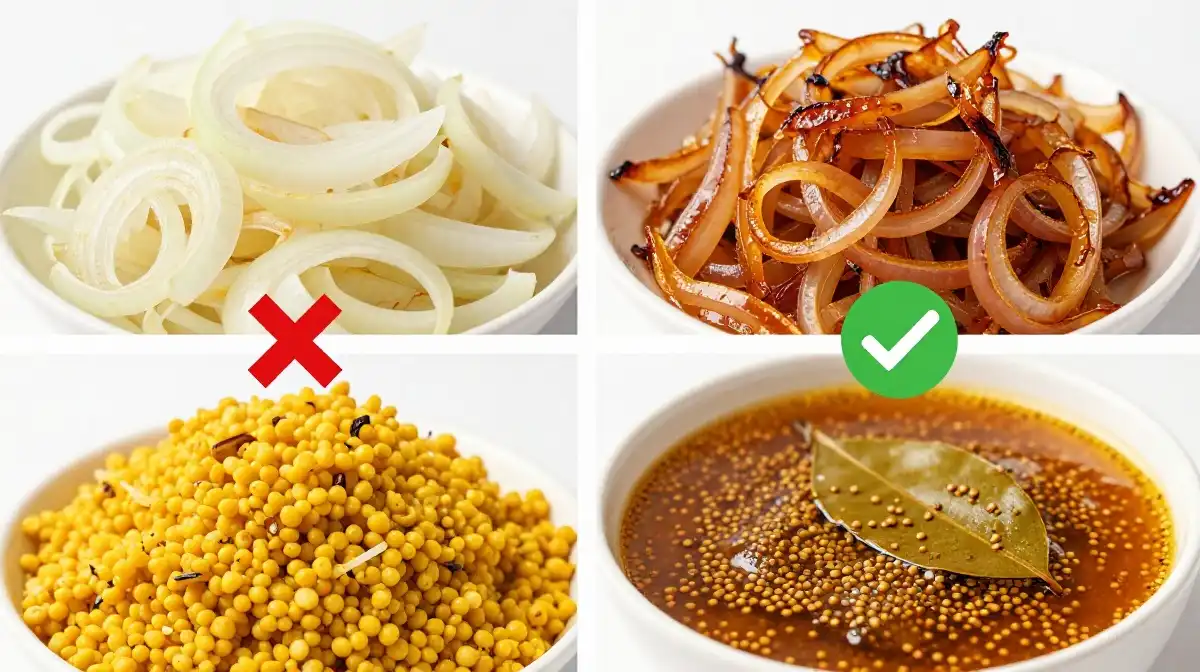
How to make moong dal without making the mistakes that produce flat, grainy, or disappointingly bland results begins with the single most common error — insufficient patience with the onion caramelization during the aromatic base building stage. Properly caramelized onions — deeply golden and sweet rather than merely translucent and soft — contribute more flavor depth to the finished dal than all other spices combined. Most home cooks rush this stage because seven to eight minutes of active stirring feels long when hunger is present and the stovetop is hot. That impatience produces pale onions that contribute minimal sweetness or depth and a finished dal that tastes adequately spiced but somehow lacking the rounded complexity that properly caramelized onion builds into the preparation’s flavor foundation.
The second most damaging mistake is adding the tadka at the wrong temperature — ghee that isn’t hot enough when the spices are added produces sluggishly blooming aromatics that release their flavor compounds incompletely rather than the explosive aromatic bloom that properly heated ghee creates in seconds. How to make moong dal with correct tadka temperature means heating the ghee until it shimmers and a mustard seed dropped in pops immediately — this temperature indicates that the fat is hot enough for the rapid flavor compound extraction that tadka requires. The third critical mistake is undersalting throughout the cooking process — dal requires assertive seasoning at multiple stages because its starchy base absorbs salt continuously and the finished dish almost always needs considerably more salt than first-time makers instinctively apply at any single seasoning point during the preparation.


One Comment