14 Pasta e Ceci: The Ultimate Italian Chickpea Pasta Recipe That Warms Your Soul
Some recipes don’t just feed you — they restore you. Pasta e ceci is exactly that kind of dish. It’s humble. It’s ancient. And it’s one of those rare combinations where every ingredient serves a genuine purpose and nothing feels accidental or unnecessary. A bowl of this thick, fragrant, chickpea-laden pasta on a cold evening is one of Italy’s most quietly magnificent gifts to the world — a dish that costs almost nothing to make yet delivers a depth of flavor and comfort that expensive restaurant meals frequently fail to achieve despite their sophisticated pretensions and carefully curated presentations.
1. What Is Pasta e Ceci and Why Italy Has Loved It for Centuries
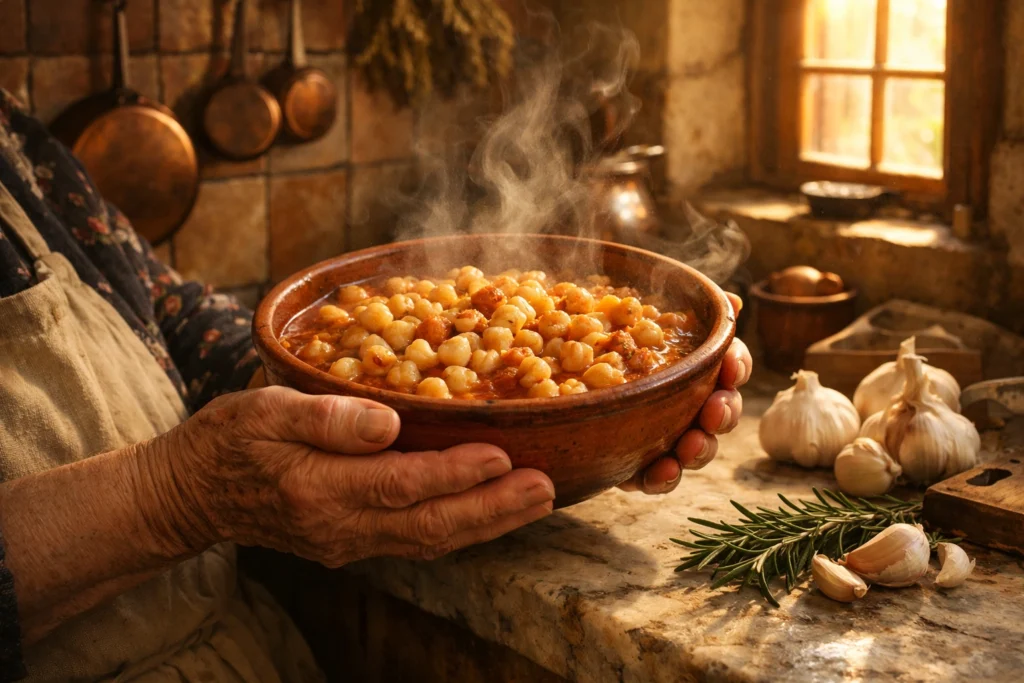
What is pasta e ceci in its most essential definition? It’s a classic Italian recipe combining short pasta and chickpeas in a thick savory broth that sits somewhere beautifully between a soup and a pasta dish — deliberately ambiguous in its consistency and all the more interesting for that ambiguity. Pasta e ceci comfort food traditions stretch back to ancient Rome where chickpeas — ceci in Italian — were a dietary staple consumed across all social classes before the arrival of New World ingredients like tomatoes and potatoes fundamentally transformed European cooking in the sixteenth century.
The dish’s enduring popularity across centuries of Italian culinary history reflects a profound truth about genuinely great food — that complexity of flavor doesn’t require complexity of ingredients. Pasta e ceci classic Italian recipe versions from different regions share the same fundamental architecture: chickpeas cooked until tender, aromatics built carefully into a flavorful base, pasta cooked directly in the chickpea liquid to absorb maximum starch and flavor, and a generous finish of excellent olive oil that brings every element into satisfying harmony. The result tastes far more sophisticated than its modest ingredient list suggests — a phenomenon that Italian cucina povera cooking achieves with remarkable and consistent frequency.
2. Roman Style vs Neapolitan Style Pasta e Ceci: Key Differences Explained
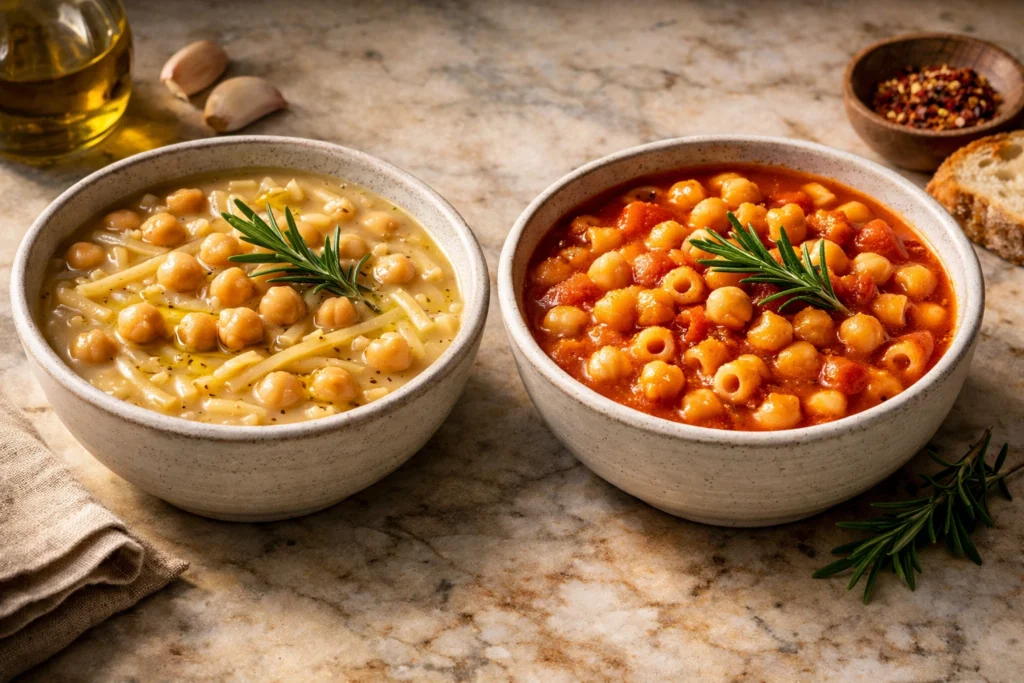
Pasta e ceci Roman style and Pasta e ceci Naples style represent two genuinely distinct culinary philosophies applied to the same fundamental ingredients — a difference that reveals as much about regional Italian character and culinary identity as it does about cooking technique. Roman style pasta e ceci tends toward a thicker almost stew-like consistency, uses rosemary as its primary aromatic, frequently incorporates anchovy for umami depth, and often includes a splash of white wine in the soffritto base. Romans typically finish with aggressive black pepper and a generous pour of grassy extra-virgin olive oil that transforms the dish’s aromatic profile entirely in its final seconds before serving.
| Style | Tomato | Primary Herb | Anchovy | Consistency | Pasta Choice |
|---|---|---|---|---|---|
| Roman | No | Rosemary | Yes traditionally | Very thick | Broken spaghetti or tonnarelli |
| Neapolitan | Yes | Rosemary and bay | Optional | Soupy to medium | Tubetti or ditalini |
| Tuscan | Sometimes | Sage and rosemary | Rarely | Medium thick | Maltagliati |
| Venetian | No | Rosemary | No | Soupy | Bigoli |
3. The Essential Ingredients That Make Authentic Pasta e Ceci Unforgettable
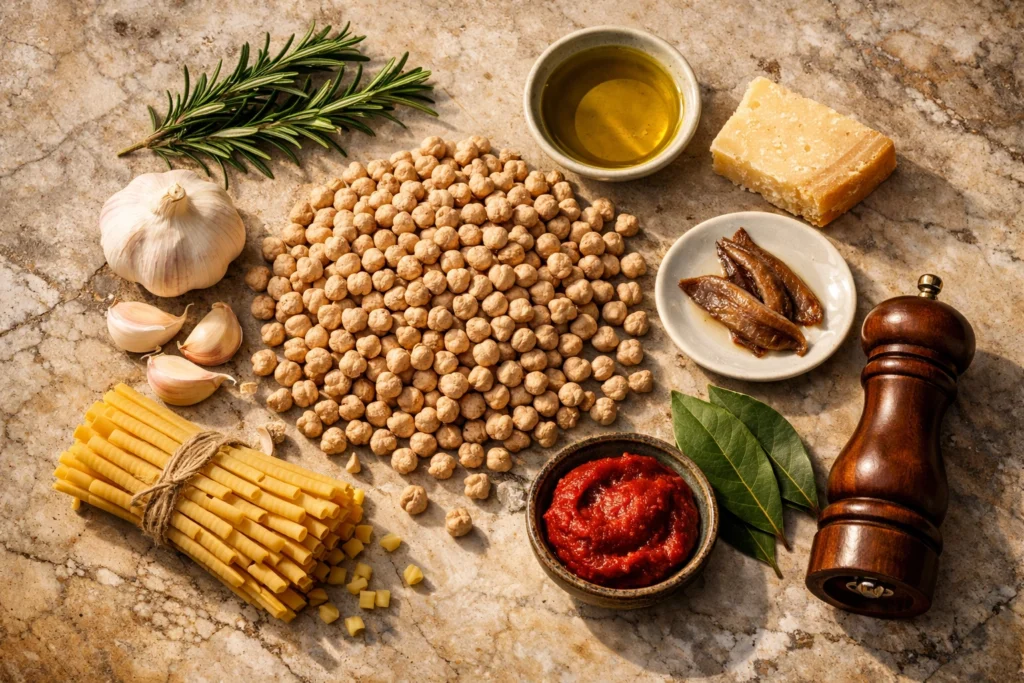
Authentic pasta e ceci recipe quality depends almost entirely on ingredient quality in a way that more complex dishes can partially disguise through technique — this simple dish exposes every ingredient choice immediately and honestly. Chickpeas are the obvious star but the supporting cast matters equally. The pasta e ceci with rosemary aromatics — fresh rosemary specifically rather than dried, which turns bitter and resinous when cooked — contributes an essential herbal backbone that defines the dish’s recognizable character. Garlic sautéed in generous olive oil until softened and fragrant builds the flavor foundation everything else rests upon.
you may also like this: 15 Ugly Dip Recipes and Ideas That Are Gloriously Gross Looking But Insanely Delicious
Best herbs and spices for pasta e ceci extend beyond rosemary to include bay leaves adding subtle eucalyptus depth, black pepper in generous quantities providing the dish’s characteristic gentle heat, and optionally a small dried chili creating warmth without dominance. Pasta e ceci with parmesan finishing — the rind added during cooking rather than grated on top — adds a savory depth that elevates the chickpea broth remarkably without making the dish feel cheesy or dairy-forward. The olive oil used for finishing should be your best quality grassy extra-virgin variety — pasta e ceci olive oil finish is the dish’s final and most impactful flavor layer, added in genuine generosity just before serving when its raw flavors shine at maximum brightness.
4. Dried Chickpeas vs Canned Chickpeas: Which Makes Better Pasta e Ceci
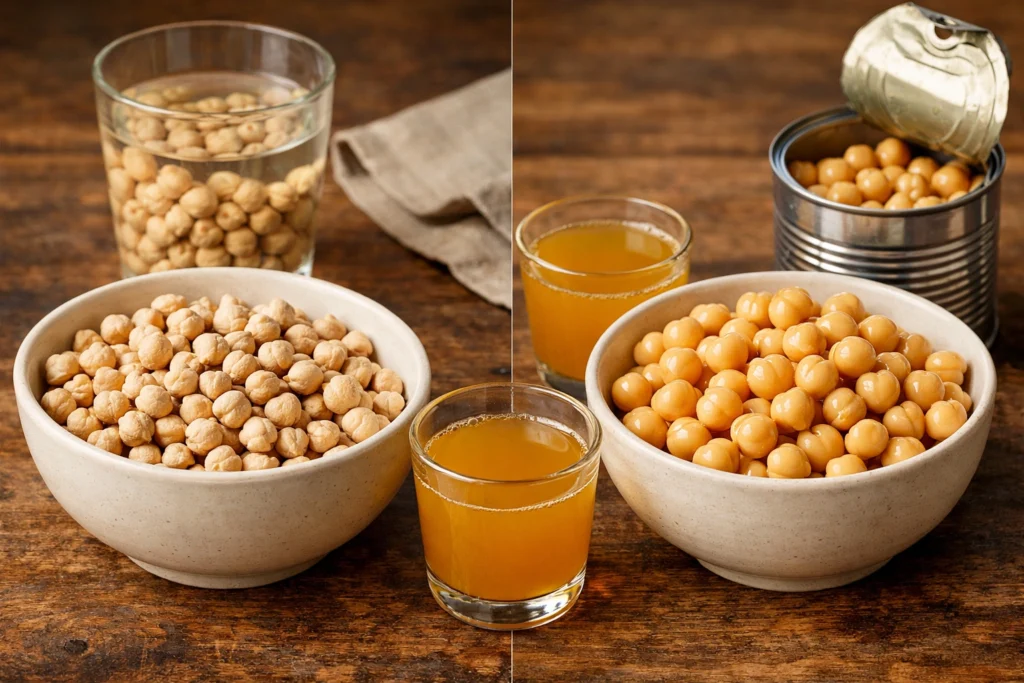
Pasta e ceci dried chickpeas vs canned is the ingredient debate that generates the most passionate and most divided opinions among Italian cooks of every skill level and regional background. Dried chickpeas — soaked overnight and cooked slowly in unsalted water for two to three hours — produce a cooking liquid of extraordinary chickpea-scented richness that becomes the dish’s flavor foundation in a way that canned chickpea liquid simply cannot replicate. That cooking water carries dissolved starches, proteins, and chickpea flavor compounds that create a naturally thick, naturally seasoned broth without any additional thickening agents required beyond what the pasta’s own starch contributes during cooking.
How to make pasta e ceci with canned chickpeas produces an excellent dish when time constraints make dried chickpea preparation impractical — but requires compensating for the inferior canned liquid with additional technique. Drain and rinse canned chickpeas thoroughly. Puree one-third of the total chickpeas with a little water before adding to the pot — this creates the natural body that dried chickpea cooking liquid provides automatically. Use a quality low-sodium chicken or vegetable stock as your cooking liquid rather than plain water to compensate for the depth that dried chickpea broth contributes. Pasta e ceci slow cooker recipe using dried chickpeas eliminates the active cooking time problem entirely — add soaked chickpeas with aromatics to the slow cooker in the morning and return to perfectly cooked chickpeas ready for pasta eight hours later.
5. Best Pasta Shapes to Use in Your Pasta e Ceci Recipe
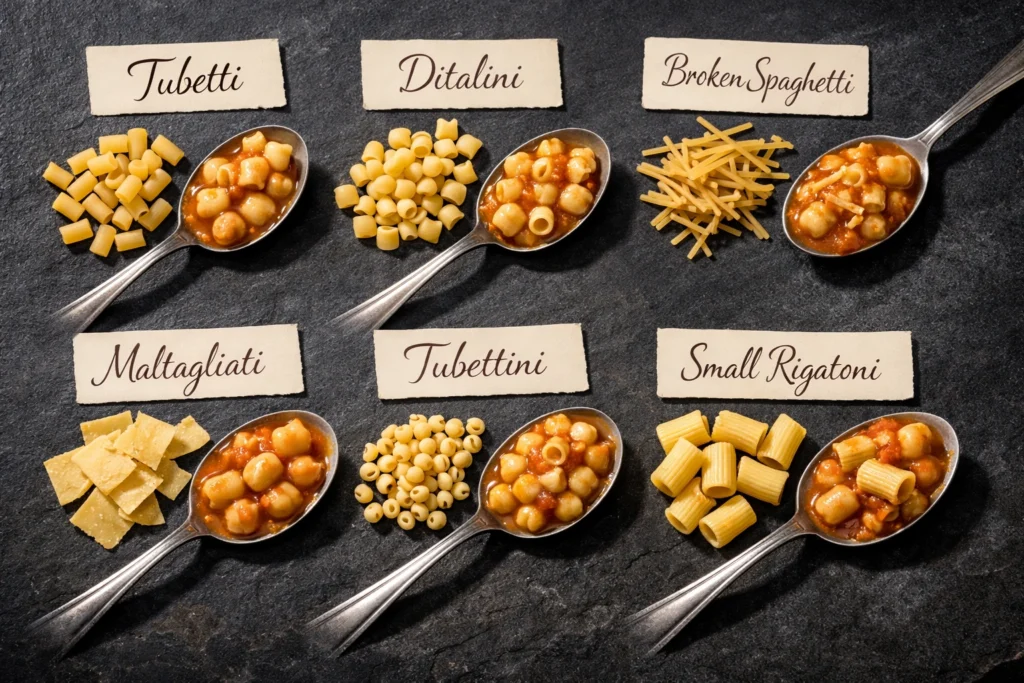
Best pasta shape for pasta e ceci is a question with regional variation and genuine practical reasoning behind different choices rather than arbitrary preference or mere tradition for its own sake. The pasta must be short enough to eat comfortably on a spoon alongside individual chickpeas — long pasta creates an awkward eating experience in a dish this thick. Pasta e ceci best pasta shape choices traditionally include tubetti or tubettini — small tube-shaped pasta that traps chickpea broth inside each piece creating explosive flavor with every bite — and ditalini, similarly sized ridged tubes that provide excellent sauce-catching surface texture.
How to make authentic pasta e ceci from scratch pasta shape selection also includes broken spaghetti — specifically the Roman tradition of breaking dried spaghetti into irregular 2-inch pieces that create a pleasingly rustic and varied texture throughout the dish. Maltagliati — rough irregular fresh pasta pieces whose name literally means badly cut — is the Tuscan tradition that adds a handmade character impossible to achieve with factory-produced shapes. Whatever shape you choose, cook the pasta directly in the chickpea broth rather than separately — this single technique decision contributes more to the dish’s final quality than almost any other cooking choice you make throughout the entire preparation process.
6. How to Make Classic Pasta e Ceci From Scratch Step by Step
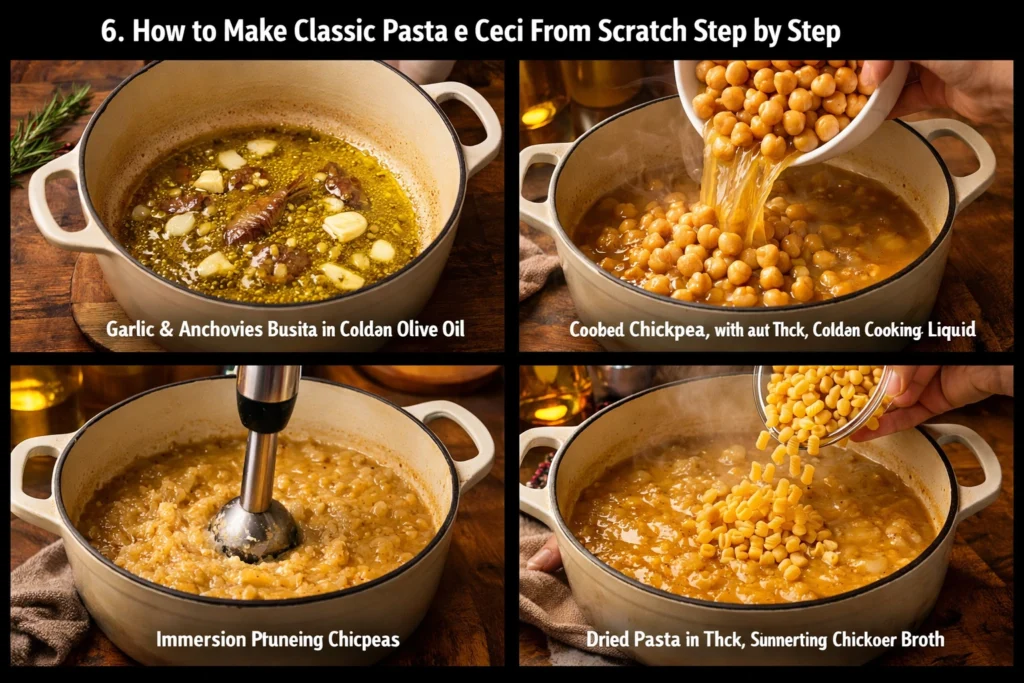
How to make authentic pasta e ceci from scratch begins with building the soffritto — the aromatic flavor base that determines everything that follows. Heat four tablespoons of good olive oil in a heavy pot over medium heat. Add four minced garlic cloves and cook until softened but not colored — approximately two minutes. Add two anchovy fillets if using Roman style and allow them to dissolve completely into the oil. Add fresh rosemary and bay leaf. If using tomato add two tablespoons of tomato paste and cook for two minutes until it deepens in color. This soffritto building phase deserves patience and attention — rushing it produces a flat underdeveloped flavor foundation that no amount of subsequent seasoning can adequately rescue.
Pasta e ceci one pot recipe continues by adding your cooked chickpeas with all their cooking liquid — or canned chickpeas with quality stock — to the aromatic base. Bring to a gentle simmer and cook for fifteen minutes allowing the flavors to integrate completely. Remove approximately one-third of the chickpeas and puree them until completely smooth before returning to the pot — this creates the characteristic thick creamy consistency that distinguishes excellent pasta e ceci from watery disappointing versions. How to make pasta e ceci creamy and thick using this partial puree technique means the remaining whole chickpeas provide textural interest while the pureed portion creates body and natural creaminess without any dairy addition whatsoever. Add pasta directly to the simmering broth and cook until al dente according to package instructions minus two minutes since the pasta continues cooking in the residual heat after removal from the stove.
7. Make Pasta e Ceci Creamy and Thick the Italian Way
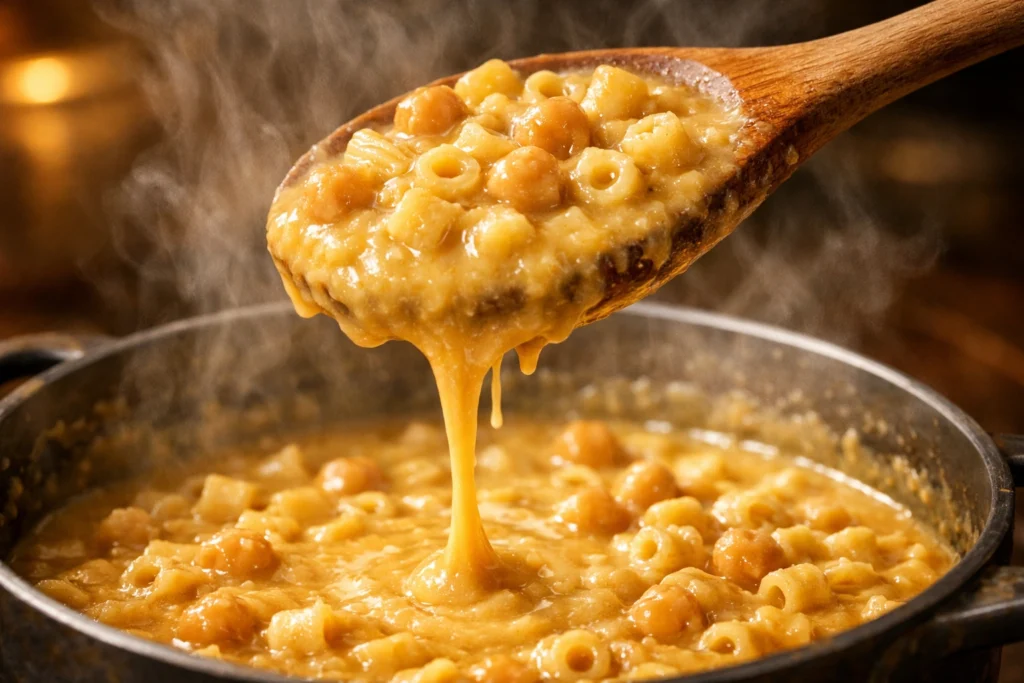
How to make pasta e ceci creamy and thick without cream, butter, or any dairy product requires mastering two specific techniques that Italian home cooks have employed for generations without ever needing to consult a recipe or a food science textbook for explanation. The first technique is the partial chickpea puree already described — blending a portion of the cooked chickpeas with their liquid until completely smooth creates a naturally starchy naturally flavored thickening agent that adds both body and pure chickpea flavor simultaneously. The second technique is cooking the pasta directly in the chickpea broth rather than in separate salted water — pasta releases significant quantities of starch during cooking that thickens the surrounding liquid dramatically over the ten to twelve minutes of active pasta cooking time.
Pasta e ceci thick or soupy preference is ultimately a personal and regional choice that admits no universal correct answer — both textures represent legitimate authentic preparations with passionate regional defenders across Italy. However controlling consistency requires understanding that pasta e ceci thickens significantly and rapidly as it sits after cooking — a dish with perfect soupy consistency immediately after cooking becomes very thick within fifteen minutes as pasta continues absorbing liquid even after heat is removed. How to fix pasta e ceci that is too thick or too thin requires keeping a cup of reserved chickpea cooking liquid or warm water nearby throughout the serving process — thin the dish as needed with modest additions of warm liquid and adjust seasoning after each addition since adding liquid dilutes salt as well as consistency in equal measure.
8. Pasta e Ceci With Pancetta Anchovies and Rosemary for Extra Depth
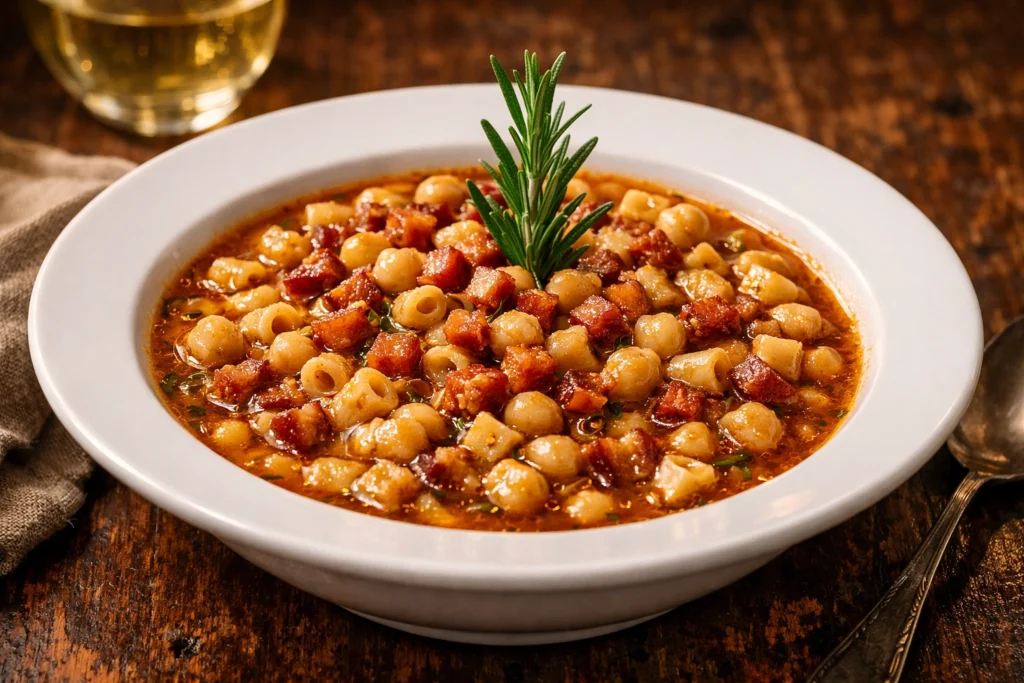
Pasta e ceci with pancetta transforms the dish from a vegetable-forward comfort bowl into a genuinely meaty deeply savory preparation that satisfies in a completely different register without losing any of the original dish’s fundamental character or chickpea-centered identity. Pancetta — Italian cured pork belly available diced at most American specialty grocers and many standard supermarkets — renders its fat slowly in the pot before the aromatics are added, creating a rich pork-scented cooking fat that replaces the plain olive oil of the soffritto base with something considerably more complex and considerably more deeply flavored throughout the entire dish.
How to add anchovies to pasta e ceci correctly is a technique question that trips up many American home cooks unfamiliar with anchovy’s culinary role beyond pizza topping or Caesar salad ingredient. Anchovies added to hot olive oil at the beginning of cooking dissolve completely within two to three minutes of gentle stirring — disappearing entirely from visual and textural presence in the finished dish while contributing an irreplaceable savory depth that makes experienced diners say “this tastes incredibly good but I can’t identify exactly why.” Pasta e ceci with anchovies using this dissolving technique produces a dish that tastes more deeply savory, more roundly complex, and more satisfyingly meaty than versions without anchovy — without any fishy flavor whatsoever in the finished preparation that would alarm or deter seafood-averse diners.
9. Vegetarian and Vegan Pasta e Ceci That Tastes Just as Incredible
How to make vegetarian pasta e ceci that achieves the same depth and complexity as meat-containing versions requires understanding which ingredients provide the umami richness that anchovy and pancetta contribute in traditional preparations — and finding plant-based alternatives that deliver equivalent savory depth through different but equally effective flavor pathways. Pasta e ceci vegetarian recipe success centers on several strategic ingredient choices that compensate comprehensively for the absence of animal-derived umami contributors. A parmesan rind simmered in the chickpea broth — technically not vegan but acceptable for most vegetarian interpretations — contributes remarkable savory depth through its protein and fat content dissolving slowly into the surrounding liquid throughout the cooking process.
How to make one pot pasta e ceci easily in a fully vegan version achieves genuine depth through a combination of concentrated tomato paste cooked until caramelized, dried mushroom powder or a small piece of dried porcini mushroom added to the soffritto, and an extra generous quantity of garlic and rosemary that compensates for absent meat flavors through sheer aromatic intensity. Pasta e ceci budget friendly meal reality means the vegan version often costs less than one dollar per generous serving — making it among the most economically accessible and most nutritionally complete plant-based meals available to American home cooks looking to reduce both food expenditure and animal product consumption simultaneously without sacrificing flavor satisfaction or eating pleasure.
10. Best Toppings Garnishes and Finishing Oils for Pasta e Ceci
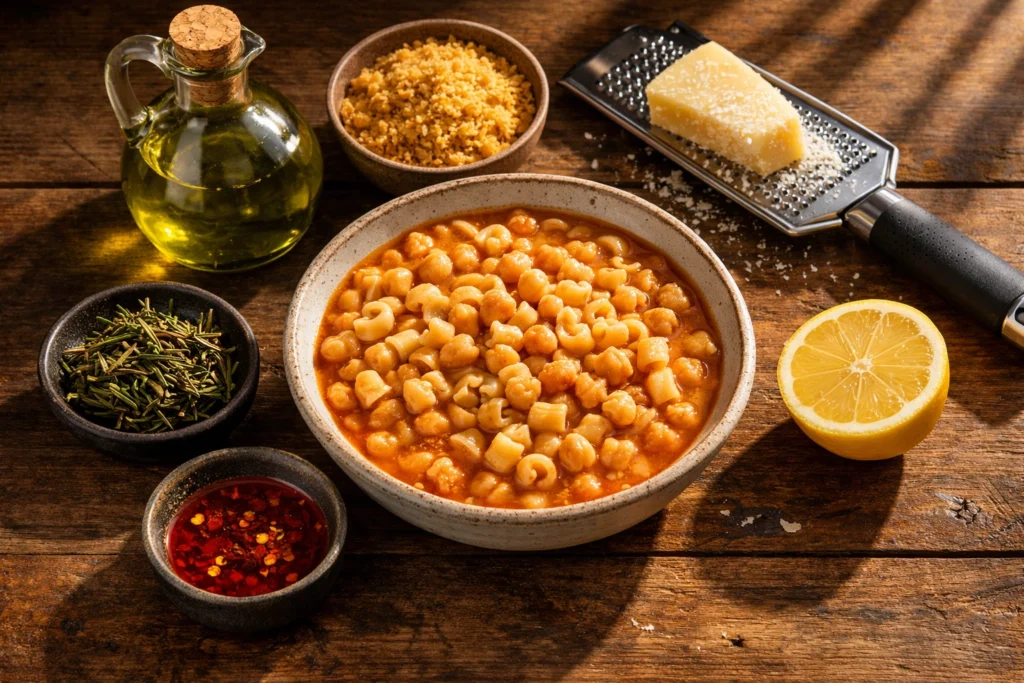
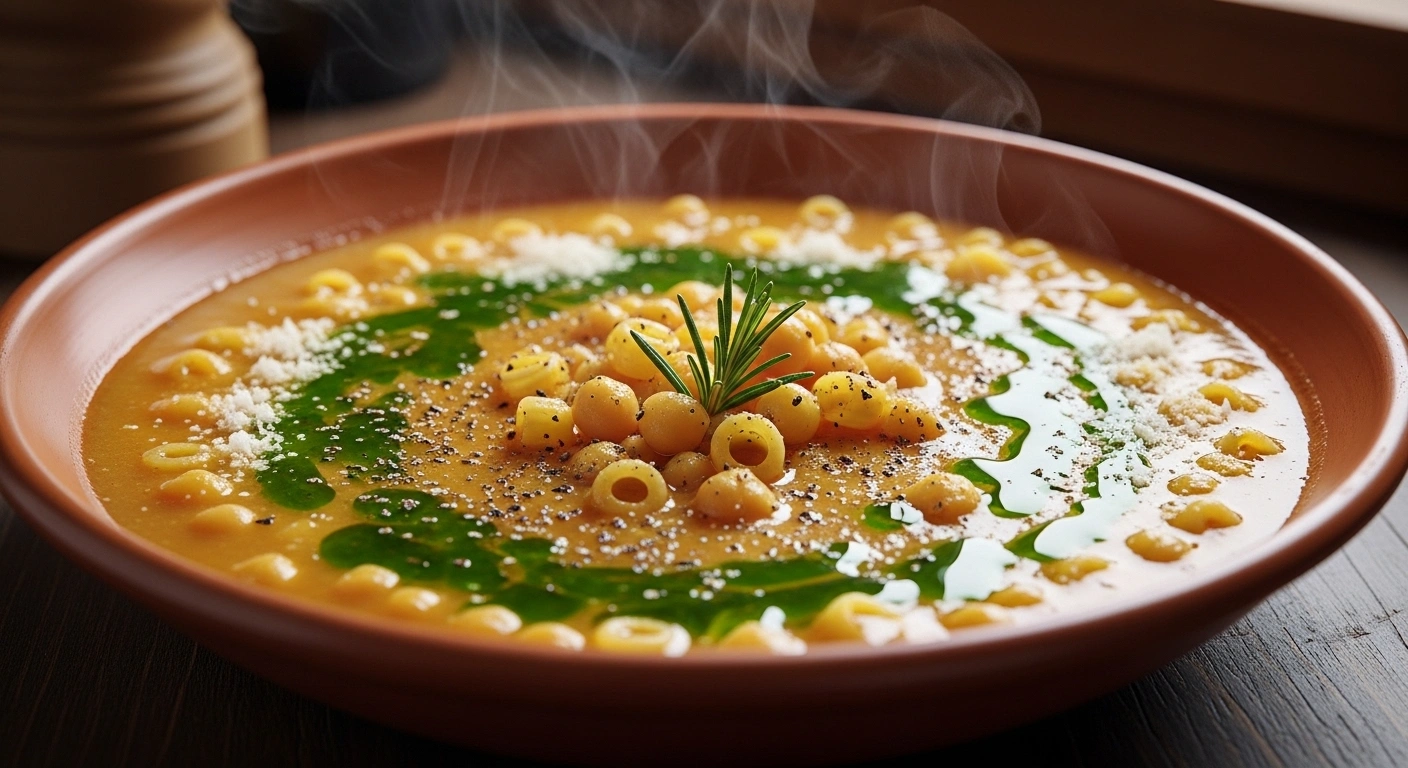
Best toppings and garnishes for pasta e ceci represent the final opportunity to add textural contrast, visual appeal, and concentrated flavor accents to a dish that benefits enormously from the sensory interest that well-chosen garnishes provide against its thick uniform base. Pasta e ceci olive oil finish is the non-negotiable first garnish — a generous pour of your best quality raw extra-virgin olive oil across the surface of each served bowl adds grassy peppery aromatic notes that transform the finished dish’s character as dramatically as finishing a steak with good butter transforms that preparation. Use at minimum one tablespoon per serving and don’t be shy — this is precisely the moment olive oil was born for.
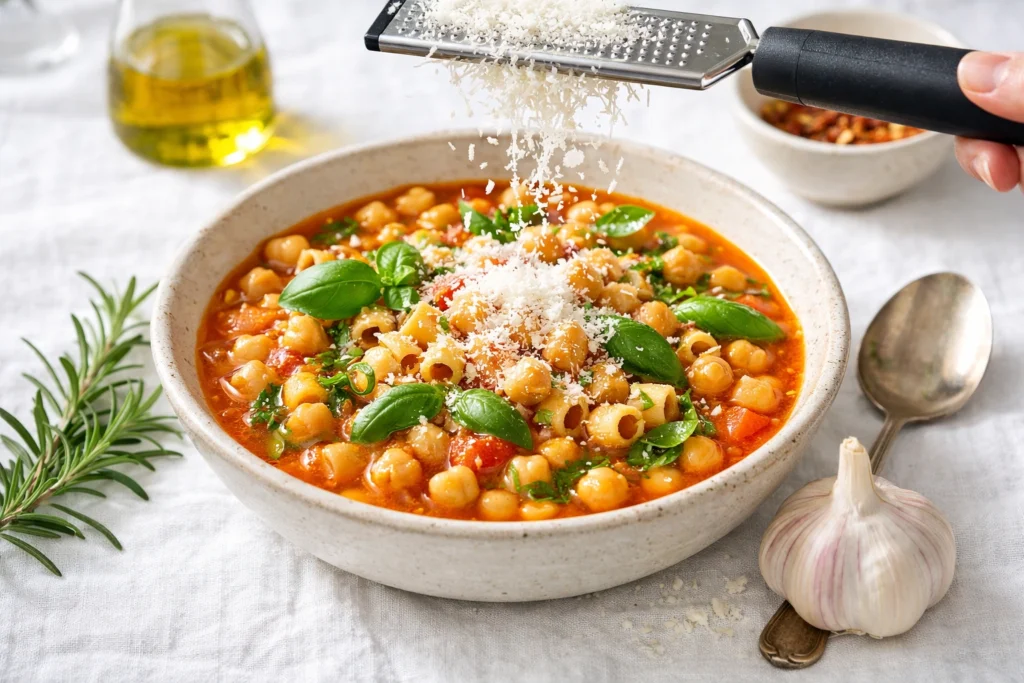
Pasta e ceci with parmesan — freshly grated rather than pre-shredded — adds a salty crystalline accent that pairs magnificently with the chickpeas’ natural earthiness. Crispy fried rosemary sprigs provide textural contrast and visual elegance at virtually zero additional cost or effort. A scattering of toasted breadcrumbs in the Neapolitan tradition adds satisfying crunch that contrasts beautifully with the dish’s soft thick texture. Best toppings and garnishes for pasta e ceci also include a drizzle of chili oil for those wanting heat, a few torn fresh basil leaves for a bright herbaceous note different from the rosemary base, or a squeeze of lemon juice that cuts through the richness with sharp citrus acidity creating a completely different but equally valid finishing flavor profile.
11. How to Store Reheat and Revive Pasta e Ceci Leftovers Perfectly
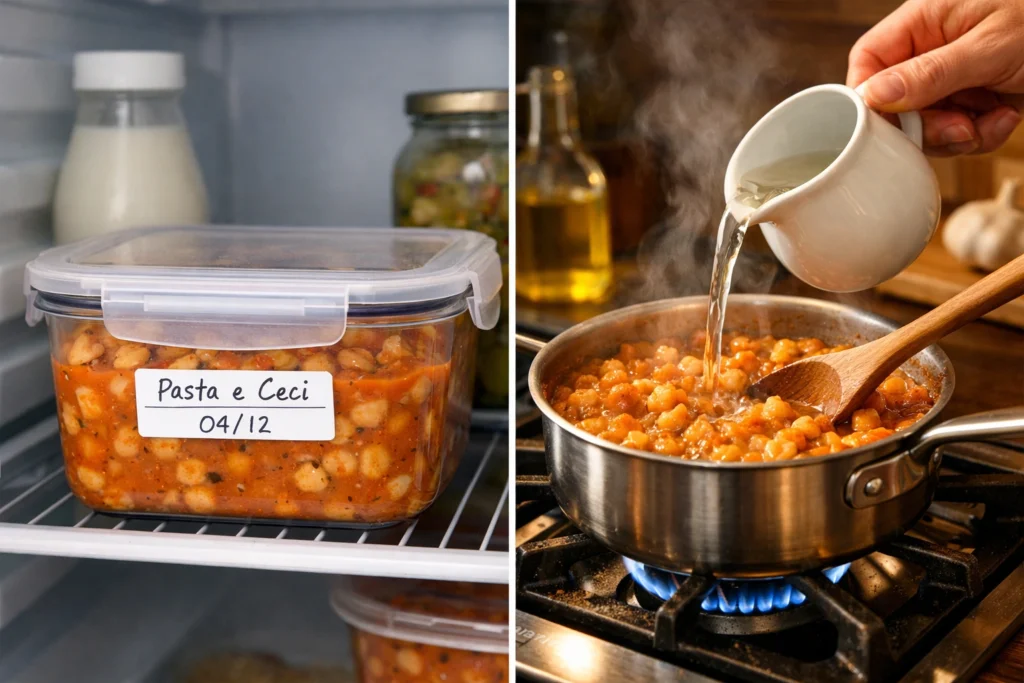
How to store and reheat pasta e ceci leftovers requires understanding the dish’s most challenging characteristic — its tendency to thicken dramatically as it cools and sits in the refrigerator overnight due to pasta starch absorption and natural liquid evaporation. Pasta e ceci make ahead recipe advice consistently recommends storing leftovers with this thickening reality firmly in mind — the dish you refrigerate will be significantly thicker than what you served at the table and will require aggressive thinning with warm water or stock during reheating to return it to an appropriate eating consistency. Never attempt reheating refrigerated pasta e ceci without additional liquid — the result will be a stodgy paste rather than the beautifully thick but still flowing consistency the dish requires.
Pasta e ceci leftovers tips from experienced Italian home cooks include the practical suggestion of storing leftover pasta e ceci as a deliberately thick paste — adding generous warm water during reheating over medium heat and stirring continuously until the desired consistency returns. Pasta e ceci make ahead recipe preparation specifically for advance serving benefits from cooking the chickpea base completely and refrigerating it without pasta — adding fresh pasta directly to the reheated base on the day of serving produces significantly superior texture compared to reheated previously-cooked pasta that has spent a night absorbing all available liquid in the refrigerator. Properly stored in an airtight container, the chickpea base keeps beautifully for up to four days in the refrigerator and freezes well for up to three months without any significant quality degradation.
12. Common Pasta e Ceci Mistakes and How to Avoid Every One
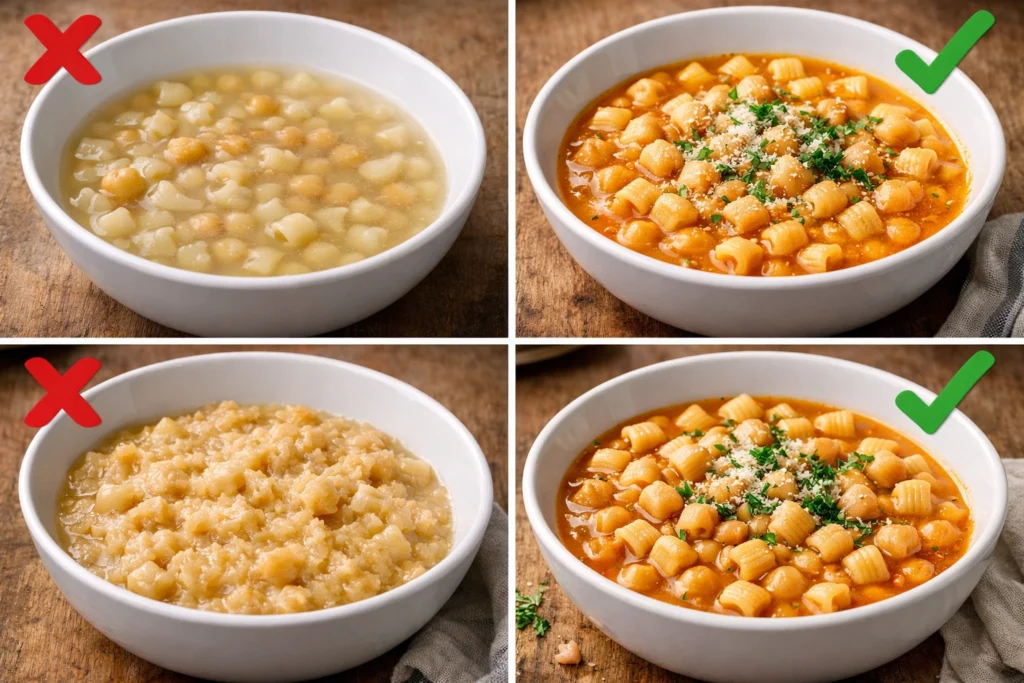
How to make authentic pasta e ceci from scratch without making the mistakes that undermine even experienced cooks’ results begins with the single most common error — insufficient seasoning at every stage of cooking. Chickpeas are inherently mild and the dish’s thick consistency means underseasoning at the chickpea cooking stage cannot be adequately corrected by adding salt to the finished dish — the salt added at the end sits on the surface rather than penetrating the chickpeas and broth that have already been cooking for an extended period. Season the chickpea cooking liquid generously from the start and taste repeatedly throughout the cooking process rather than waiting until the final moment to address seasoning comprehensively.
How to fix pasta e ceci that is too thick or too thin represents two of the other most common problems that home cooks encounter with this apparently straightforward dish. Too-thick pasta e ceci after pasta cooking is complete means you added too little liquid or cooked it too long — add warm water or warm stock in small increments stirring and tasting after each addition until the desired consistency returns. Too-thin pasta e ceci despite the partial chickpea puree technique means insufficient starch release — simmer uncovered for an additional five to ten minutes before adding pasta allowing the broth to reduce and concentrate to the desired thick consistency. Pasta e ceci vs pasta e fagioli differences confuse many American cooks — pasta e fagioli uses beans rather than chickpeas and generally has a somewhat different consistency and flavor profile, though both dishes share the same cucina povera philosophy and similar technique.
13. Pasta e Ceci Variations Worth Trying From Across Italy
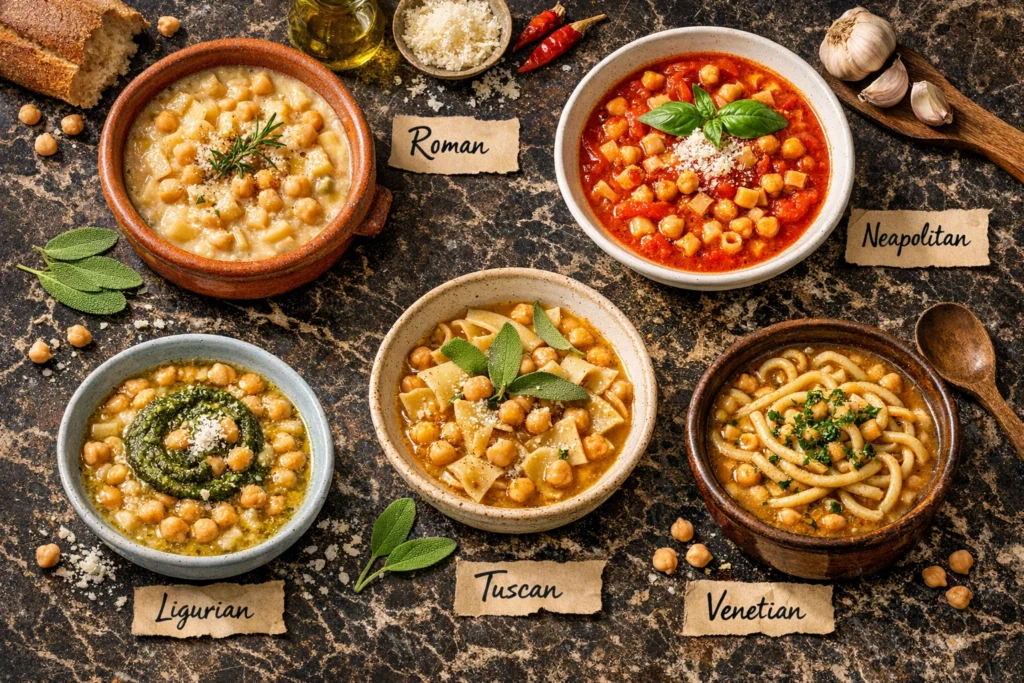
Pasta e ceci variations across Italy’s twenty regions reveal the enormous creative range possible within this dish’s apparently simple structural framework — each regional version reflecting local ingredient availability, historical influences, and distinct culinary personality that makes Italian regional cooking so inexhaustibly fascinating to explore. Pasta e ceci with tomato paste vs fresh tomato creates entirely different flavor profiles within the Neapolitan tradition itself — tomato paste adds concentrated deep sweetness and body while fresh or passata tomatoes contribute brighter more acidic freshness that keeps the dish feeling lighter despite its substantial chickpea base. The Ligurian version adds pesto as a finishing element that completely transforms the dish’s aromatic identity into something simultaneously familiar and surprising.
Pasta e ceci gluten free adaptation is remarkably straightforward compared to many pasta dishes — simply substitute your preferred certified gluten-free short pasta shape following the same cooking technique with the single practical adjustment of watching cooking time more carefully since gluten-free pasta tends to overcook more rapidly than conventional wheat pasta and deteriorates from al dente to mushy within a narrow time window that requires attentive monitoring. Pasta e ceci for a crowd scales beautifully — simply multiply all ingredients proportionally and use your largest available pot, noting that larger quantities require longer cooking times to build equivalent flavor depth and may need more generous finishing olive oil to compensate for the dilution effect of scaling up volume while maintaining the same ratio of finishing fat to total dish quantity.
14. What to Serve With Pasta e Ceci for a Complete Italian Meal
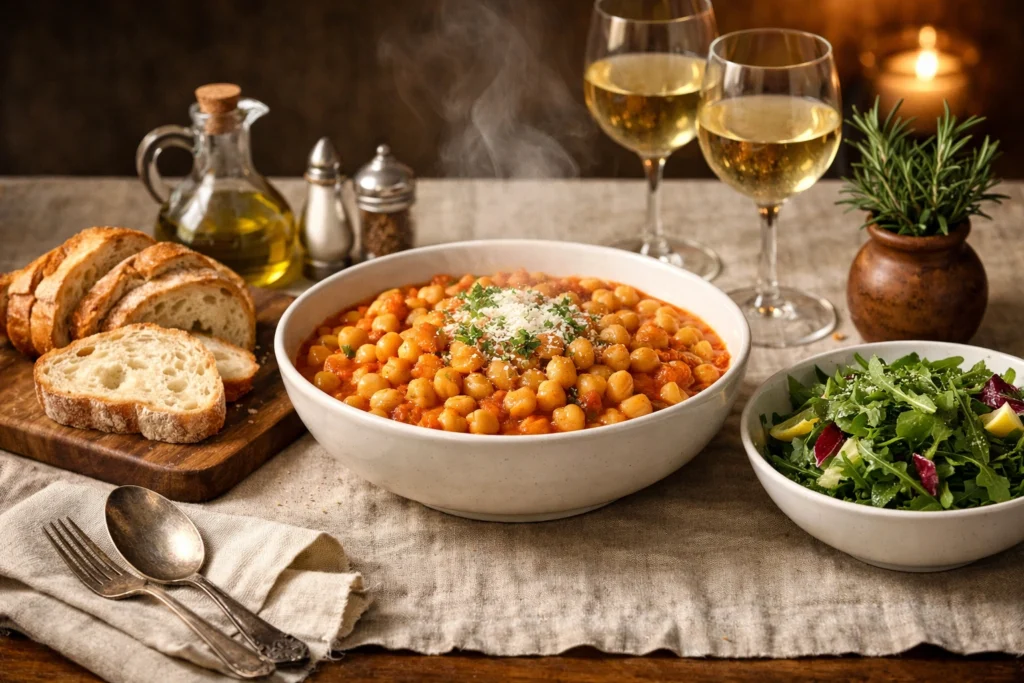
Best wine to serve with pasta e ceci is a question that rewards attention to the dish’s fundamental flavor profile — earthy, savory, herbal, with varying levels of tomato acidity depending on which regional style you’ve prepared. A medium-bodied Italian white wine with mineral character and good acidity — Verdicchio dei Castelli di Jesi, Greco di Tufo, or Fiano di Avellino — cuts through the dish’s starchy richness while complementing its herbal rosemary character beautifully. Red wine drinkers should look toward a light-bodied central Italian option like Frascati Rosso or a lighter Chianti rather than full-bodied tannic reds that overwhelm pasta e ceci’s subtly expressed flavors rather than enhancing them.
Pasta e ceci winter comfort dish serving contexts suggest that the meal needs little accompaniment — a beautiful salad of bitter greens dressed simply with olive oil and lemon provides welcome contrast to the dish’s richness. Crusty Italian bread — specifically a rustic pane di casa or ciabatta served warm — is essential for the Italian tradition of fare la scarpetta, using bread to clean the last traces of magnificent broth from the bowl in a gesture that represents the highest possible compliment to the cook. Pasta e ceci recipe as a complete Italian meal course needs no elaborate preparation before or after — it is genuinely sufficient as a single satisfying course when made with proper care and served in generous quantities with excellent olive oil and good Italian bread that honors the dish’s beautiful and time-tested simplicity.